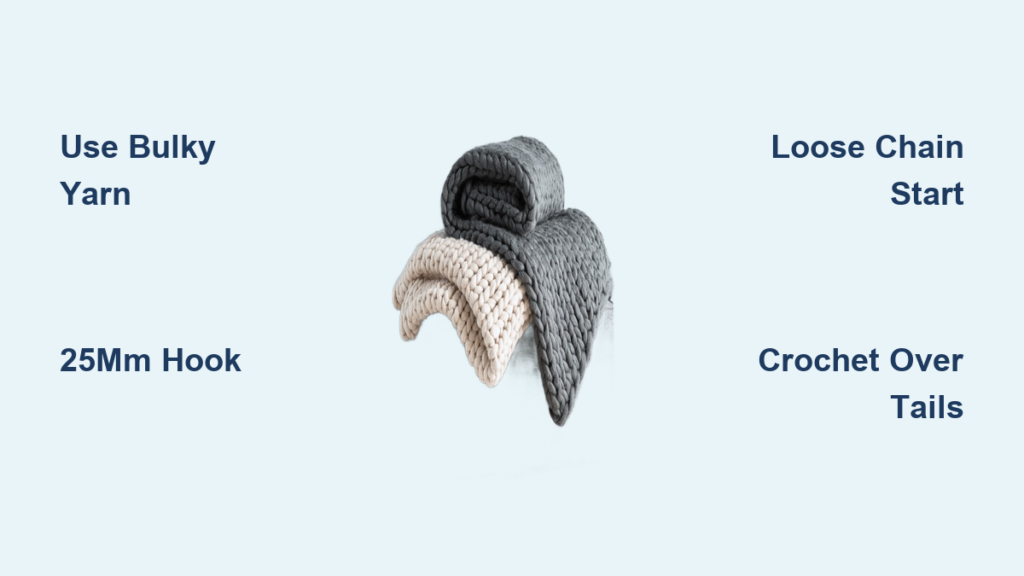
Imagine curling up under a soft, handcrafted blanket you made yourself. For beginners, crocheting a chunky blanket is one of the most satisfying first projects you can tackle. With super bulky or jumbo yarn and a large hook, you can complete a plush throw in just days, even if you have never held a crochet hook before.
This guide walks you through every step of making a chunky crochet blanket, from choosing the right yarn and hook to mastering beginner-friendly stitches, changing colors, and finishing with a polished edge.
Choose the Right Yarn for Your Blanket

Pick Super Bulky or Jumbo Weight Yarn
For a true chunky look and fast progress, use super bulky (#6) or jumbo (#7) yarn. These thick yarns create a dense, warm fabric with minimal effort.
Best beginner-friendly options include:
• Bernat Blanket Yarn (bulky #6, 100% polyester)
• Lion Brand Yooge (jumbo #7, no shedding)
• Soho Colossal (jumbo #7, ultra-plush)
• Big Twist Natural Blend (doubled super bulky #6)
Polyester-based yarns are ideal because they are soft, durable, and machine-washable.
Buy Enough Yarn From the Same Dye Lot
Always purchase all your skeins at once and from the same dye lot to ensure consistent color. Even slight variations can be obvious in large, solid-colored blankets.
Pro Tip: If your yarn sheds, switch to a higher-quality brand like Yooge or Soho Colossal. Shedding is common with lower-cost acrylics.
Estimate Yarn Quantity by Blanket Size
| Blanket Size | Yarn Needed |
|---|---|
| Lapghan (26″ × 41″) | 1 skein Yooge (2300g) |
| Medium throw (45″ × 50″) | 7–10 skeins |
| Full-size (90″ × 90″) | 12+ skeins |
Budget Hack: Use two strands of affordable super bulky yarn like Big Twist instead of pricier jumbo yarn. It is cheaper and just as thick.
Select the Correct Crochet Hook
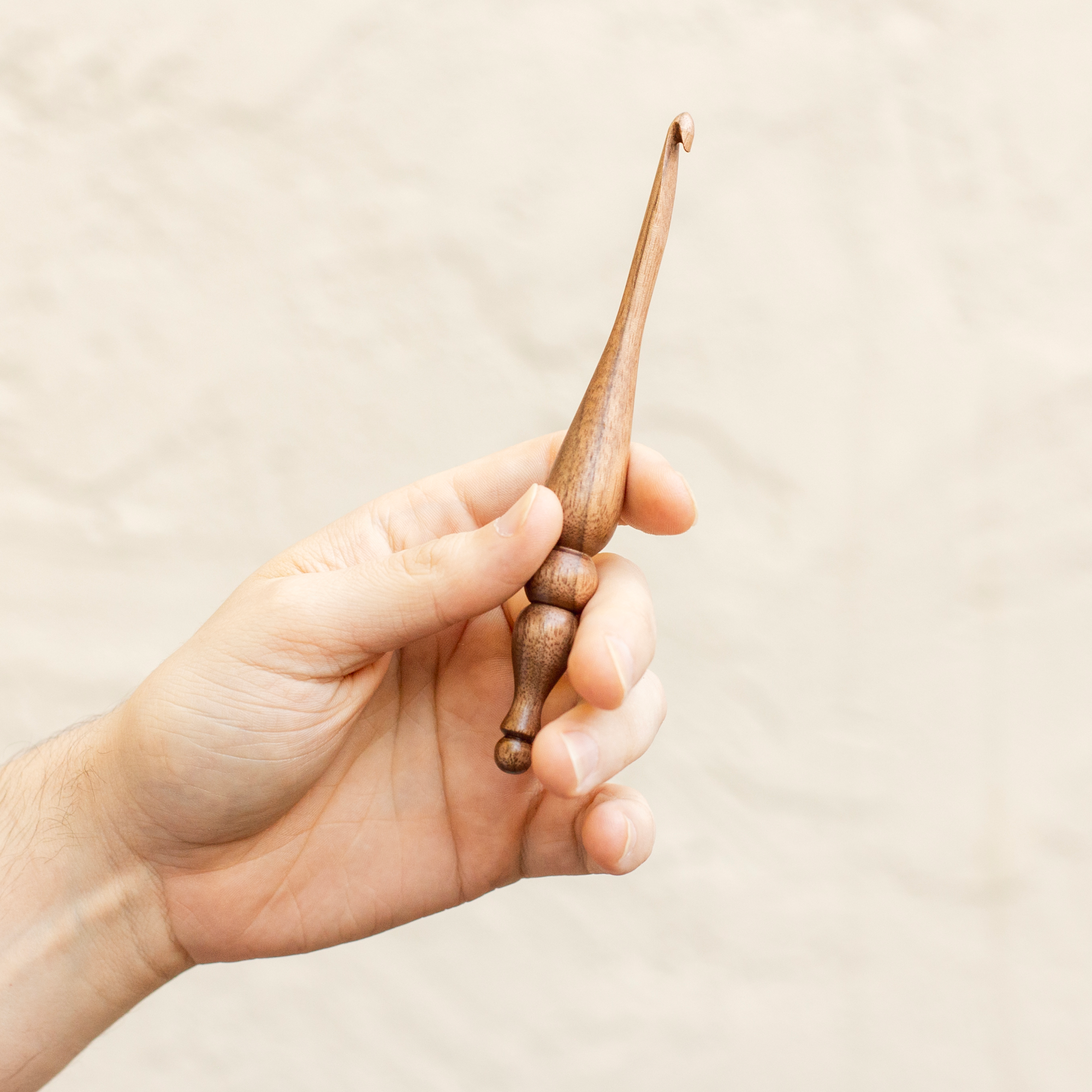
Use a 25mm Hook for Most Projects
A 25mm (US 50) hook is ideal for most chunky blanket projects. It is large enough to glide through thick yarn without splitting it.
Recommended options include:
• Furls 25mm (resin/wood) – ergonomic and smooth
• Aluminum 25mm – affordable and widely available
• Wooden hooks – lightweight, reduce hand strain
Use a Larger Hook for the Foundation Chain
To prevent a tight, stiff edge, use a 30–35mm hook (US 70) just for the foundation chain. This keeps the first row loose and flexible.
Why? Thick yarn naturally pulls tight. A bigger hook offsets that tension.
Try Hand-Crocheting Without a Hook
With ultra-thick yarn like Yooge, you can crochet by hand with no hook needed. Simply loop the yarn with your fingers using single crochet. It is slower but creates a looser, organic texture.
Start With a Loose Foundation Chain
Chain for Your Desired Width
Your foundation chain sets the blanket’s width. Common chain counts include:
• 36 chains – approximately 60″ wide (jumbo yarn)
• 40 chains – approximately 45″ wide (doubled super bulky)
• 52 chains – approximately 36″ wide (single strand hdc)
To customize your size, measure your gauge by counting how many chains equal 1 inch, then multiply by your desired width.
Keep the Chain Loose
Pull a 6–8 inch tail before chaining to avoid a tight start. Do not over-tighten each chain. Keep them easy to slide. Lay the chain flat before starting the first row to check for twists.
Mistake to Avoid: A twisted chain leads to a Möbius strip effect. Fix it before stitching.
Master Beginner-Friendly Stitches
Single Crochet for Dense, Warm Blankets
Single crochet creates the simplest and tightest fabric, perfect for warm, firm blankets.
Steps to single crochet:
- Insert hook into 2nd chain from hook
- Yarn over, pull up a loop (2 loops on hook)
- Yarn over, pull through both loops
Chain 1 at the end of each row (does not count as a stitch). Turn and repeat.
Pro Tip: Use two strands held together for extra thickness and faster coverage.
Half Double Crochet for Balanced Speed and Density
Half double crochet is faster than single crochet and denser than double crochet. It offers the best balance for medium-weight throws.
Steps to half double crochet:
- Yarn over
- Insert into stitch, yarn over, pull up a loop (3 loops)
- Yarn over, pull through all 3 loops
Work into the space between posts rather than the top of stitches. This creates clean vertical lines and even edges.
Double Crochet for Lightweight Throws
Double crochet creates a looser, drapier fabric and covers more ground per row.
Steps to double crochet:
- Yarn over, insert into stitch
- Yarn over, pull up a loop (3 loops)
- Yarn over, pull through 2 loops (2 remain)
- Yarn over, pull through both remaining loops
This stitch is ideal if you want a lighter, airier blanket.
Maintain Even Edges and Count Stitches
Count Stitches Regularly
It is easy to accidentally add or drop a stitch at the row ends. Prevent this by counting stitches every 3–5 rows, using stitch markers at both edges, and ensuring the first stitch goes into the correct space.
Fix Common Edge Problems
| Problem | Solution |
|---|---|
| Slanted edges | You are adding or dropping stitches |
| Holes at row start | Work first stitch into the same stitch as turning chain |
| Curling edges | Try hdc or sc; add a border later |
Pro Tip: The turning chain (ch 1 or ch 2) usually does not count as a stitch unless specified.
Change Colors Without Weaving In Ends
Crochet Over the Color Tails
Skip hours of weaving by crocheting over color-change tails.
Steps:
- Finish all stitches except the last turning chain
- Cut old color, leave 12″ tail
- With new color, pull loop through last loop of old color
- Complete turning chain with new color
- Turn, lay all four tails flat along edge
- Crochet directly over tails for 3–4 stitches
Result: Tails are locked in with no knots and no weaving needed later.
Keep Tails on One Side
For cleaner finishing, work the last stitch until 2 loops remain, drop old color, pick up new color, yarn over with it, and pull through. Chain, turn, and continue. This keeps all tails on the same side.
Join New Skeins Seamlessly

Run out of yarn mid-row? Join a new skein without cutting.
Steps:
- When 3 loops remain on hook (in dc), yarn over with new skein
- Pull through to finish the stitch
- Work 2–3 more stitches with new yarn
- Flip work, tie old and new tails with a snug knot
- Weave in ends later
This prevents gaps and keeps the join strong.
Finish Strong and Weave In Ends
Complete the Final Stitch
- Finish the last stitch of the last row
- Pull yarn through to close the loop
- Leave a 6–8″ tail for weaving
Weave In Ends Using Your Fingers
With chunky yarn, tapestry needles may not fit through the stitches.
Use your fingers instead:
- Thread tail through 3–4 stitches in one direction
- Reverse and weave back
- Trim excess
For color changes done by crocheting over tails, you only need to weave any remaining loose ends.
Add a Border for a Polished Look
Single Crochet Border
A border prevents curling and frames the blanket beautifully.
Steps:
- Join yarn in corner
- Ch 1, turn
- Sc into each stitch along the side
- At each corner, work 3 sc in the same space
- Continue around all four sides
- Slip stitch to join
- Weave in ends
Special Tip: On the foundation chain edge, place 3 sc in the slip knot space to secure the tail.
Half Double Crochet Border
Follow the same steps but use hdc instead of sc. Corners: 3 hdc per corner space.
Customize Your Blanket Size and Design
Adjust for Any Size
Want a wider blanket? Increase foundation chain. Need a longer blanket? Add more rows. For a queen-sized blanket, chain 113+ and crochet 100+ rows.
Gauge Check: 7 hdc × 7 rows = 5 inches. Use this to estimate growth.
Mix Stitches for Texture
Alternate 10 rows hdc with 10 rows sc for visual interest. Try front or back post stitches for a ribbed 3D effect (slightly advanced).
Play With Color
• Thin stripes: Change color every 2 rows
• Bold bands: Change every 4–6 rows
• Gradient: Light to dark for ombre effect
Design Tip: Cut and weave color ends instead of carrying yarn across the back. This keeps the back of your blanket neat.
Avoid Common Beginner Mistakes
| Mistake | Quick Fix |
|---|---|
| Tension too tight | Use larger hook; relax your grip |
| Twisted chain | Lay flat before starting |
| Uneven edges | Count stitches; use markers |
| Yarn tangling (2 strands) | Use center and outside pull together |
| Holes at row start | Work first stitch into same stitch as turning chain |
Mindset Tip: Imperfections are part of the charm. Every crocheter makes mistakes. It is how you learn.
Care for Your Chunky Blanket
Wash Cold and Lay Flat to Dry
Most chunky acrylics are machine-washable. Use cold water on a gentle cycle. Lay flat to dry. Never hang the blanket because this stretches it out. Avoid high heat because it can melt polyester fibers.
Store Properly
Fold or roll your blanket. Do not hang it. Keep it out of direct sunlight to prevent fading.
Ensure Long-Term Durability
Polyester yarns resist pilling. Reinforce corners with extra weaving if the blanket is used daily.
Complete Your Blanket Fast
Time Estimates
• Lapghan: As little as 2 hours (hand-crocheted)
• Medium throw: 1–3 days (30–60 minutes per day)
• Full-size: 1–2 weeks
You see progress row by row, which keeps motivation high.
Speed Up With These Tips
Use a larger hook for faster stitching. Choose a simple stitch like sc or hdc. Crochet over color tails to skip weaving. Work in a comfortable position to avoid fatigue.
Sell or Gift Your Creation
You Can Sell Finished Blankets
Many free patterns allow commercial use, meaning you can sell what you make.
Requirement: Credit the designer and link to their site.
Perfect for Gifting
Chunky blankets make wonderful gifts for housewarmings, birthdays, baby showers, and charity donations. Use machine-washable yarn for practical gifting.
It is even more special to give them as gifts and wrap your favorite people in love.
Frequently Asked Questions About Crocheting a Chunky Blanket
What is the best yarn for a chunky crochet blanket?
Super bulky (#6) or jumbo (#7) yarn works best. Polyester options like Bernat Blanket Yarn or Lion Brand Yooge are soft, durable, and machine-washable, making them ideal for beginners.
What size crochet hook should I use for chunky yarn?
A 25mm (US 50) hook is standard for most chunky blanket projects. Use a 30–35mm hook only for the foundation chain to keep the edge loose and flexible.
How long does it take to crochet a chunky blanket?
A lapghan takes about 2 hours. A medium throw takes 1–3 days. A full-size blanket takes 1–2 weeks, depending on how much time you dedicate each day.
Can I crochet a chunky blanket without prior experience?
Yes. Single crochet and half double crochet are beginner-friendly stitches. The repetitive nature of chunky blankets makes them perfect for learning while creating something beautiful.
How do I prevent my edges from being uneven?
Count your stitches every 3–5 rows. Use stitch markers at both edges. Make sure you are working into the correct stitch at the beginning and end of each row.
How do I care for my finished chunky blanket?
Wash in cold water on a gentle cycle. Lay flat to dry. Avoid high heat and direct sunlight. Polyester yarns are durable and resist pilling.
Key Takeaways for Crocheting Your First Chunky Blanket
Choosing the right materials sets you up for success. Super bulky or jumbo yarn with a 25mm hook creates the thick, plush texture that makes chunky blankets so appealing. Always buy enough yarn from the same dye lot for consistent color throughout your project.
Mastering basic stitches like single crochet and half double crochet gives you the foundation to create any blanket design. These stitches are simple to learn, forgiving of minor mistakes, and produce beautiful results quickly. The repetitive motion builds muscle memory and confidence.
Finishing techniques like crocheting over color tails and adding a border elevate your blanket from a practice project to a polished creation. These small details make a big difference in the final appearance and durability.
Now grab your yarn, pick your hook, and make your first row. Your cozy masterpiece is just a few stitches away.