You reach for your favorite blanket, only to find it flat, lumpy, and lifeless. It no longer feels cozy or warm. If you’ve ever wondered how to fluff a blanket back to its plush, pillowy state, you’re not alone. Over time, all blankets lose their loft due to washing, daily use, and improper drying.
This guide reveals proven, step-by-step methods to bring your blanket back to life using tools you likely already have. From quick daily shakes to deep restoration washes, I’ll cover everything you need to know to keep your blankets fluffy for years.
Why Blankets Lose Their Fluff
Blankets don’t go flat overnight. Their softness fades due to repeated stress, chemical exposure, and poor care habits. Understanding what causes flatness helps prevent it and fix it.
Common Causes of Flat, Lumpy Blankets
Blankets lose loft for several interconnected reasons. Daily compression from sleeping or sitting packs fibers down over time. Improper washing with high agitation or hot water breaks delicate fibers. Fabric softener leaves a waxy coating that reduces breathability and bounce. High-heat drying melts synthetic fibers and damages down clusters. Poor storage in tight folds or plastic bags suffocates the filling. Detergent residue leaves stiffness and reduces fluff potential.
Signs Your Blanket Needs Fluffing
Watch for these indicators that your blanket is losing its plushness. It feels dense or lumpy when you touch it. The thickness seems uneven across different areas. Despite its weight, it no longer provides the warmth you expect. A musty smell lingers even after washing. The fabric looks visibly flattened or matted.
Wash Smart: Prevent Flatness Before It Starts
The best fluffing starts before the problem begins. How you wash your blanket determines how well it holds its shape and softness.
Use Cold Water Only
Always wash blankets in cold or lukewarm water at 30°C or lower. Hot water shrinks fibers, fades colors, and degrades both natural and synthetic materials. Cold water cleans gently while preserving loft.
Select the Right Detergent
Choose mild, fragrance-free, and bleach-free detergent. Avoid fabric softeners entirely because they leave a waxy coating that kills fluff. Non-toxic options work best for maintaining softness without residue buildup.
Try the Revitalization Wash
For deep cleaning and restoration, combine these three ingredients. Mix one-third cup white vinegar, one-third cup mild detergent, and one-third cup baking soda. Add vinegar and detergent to the dispenser, then add baking soda directly to the drum. Wash on cold gentle cycle.
Hand Wash Delicate Blankets
Wool, cashmere, silk, faux fur, and heirloom textiles need special handling. Fill a tub with cold water and add mild detergent or baby shampoo. Submerge the blanket and gently agitate by hand. Soak for 15 to 30 minutes, then rinse thoroughly. Press out water gently and never wring.
Dry Right: The Secret to Fluffy Recovery

Drying is where most people ruin their blankets. High heat flattens fibers permanently, but the right method brings back loft and softness.
Air Dry for Best Results
Lay the blanket flat on a drying rack or clean towel. Reshape it to its original dimensions to prevent warping. Flip every few hours for even drying and avoid direct sunlight to prevent fading. Once completely dry, shake vigorously for 30 seconds to redistribute fibers.
Machine Dry With Caution
If using a dryer, never use high heat. Select low heat or air-fluff setting instead. Check every 20 minutes to prevent overheating.
Use Dryer Balls for Better Results
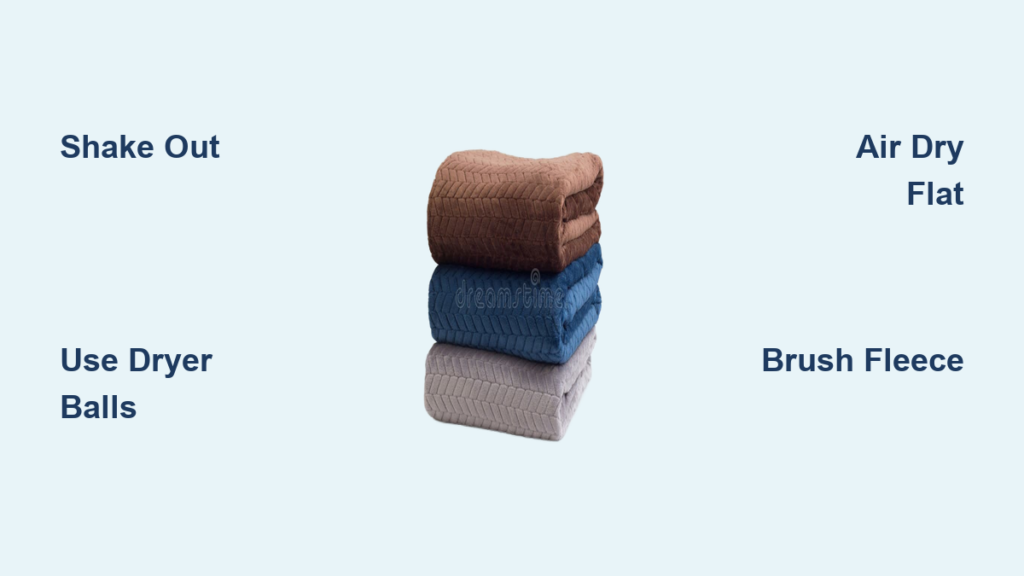
Dryer balls break up clumps, improve airflow, and reduce drying time by up to 30 percent. Wool dryer balls are reusable and chemical-free. Rubber fluffer balls work well for bulky items. Clean tennis balls placed in a sock prevent scuffing. Use 2 to 3 balls for standard throws and 4 to 6 for oversized comforters.
7 Quick Fluffing Techniques
When your blanket is already flat, these targeted methods restore puffiness without washing.
1. Shake-Out Method
Lay the blanket flat on the bed or floor. Grab one edge or corner and lift upward, then snap downward in a wave motion. Repeat across all sections. This instantly redistributes filling and separates matted fibers.
2. Manual Kneading
Identify clumped or dense areas, especially at corners and edges. Use fingers or palms to knead and massage in circular motions. Pull gently to redistribute filling evenly.
3. The Throw-Down Technique
Grasp the bottom corners of the blanket. Lift high into the air so air fills the fabric. Snap down forcefully onto the bed. Repeat 2 to 3 times. Doing this each morning maintains loft.
4. Sun Refresh
Hang the blanket outdoors on a dry, sunny day with a gentle breeze for 2 to 4 hours. UV rays kill bacteria and odors while airflow re-inflates compressed fibers. Skip this method if humidity is high to avoid mildew risk.
5. Dryer Refresh With Balls
Place the blanket in the dryer with 2 to 4 dryer balls. Set to air-fluff or low heat and run for 10 to 30 minutes. Stop halfway through to reposition the blanket. Add 1 to 2 drops of essential oil on the balls for scent.
6. Steam Stubborn Flat Spots
Use a handheld garment steamer held 2 to 6 inches from the fabric. Pass slowly over matted areas and tap lightly to lift fibers. Let air dry after steaming to prevent oversaturation.
7. Brush Textured Fabrics
Use a soft-bristle clothes brush or pet slicker brush. Brush in one direction to lift flattened loops on fleece, Sherpa, chenille, faux fur, and knit throws. Focus on high-contact areas like shoulders and feet.
Material-Specific Fluffing Guide

Different blankets need different care. Here is how to fluff each type safely.
Down and Down-Alternative Comforters
Wash in cold water using a front-load machine. Dry on low heat with 3 to 6 dryer balls for 60 to 90 minutes or longer. The blanket must be completely dry to prevent mildew. Redry if needed.
Fleece and Sherpa
Wash cold on delicate cycle and air dry or use low heat. Brush the surface after drying to lift fibers. Never apply high heat, which melts fibers.
Microfiber and Polyester
Wash cold on gentle cycle and avoid fabric softener, which clogs fibers. Air dry or tumble dry low with dryer balls. Brush lightly with a soft brush after drying.
Wool and Cashmere
Hand wash only in cold water using wool-safe detergent. Lay flat to dry and reshape. Never hang or wring, which causes stretching.
Cotton Throws
Wash cold or warm on gentle cycle. Tumble dry low or line dry. Shake after drying to prevent stiffness.
Faux Fur
Wash cold by hand or on gentle cycle. Lay flat and reshape to dry. Never tumble dry on heat. Use a wide-tooth comb or soft brush to fluff.
Fix Common Fluffing Problems
Even with proper care, issues can still arise. Here is how to troubleshoot them.
Blanket Still Damp Inside
Incomplete drying or clumping causes this problem. Redry on air-only setting with dryer balls and break up clumps manually.
Musty Smell After Washing
Detergent residue or trapped moisture creates odors. Rewash with one cup of vinegar and dry fully with balls.
Fibers Feel Stiff
Hard water or detergent buildup leads to stiffness. Wash with half a cup of baking soda and rinse thoroughly.
Persistent Clumping in Down
Moisture or uneven fill distribution causes clumping. Manually redistribute the filling and tumble dry on low with 4 to 6 balls.
Long-Term Maintenance Plan
Fluffing is not a one-time fix. Build these habits to extend your blanket’s life.
Daily: The 10-Second Fluff
Throw down your comforter each morning to prevent settling. This simple habit takes seconds but makes a big difference.
Weekly: Air It Out
Hang the blanket over a door or rack. This lets fibers breathe and removes moisture.
Monthly: Full Fluff Routine
Shake well, knead clumps, air out or sun refresh, and use light steam or brush if needed.
Every 3-6 Months: Deep Clean
Wash with vinegar and baking soda. Dry with dryer balls. Give a final shake before storage.
Proper Storage Methods
Use breathable cotton storage sacks, never plastic bags. Store in a cool, dry, ventilated space. Add cedar blocks or lavender sachets to deter moths. Air out seasonally.
When to Replace Your Blanket
Even excellent care cannot save every blanket. Replace when you notice permanent flat spots that will not fluff, holes thinning or tearing, no warmth despite thickness, odors that will not wash out, or excessive clumping. Down comforters last over 10 years with proper care. Synthetic blankets typically last 3 to 5 years. Fleece and Sherpa last 2 to 4 years with frequent use.
Frequently Asked Questions About Fluffing Blankets
How often should I fluff my blanket?
Perform the throw-down technique daily for comforters and duvets. Do a full fluff routine monthly with weekly shake-outs in between.
Can I fluff a blanket in the dryer?
Yes. Use low heat or air-fluff setting with dryer balls for 10 to 30 minutes. Stop halfway to reposition the blanket.
Why does my blanket still smell after washing?
Residue from detergent or trapped moisture causes persistent odors. Try washing with vinegar to dissolve buildup, then dry completely with dryer balls.
Does fabric softener help fluffiness?
No. Fabric softener coats fibers with a waxy layer that reduces breathability and actually decreases fluff over time.
How long does it take to fluff a blanket?
Quick methods like shake-out and throw-down take 2 to 5 minutes. Full restoration through washing and drying takes several hours.
Can I use tennis balls in the dryer to fluff my blanket?
Yes. Clean tennis balls in socks work effectively as dryer balls to break up clumps and restore volume.
Key Takeaways for Fluffing Your Blanket

Restoring blanket fluffiness comes down to using cold water and avoiding high heat throughout the washing and drying process. Incorporate dryer balls into your routine and perform quick daily maintenance with the throw-down technique to keep fibers lofty. Choose the right approach for your blanket’s specific material, whether that is brushing fleece, steam treating stubborn spots, or air drying wool flat. With these consistent habits, your blankets will stay soft, warm, and cloud-like for years to come.