Folding a large blanket often feels like wrestling with an octopus. Whether it’s a king-sized comforter, a plush Minky throw, or a bulky faux fur, you end up with lumpy, uneven bundles that refuse to stack neatly or fit in your storage space. The good news is that proper folding technique transforms this frustrating chore into a two-minute task that keeps your blankets compact, crease-free, and ready for storage or display.
This guide covers every proven method for folding large blankets, from space-saving storage folds to decorative draping techniques. You’ll learn which approach works best for your specific blanket type, how to protect delicate fabrics, and simple tips to keep your blankets looking fresh for years.
Fold for Storage: Best Techniques
When your goal is tidy, space-saving storage, these methods keep blankets compact, stackable, and free of tangles.
Classic Rectangle Fold
This go-to method works for most large blankets and fits perfectly in closets, under beds, or inside storage bins.
Steps:
1. Lay the blanket flat on a bed or clean floor.
2. Smooth out all wrinkles from the center outward.
3. Fold in half lengthwise, aligning corners precisely.
4. Rotate 90 degrees so the fold runs vertically.
5. Fold in half widthwise.
6. Fold once more if needed for smaller storage spaces.
Pro Tip: For king or oversized blankets, do an extra fold to reduce bulk and create a neater stack.
Best For: Thick winter throws, comforters, Minky blankets
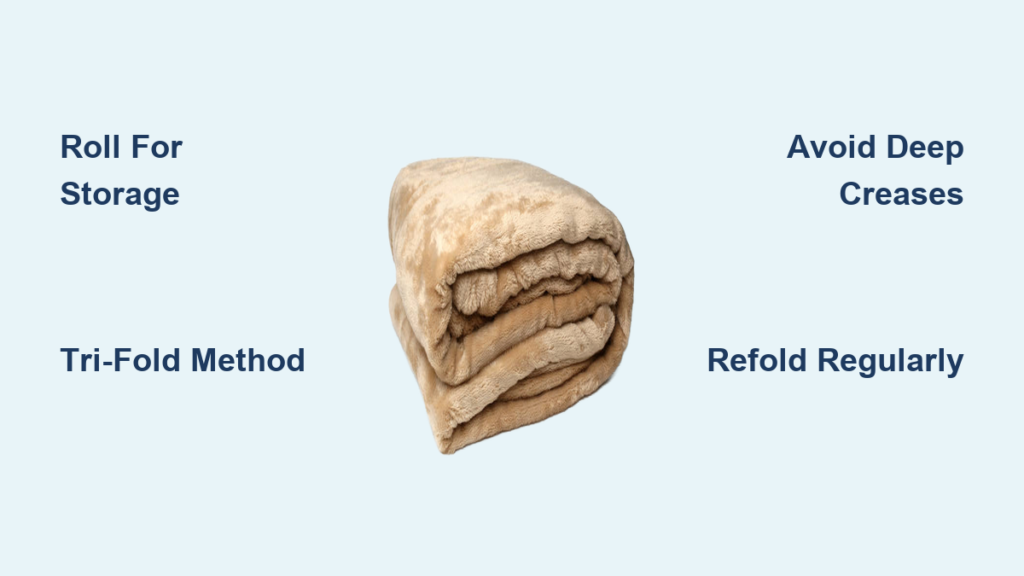
Tri-Fold Method
Ideal for narrow spaces, this method prevents deep creases and creates a tidy, uniform shape.
Steps:
1. Spread the blanket flat on your work surface.
2. Fold one-third of the blanket inward from the left side.
3. Fold the remaining third from the right side over it to complete the rectangle.
Why It Works: This technique avoids repeated center creasing that happens with standard half-folds. It fits perfectly in slim drawers or under-bed boxes and is the standard method used in hospitals and hotels for quick access.
Best For: Under-bed storage, narrow closets, linen cabinets
Thin Rectangular Fold
For high-density storage where space is extremely limited.
Steps:
1. Fold lengthwise in half.
2. Fold widthwise in half.
3. Continue folding in half until a narrow strip forms.
Caution: Limit to three to four folds to prevent instability and bulging.
Best For: Linen closets, emergency kits, dorm rooms
Roll Instead of Fold: Compact and Safe
Rolling protects texture, reduces creasing, and makes transport easier, especially for delicate or frequently used blankets.
The Roll Method
Perfect for travel, camping, or display in baskets.
Steps:
1. Lay blanket flat and smooth thoroughly.
2. Fold in half lengthwise.
3. Start rolling from a short end, keeping your hands close for even tension.
4. Press gently with your hands or knees to secure the roll.
5. Optional: Tie with a fabric band or ribbon.
Pro Technique: Flip one foot of the leading edge backward before rolling. This creates a better grip and produces a tighter, more stable roll.
Why Rolling Wins: Preserves loft in plush and Minky fabrics. Less likely to unravel than folded bundles. Stands upright like a file for easy access.
Rolling with Pocket
A self-locking roll that stays secure without ties.
Steps:
1. Lay blanket flat.
2. From one short edge, lift and tuck one foot of fabric underneath to form a pocket.
3. Fold the blanket into thirds lengthwise.
4. Roll tightly from the end opposite the pocket.
5. Flip the pocket open and slide the rolled end inside.
Result: A sleek, knot-free cylinder that will not come undone during storage or transport.
Best For: Beach trips, nurseries, car storage, camping
Turn Blanket into a Pillow: Dual-Purpose Fold

Combine storage and decor by folding your blanket into a self-contained cushion.
Pillow Method
Transforms a large blanket into a decorative pillow that locks shut without clips or ties.
Steps:
1. Lay blanket flat.
2. Fold into thirds lengthwise.
3. Begin folding or rolling from one short end.
4. Stop about 12 inches before the end.
5. Tuck the final section into the open flap.
Display Ideas: Place in a woven basket, use as a sofa accent, or set at the foot of a guest bed.
Limitation: Less effective with ultra-thick blankets due to tucking difficulty.
Decorative Folds for Stylish Display

When aesthetics matter, these techniques elevate your blanket from functional to fashionable.
Tidy Blanket Method
A polished fold perfect for minimalist interiors.
Steps:
1. Fold lengthwise into thirds.
2. Fold widthwise in half.
3. Drape over a sofa corner.
4. Top with a throw pillow for balance.
Style Match: Modern, Scandinavian, or neutral decor
The Toss Method
Effortless and inviting, ideal for everyday comfort.
Steps:
1. Fold in half lengthwise or widthwise.
2. Gently toss over the back of a couch or chair.
Design Secret: Slight asymmetry adds warmth and personality to your space.
Best Blankets: Sherpa, knit, or textured throws
The Corner Method
Adds elegance by creating a flowing drape.
Steps:
1. Fold in half.
2. Drape over a furniture corner so one side cascades to the floor.
Visual Effect: Lengthens the space and draws the eye downward.
Furniture Match: Armchairs, chaise lounges, sectional corners
The Knot Method
A trendy, bohemian twist for creative styling.
Steps:
1. Fold lengthwise into a long strip.
2. Drape over furniture.
3. Tie a loose knot near the edge.
Style Note: Best with medium-weight blankets. Avoid heavy materials that may sag or distort.
The Cascade Method
Luxury hotel-style draping with layered texture.
Steps:
1. Fold lengthwise into quarters.
2. Drape over furniture.
3. Fan out layers gently for a waterfall effect.
Result: A rich, textured look that catches light beautifully.
Perfect For: Formal living rooms, luxury bedrooms, Instagram-worthy spaces
Accordion Fold
Great for shelves and quick access.
Steps:
1. Lay blanket flat.
2. Fold back and forth in six to eight inch sections like a fan.
3. Compress gently and place on a shelf or foot of the bed.
Advantage: Easy to grab one layer without disturbing the rest.
Best For: Medium-sized throws, floating shelves, mantels
Special Folding by Blanket Type
.JPG)
Different fabrics need different care. Use these guidelines to protect texture and extend blanket lifespan.
Plush or Minky Blankets
Best Methods: Roll, Classic Fold, Pillow Method
Do: Roll to preserve softness and prevent matting.
Don’t: Press or iron as this flattens the pile.
Storage Tip: Store loosely to maintain loft.
Faux Fur Blankets
Best Methods: Minimal fold, Casual Drape
Do: Smooth thoroughly before folding and allow airflow.
Don’t: Crush or tightly fold as this damages fibers.
Pro Tip: Refold every few weeks to prevent permanent creases.
Knit or Cable Throws
Best Methods: Gentle fold along ridges, Rolling
Do: Follow natural texture lines to avoid stretching.
Don’t: Force sharp creases as this distorts patterns.
Wool or Cotton Blankets
Best Methods: Square Fold, Tri-Fold, Accordion
Do: Fold tightly as these fabrics hold shape well.
Bonus: Add cedar sachets to prevent moths.
Fleece Blankets
Best Methods: Classic Fold, Tri-Fold
Do: Fold tightly as fleece resists wrinkles.
Don’t: Store damp as this causes pilling.
Sherpa Blankets
Best Methods: Classic Fold, Roll
Do: Smooth after each fold to prevent pilling.
Don’t: Stack heavy items on top as this flattens the texture.
Maintenance Tip: Air out after storage to refresh fluff.
Electric or Down-Filled Blankets
Best Methods: Shelf Fold, Rolling
Do: Fold loosely to avoid damaging wires or compressing insulation.
Don’t: Fold tightly as this can break internal heating elements.
Safety First: Always unplug and cool completely before folding.
When and Why to Refold
Even a perfectly folded blanket can develop permanent creases if left untouched for months.
Refold Every Two to Four Weeks
Why: Prevents deep fold lines, especially in synthetic or high-pile fabrics.
Best Practice: Rotate storage position or switch folding method periodically to distribute stress points.
Air Out Blankets Monthly
Benefit: Removes mustiness, refreshes fibers, prevents mildew.
How: Unfold and lay flat for one to two hours in a dry, ventilated area.
Follow Care Labels
Some premium blankets require specific folding to maintain warranty. Always wash according to label instructions.
Storage and Display Tips
Maximize both function and beauty with smart storage choices.
Use Breathable Containers
Best Options: Cotton bags, linen bins, woven baskets
Avoid: Plastic bins as these trap moisture and promote mildew.
Store Upright When Possible
Idea: Keep rolled blankets standing like files in a basket.
Advantage: Easy to see and grab without disturbing others.
Label for Organization
Method: Use small tags to mark blankets by size, season, or room.
Pro Organizer Move: Color-code for quick identification.
Display on Open Shelves
Technique: Use the Accordion or Roll Method for visual appeal.
Design Tip: Match blanket color to room palette for a curated look.
Key Takeaways for Folding Large Blankets

Mastering how to fold a large blanket is about more than just tidiness. It preserves fabric quality, saves valuable storage space, and enhances your home’s style. Always start with a flat, clean surface and smooth each layer from center to edge before folding. Choose your method based on your goal: classic folds for stackable storage, rolling for fabric protection, and decorative drapes for visual impact. Match your technique to your blanket type, with plush and Minky fabrics benefiting from rolling while durable fabrics like cotton handle tight folds. Finally, refold and air out stored blankets regularly to prevent permanent creases and keep them fresh.
Frequently Asked Questions About Folding Large Blankets
What is the best way to fold a large blanket for storage?
The Classic Rectangle Fold works best for most storage situations. Lay the blanket flat, smooth wrinkles, fold lengthwise in half, rotate, fold widthwise in half, and repeat if needed for a tighter package. This method creates stackable, neat bundles that fit in closets and under-bed containers.
How do you fold a Minky blanket without flattening it?
Roll Minky and plush blankets instead of folding them. Rolling preserves the soft texture and prevents the pile from becoming matted. Use the Roll Method or Rolling with Pocket technique, and avoid pressing or ironing these delicate fabrics.
How do you fold a blanket to fit in a small space?
Use the Tri-Fold Method for narrow spaces like under-bed storage boxes. This creates a flat, compact rectangle without deep center creases. Fold one-third inward, then fold the opposite third over it, resulting in a tidy package that fits slim drawers and containers.
How often should you refold stored blankets?
Refold stored blankets every two to four weeks to prevent permanent creases. This is especially important for synthetic fabrics and high-pile blankets that develop deep fold lines when left folded too long.
Can you fold an electric blanket?
Yes, but fold loosely to avoid damaging internal heating elements. Use the Rolling method or a loose shelf fold. Always unplug the blanket and ensure it has cooled completely before folding. Avoid tight folds that could break wires or compress insulation.
What is the fastest way to fold a blanket for display?
The Toss Method is the fastest and most casual approach. Simply fold the blanket in half and drape it over a couch or chair back. This creates an inviting, lived-in look with zero effort, perfect for everyday comfort and quick tidying.