You wake up to find blood on your blanket, perhaps from a nosebleed, a small cut, or a menstrual accident. Your first instinct might be to toss it in the wash with hot water, but that could permanently set the stain. The good news is that you can remove blood from a blanket with the right approach, even if the stain is dried or stubborn. The key lies in understanding how blood interacts with fabric and using cold water, proper stain treatments, and fabric-specific care.
Blood contains proteins like hemoglobin that bind tightly to fibers when exposed to heat. Once cooked into the fabric, these stains become nearly impossible to remove. But when treated quickly and correctly with cold water, enzyme cleaners, hydrogen peroxide, or oxygen bleach, most blood stains lift cleanly. This guide walks you through every step, tool, and technique needed based on fabric type, stain age, and household resources.
Act Fast to Prevent Set-In Stains
The longer blood sits on your blanket, the harder it becomes to remove. Fresh stains respond well to basic rinsing, while dried or heat-exposed ones may need multiple treatments.
Why Speed Matters
Blood proteins begin oxidizing and bonding to fabric within minutes. Cold water slows this process, while heat accelerates it. Treating immediately gives you the best chance of complete removal. Even older stains can often be lifted with persistence, but fresh ones disappear fastest.
First Response Checklist
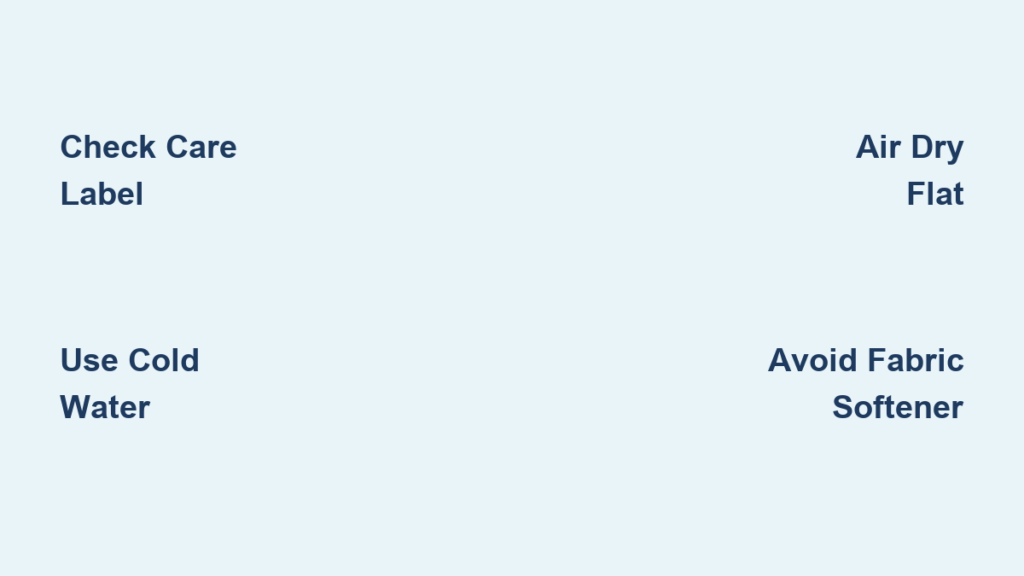
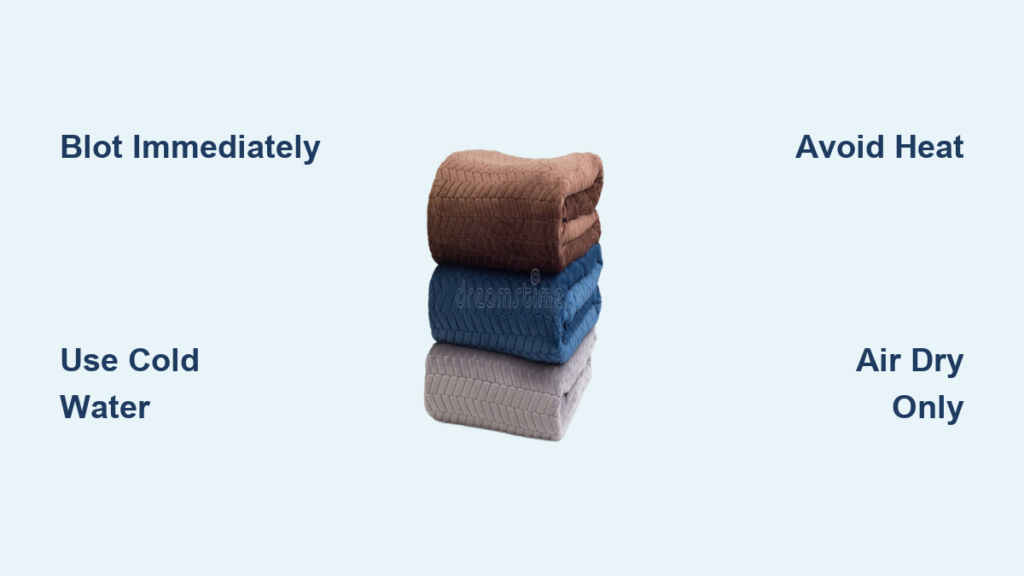
Blot gently with a clean white cloth to absorb excess blood. Do not rub, as this pushes blood deeper into the fibers. Keep the area damp if immediate washing is not possible. Isolate the blanket to avoid transferring the stain to other surfaces.
Blot from the back of the fabric if you can access it, as this forces the stain outward rather than deeper into the fibers.
Rinse With Cold Water Only
Hot water is the number one mistake people make when trying to remove blood. It causes proteins to coagulate and bind permanently to fabric fibers.
Flush From the Back Side
Hold the stained area under cold running water, ideally from the reverse side of the stain. This pushes the blood out rather than driving it further into the fibers.
Run water for several minutes and stop when the runoff runs clear. Never use warm or hot water at any stage before laundering.
Soak Before Washing
Submerge the stained section in a sink or tub filled with cold water. For fresh stains, soak for 30 minutes. For dried or old stains, soak for several hours or overnight. This loosens bonded proteins and prepares the fabric for treatment.
Choose the Right Stain Treatment

Different stains and fabrics require specific solutions. Below are proven methods ranked by effectiveness and safety.
Hydrogen Peroxide for Cotton and Microfiber
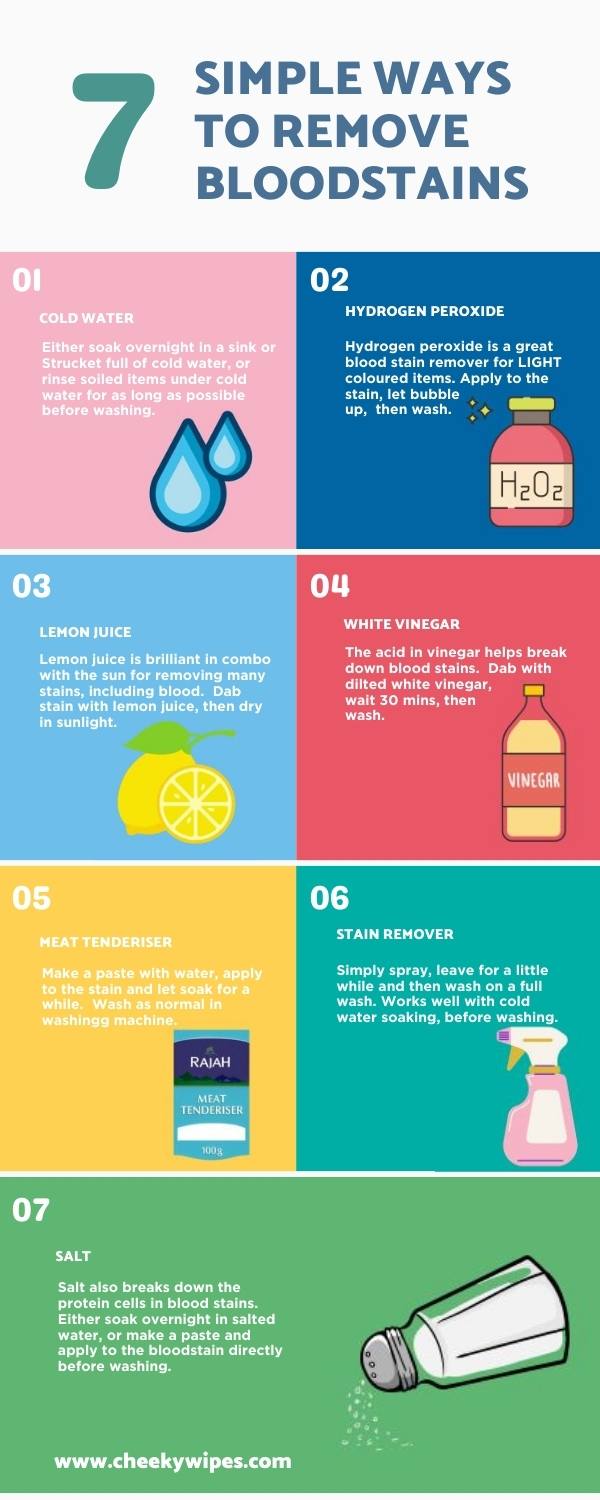
Hydrogen peroxide works best on durable, colorfast fabrics like cotton, bamboo, and microfiber. Use 3% medical-grade or stronger 6% salon-grade peroxide. Pour or spray directly onto the stain and watch for foaming, which means it is breaking down blood proteins.
Apply peroxide and wait 10 to 20 minutes. Reapply if needed, especially for dried stains, and let sit up to 2 hours for tough stains. This method is not safe for silk, wool, or delicate fabrics, as it can weaken or discolor the fibers.
Enzyme-Based Cleaners for Protein Breakdown
Enzymes, especially protease, digest blood proteins, making them ideal for biological stains. Recommended products include OxiClean MaxForce, Heritage Park Luxury Detergent, and Tide Stain Release.
Apply the cleaner directly to the stain and let it sit for 30 minutes to several hours. For heavy stains, use it as a pre-soak in cold water. Enzyme cleaners work well on cotton, bamboo, and microfiber. Use only occasionally on silk or wool.
Baking Soda Paste for Dried Blood
Baking soda makes a gentle abrasive paste perfect for surface-level, crusted stains. Mix baking soda with cold water into a thick paste, spread it over the stain, and let it dry completely. Scrape off the residue with a spoon or fingernail, then rinse and launder as usual.
This method works well for microfiber and cotton but avoid using it on delicate weaves.
White Vinegar Solution for Residue Removal
White vinegar helps dissolve leftover traces and deodorize the fabric. Mix equal parts white vinegar and cold water. Spray or dab the solution onto the stain, let it sit for 30 minutes, and rinse thoroughly with cold water. This is safe for most fabrics except silk.
Lemon Juice and Sunlight for White Fabrics
Lemon juice has a natural bleaching effect that works best on white or light-colored blankets. Squeeze fresh lemon juice onto the stain, dilute with cold water, and lay the blanket in direct sunlight for 1 to 2 hours. Rinse and wash as usual. This can fade dyes, so never use it on colored or patterned fabrics.
Oxygen Bleach for Stubborn Stains
Oxygen bleach is color-safe and highly effective for lifting set-in blood stains. It works well on whites and colorfast fabrics but avoid using it on silk or wool. Dissolve the powder in cold water, soak the blanket for 1 to 6 hours, and wash as usual. It is more effective than chlorine bleach without damaging fabric.
Chlorin Bleach as Last Resort
Only use chlorine bleach for pure white cotton blankets with no trims or blends. Never use it on silk, wool, spandex, or colored fabrics, as it causes yellowing or fiber degradation. Use this only if all other methods fail.
Follow Proper Laundering Steps
After treatment, washing correctly ensures full stain removal.
Wash in Cold Water
Use a cold cycle only. Select a normal or heavy-duty setting depending on fabric weight. Add enzyme-based detergent for extra cleaning power and avoid overloading the machine.
For Delicate Fabrics
Silk, wool, or blends require a gentle cycle and mild, enzyme-free detergent. Hand wash if possible.
Air Dry Until Stain Is Gone
This is non-negotiable: never put a blood-stained blanket in the dryer.
Heat Sets Stains Permanently
Even slight warmth from a dryer can cook remaining proteins into the fabric, making them impossible to remove. Hang or lay the blanket flat to air dry. Inspect after drying, and if any stain remains, repeat the treatment.
Try Advanced Methods for Tough Stains
When basic steps are not enough, these professional techniques can help.
Fabric Cup Method for Targeted Treatment
This method isolates the stain to prevent spreading during soaking or chemical application. Stretch the stained area over the bottom of a plastic cup and secure it with rubber bands if needed. Apply hydrogen peroxide or enzyme solution into the cup and let it sit. The liquid stays contained and works directly on the stain.
Heat-Assisted Peroxide Treatment
This method speeds up chemical breakdown of old or heat-set stains, but only use it after initial cold water and peroxide treatment. Spray hydrogen peroxide on the stain, place a clean cloth over it, and press with a hot iron set to the appropriate fabric setting. Iron until the peroxide evaporates, then repeat as needed. This may leave a white ring, but the color typically lifts.
Ammonia for Final Residue
If a faint stain remains after peroxide treatment, lightly spray household ammonia cleaner on the area. Gently agitate with a spotting bone or spoon, rinse thoroughly with cold water, and launder again.
Know Your Fabric Type

Using the wrong method can ruin your blanket. Always check the care label first.
Cotton Blankets
Cotton responds well to cold water rinse, hydrogen peroxide, enzyme cleaners, baking soda, vinegar, oxygen bleach, and chlorine bleach for white only. Avoid hot water and excessive scrubbing.
Bamboo and Microfiber
These fabrics handle cold water, hydrogen peroxide, enzyme cleaners, oxygen bleach, and vinegar. Avoid chlorine bleach, which damages fibers, and fabric softeners, which trap stains. Use gentle cycle and avoid high heat.
Silk and Delicate Fabrics
Silk requires gentle handling with cold water rinse and mild detergent. Occasional enzyme cleaner is acceptable for tough stains. Never use hydrogen peroxide, bleach, vinegar, lemon juice, or heat. Hand wash or spot clean, and consider professional cleaning for large stains.
Wool and Cashmere
Wool needs cold water blotting and enzyme-free detergent. Professional cleaning is recommended for large stains. Avoid enzymes, peroxide, bleach, and heat, as these fibers are fragile and prone to shrinking or damage.
Blended Fabrics
Test any treatment on an inconspicuous area first. If silk or wool content exceeds 10%, treat the fabric as delicate. Avoid harsh chemicals and prefer cold water and mild detergents.
Key Warnings to Remember
Avoid these common mistakes at all costs.
Never use hot water, as it sets the stain permanently. Never use a dryer until the stain is completely gone. Never use bleach or peroxide on silk or wool, as it damages the fibers. Never scrub aggressively, as this spreads or embeds the stain.
Always test chemicals on a hidden area first. Blot gently rather than rubbing. Use cold water throughout the entire process.
Frequently Asked Questions About Removing Blood from Blankets
Does cold water actually remove blood stains?
Yes, cold water is essential for removing blood stains. Hot water causes blood proteins to coagulate and bond permanently to fabric fibers, making the stain nearly impossible to remove. Always rinse and soak with cold water before applying any treatment.
How long does it take to remove a dried blood stain from a blanket?
Fresh stains usually come out within one treatment cycle. Dried stains that have been set for 1 to 48 hours may take 70 to 85% success with enzyme pre-treatment and hydrogen peroxide. Set-in stains over two weeks old may require multiple treatments over several days and have only 40 to 60% success rates.
Can I use hydrogen peroxide on all types of blankets?
No, hydrogen peroxide is safe only for durable fabrics like cotton, bamboo, and microfiber. It is not safe for silk, wool, cashmere, or other delicate protein-based fibers, as it can weaken or discolor the fibers. Always test on an inconspicuous area first.
What is the most effective method for removing blood from a blanket?
Hydrogen peroxide is the most effective single agent for non-delicate fabrics. For best results, apply it directly to the stain, watch for foaming, and let it sit for 10 minutes to 2 hours before rinsing. Enzyme-based detergents also work well for both pre-treatment and washing.
Can I put my blanket in the dryer after treating a blood stain?
Never put a blood-stained blanket in the dryer until the stain is completely gone. Even low heat can cook remaining blood proteins into the fabric, permanently setting the stain. Air dry entirely and inspect carefully before using any heat.
Key Takeaways for Removing Blood from Blankets
Acting immediately is your greatest ally in blood stain removal. The longer you wait, the more proteins bond to the fabric fibers, making removal progressively harder. Keep cold water flowing throughout the entire process, from initial rinsing through final rinsing after treatments.
Hydrogen peroxide remains the most effective household remedy for cotton, bamboo, and microfiber blankets. Enzyme detergents work well for both pre-treatment and regular washing cycles. For delicate fabrics like silk and wool, stick to cold water and mild, enzyme-free detergents, and consider professional cleaning for stubborn stains.
Always air dry until you confirm the stain is completely gone. Inspect carefully after drying, and repeat treatments as needed, especially for older or dried stains. With patience and the right approach, most blood stains can be removed, and your blanket can look like new again.