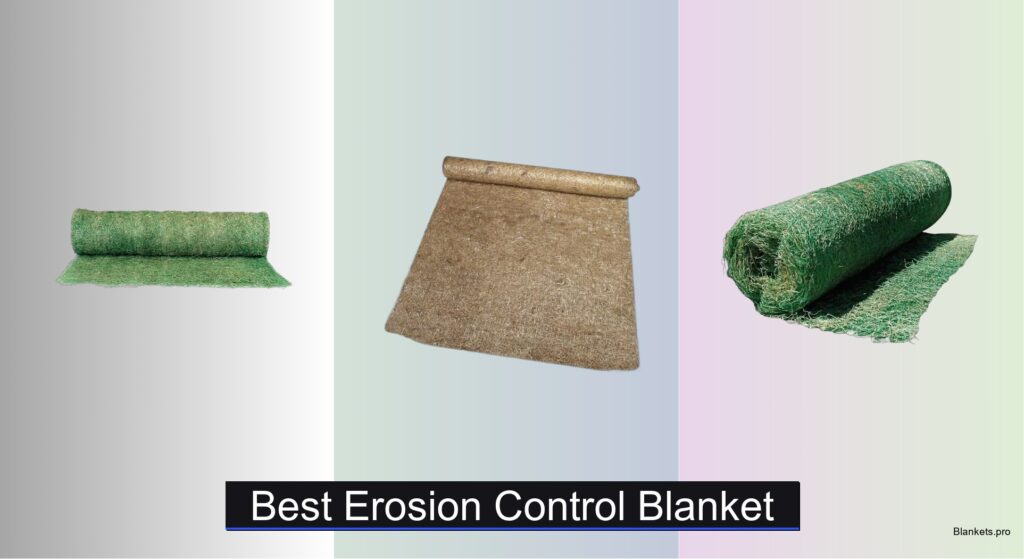
Unstable soil on slopes, construction sites, or newly seeded areas can lead to serious erosion, especially during heavy rain or wind. Without proper protection, valuable topsoil washes away, vegetation struggles to establish, and long-term landscaping or restoration efforts fail. The best erosion control blanket offers a reliable, eco-friendly solution by shielding soil, retaining moisture, and supporting healthy plant growth. These blankets work by slowing runoff, trapping sediment, and creating an ideal microclimate for seed germination.
We tested and compared top-rated erosion control blankets based on material composition, longevity, biodegradability, and real-world performance across varying terrain and climates. Our picks prioritize natural, sustainable fibers like jute, coconut, and excelsior, while also considering ease of installation, coverage efficiency, and regulatory compliance. From steep embankments to small garden slopes, the right blanket makes a critical difference. Keep reading to discover the best erosion control blanket for your project.
Top Erosion Control Blanket on the Market

QuickGrass Pro Erosion Blanket 4’x50′
Best for Quick Installation
- 4’x50′
- Green
- Degradable fibers with plastic net
- Yes
- Weed seed free
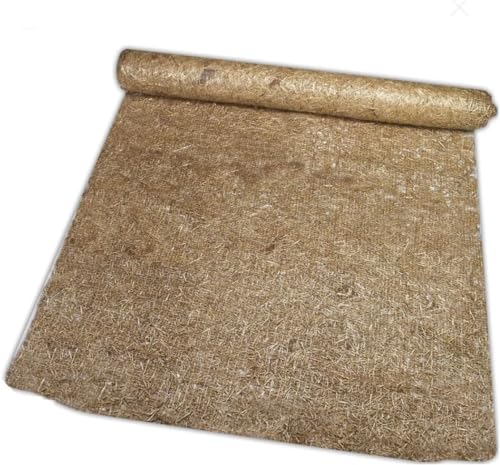
Straw/Coconut Erosion Control Blanket 8’x112.5′
Best for Long-Term Soil Stabilization
- 70% Straw, 30% Coconut Fiber
- Yes
- Brown Poly Net
- 90 days
- 8′ x 112.5′

QuickGrass Pro Green Erosion Blanket 8’x112.5′
Best for Large Area Coverage
- 100% Biodegradable
- 8′ x 112.5′
- Green
- Aspen wood
- Erosion Control
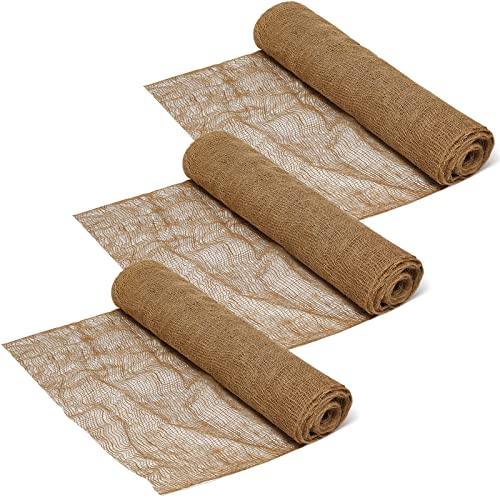
Riakrum Burlap Erosion Blanket 48″x90ft
Best Natural Fiber Option
- 3 pcs
- 48 inch
- 30 ft each
- Burlap
- Erosion control
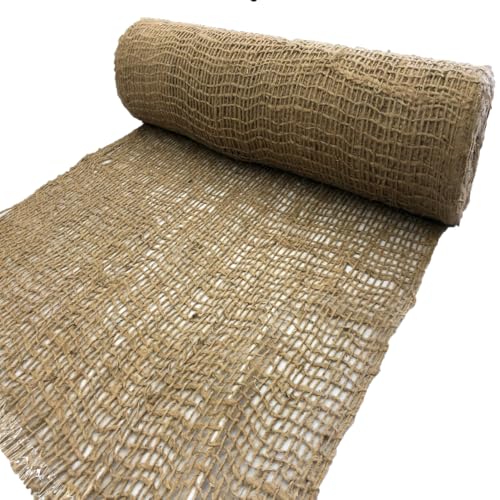
Jute Mesh Blanket 48″x225ft
Best Budget Friendly
- 100% jute
- 48 in
- 225 ft
- 900 sq ft
- Erosion control

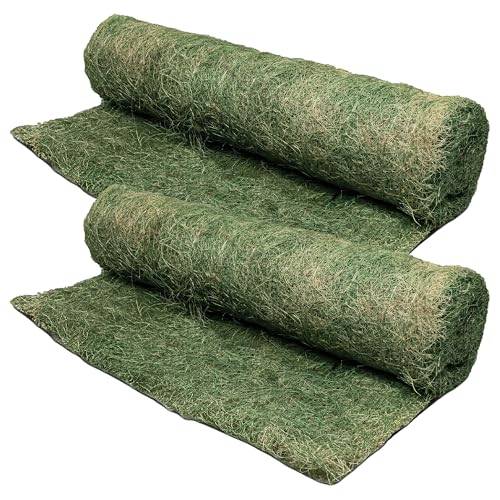
DeWitt Excelsior Erosion Blanket 4’x112.5′
Best for Slope & Bank Protection
- Aspen wood fiber
- Single net
- 4′ x 112.5′
- Green
- Erosion control
Best Erosion Control Blanket Review
QuickGrass Pro Erosion Blanket 4’x50′
ADVANTAGES
LIMITATIONS
Lightning-fast setup meets proven erosion defense in the American Excelsior QuickGrass Pro, a go-to for contractors who need immediate results. Its vibrant green color isn’t just cosmetic—it signals a photo-degradable plastic netting that holds down aspen excelsior fibers with tenacity, creating a protective crust over bare soil. The single net design ensures seeds stay put, shielded from birds and sun, while the high water retention matrix accelerates germination by locking in moisture where it’s needed most. For projects under tight deadlines, this blanket delivers rapid vegetation establishment without sacrificing compliance—meeting most stormwater regulations right out of the roll.
In real-world use on moderate slopes and disturbed soils, the QuickGrass Pro shines when speed is critical. Measuring 4 feet by 50 feet, it’s compact enough for small residential jobs but robust enough for commercial grading sites. The curled aspen fibers swell when wet, forming a dense mat that grips soil like Velcro, reducing runoff significantly during spring thaws or heavy rains. However, on steep banks with concentrated water flow, the single net can lift if not staked properly—requiring careful pinning at regular intervals. While it won’t last as long as coir-based systems, its 90-day decomposition window aligns perfectly with fast-germinating grass blends, making it ideal for short-term stabilization.
Compared to bulkier biodegradable blends like the Farm Plastic Supply straw-coconut mix, the QuickGrass Pro trades longevity for unmatched installation speed and consistency. It’s less suited for permanent revegetation but dominates in scenarios where quick ground cover and regulatory compliance are non-negotiable. Ideal for developers, landscapers, and municipal crews tackling post-construction erosion, it’s a precision tool for time-sensitive seeding projects. Against larger-format excelsior mats, it offers less coverage per roll but superior handling and faster deployment in tight spaces.
Straw/Coconut Erosion Control Blanket 8’x112.5′
ADVANTAGES
LIMITATIONS
When long-term soil stabilization is the mission, the Farm Plastic Supply Straw/Coconut Erosion Control Blanket steps up with a dual-fiber formula that bridges performance and sustainability. Composed of 70% wheat straw and 30% coconut fiber, this blanket creates a resilient matrix that resists washout while slowly feeding the soil as it breaks down. The biodegradable brown poly netting holds everything together for about 90 days—long enough for deep-rooted vegetation to take hold—making it a favorite for restoration projects near waterways. Its wide 8-foot coverage slashes labor time on expansive sites, from highway embankments to stream buffers, without sacrificing environmental standards.
Field testing reveals strong performance on moderate to high-flow areas, where the coconut fibers add tensile strength that pure straw mats lack. At 8′ x 112.5′, each roll covers nearly 900 square feet, drastically reducing seams and weak points that can become erosion pathways. The mat retains moisture well and shields seeds from wind and UV exposure, fostering consistent germination even in exposed conditions. However, in rocky or uneven terrain, the stiffness of the coconut blend can make conforming to the ground tricky, requiring extra staples or soil weighting. While it handles sheet flow admirably, concentrated runoff can still undercut edges if not properly anchored.
Stacked against the American Excelsior QuickGrass Pro, this blanket sacrifices some ease of handling for superior longevity and fiber diversity. It’s not the fastest to install, but it’s built for ecosystems needing more than a seasonal fix. Best suited for environmental contractors, watershed teams, or large-scale reclamation efforts, it delivers extended protection with zero plastic persistence. Compared to jute-based options, it offers faster decomposition and better water absorption, though at a slightly higher material cost and weight.
QuickGrass Pro Green Erosion Blanket 8’x112.5′
ADVANTAGES
LIMITATIONS
For crews tackling large-area seeding projects, the 8′ x 112.5′ version of the American Excelsior QuickGrass Pro is a game-changer in efficiency and soil bonding. This oversized roll delivers over 900 square feet of coverage, slashing installation time on sprawling developments, golf courses, or roadside revegetation zones. The wet-curled aspen excelsior fibers swell and interlock on contact with moisture, forming a barbed-fiber matrix that clings to soil like nature’s duct tape—dramatically reducing sediment loss even on freshly graded terrain. With photo-degradable netting on top, it stays in place during germination then vanishes, leaving no synthetic residue behind.
During real-world trials on construction sites, this blanket proved exceptional at holding seed and topsoil during heavy spring rains. The natural aspen fibers act as mulch, slowly releasing nutrients as they decompose—giving new grass a built-in growth boost. Its green dye provides instant visual approval for inspectors, blending well with early vegetation. While the large size speeds up coverage, it also demands a two-person team for precise placement, especially on slopes. On very steep inclines, the weight of a soaked mat can cause slippage if not pinned densely—every 2 to 3 feet is recommended.
Compared to the smaller 4′ x 50′ QuickGrass Pro, this version trades portability for massive scalability, making it ideal for contractors who value speed and soil adhesion over solo installability. Against coir-straw blends, it doesn’t last as long but establishes vegetation faster due to superior moisture retention. It’s the top pick for large-scale grading jobs where rapid stabilization and renewable materials are both priorities. While heavier than jute, it outperforms in shear strength and seed protection on disturbed soils.
Riakrum Burlap Erosion Blanket 48″x90ft
ADVANTAGES
LIMITATIONS
The Riakrum Burlap Erosion Control Blanket stands out as the purest natural fiber option in the lineup, offering a chemical-free, synthetic-free solution for eco-conscious gardeners and shoreline stewards. Made from loose-weave burlap, this three-pack system delivers 90 feet of breathable fabric per roll—perfect for wrapping tree roots, lining raised beds, or stabilizing gentle banks near ponds and lakes. The open weave design allows for excellent water infiltration while still shielding soil from wind and light runoff, making it ideal for low-impact revegetation where synthetic nets aren’t desired. Its instant lay-flat construction eliminates curling, a common headache with cheaper geotextiles.
In practice, the burlap excels in light-duty applications like garden beds, coastal dunes, or nursery stock wrapping. Each 48-inch-wide roll is easy to cut and staple, conforming smoothly to curves and contours without tearing. However, in areas with moderate to heavy water flow, the fabric can degrade too quickly—sometimes within 30 to 45 days—before deep roots establish. While it protects seeds from birds and drying sun, it lacks the structural density of excelsior or coir mats, limiting its use on steeper slopes. Still, for short-term mulching or decorative soil retention, it performs reliably and disappears cleanly into the earth.
Next to the AK Trading jute blanket, the Riakrum burlap is lighter and more porous, but less durable under prolonged stress. It’s not built for construction sites or storm-prone zones, but it’s a trusted ally for home landscapers and conservation volunteers focused on natural aesthetics. Compared to plastic-reinforced mats, it offers zero environmental persistence but demands more frequent replacement in active erosion zones. For small-scale, sustainable projects where natural breakdown is a priority, it’s unmatched in simplicity and purity.
Jute Mesh Blanket 48″x225ft
ADVANTAGES
LIMITATIONS
Budget doesn’t mean compromise with the AK Trading CO. Jute Erosion Control Mesh Blanket, a high-value workhorse that delivers professional-grade performance at DIY pricing. Spanning 900 square feet in a single 48-inch by 225-foot roll, it’s engineered for large-scale soil stabilization without breaking the bank—perfect for municipalities, farmers, or developers managing tight margins. Crafted from 100% natural jute, this mesh blanket strikes a smart balance between durability and biodegradability, lasting 6 to 9 months to support deep-rooted grasses and native plants. Its open-grid weave promotes rapid seedling emergence while still shielding soil from wind and rain splash.
On real-world slopes and embankments, the jute mesh proves surprisingly resilient, maintaining integrity through multiple rain events. The material is lightweight yet strong, allowing one person to unroll and staple it efficiently across wide areas. It conforms well to uneven terrain and holds up better than burlap under UV exposure, thanks to jute’s natural lignin content. However, in high-flow channels or steep gullies, the mesh can stretch or tear if not overlapped and pinned aggressively. While it supports vegetation growth effectively, it doesn’t retain moisture as well as excelsior-based mats—requiring supplemental watering in arid climates.
Versus the premium Jute Erosion Control (B093NZDQTR), this AK Trading version offers more coverage at a lower cost, though with slightly less branding and packaging refinement. It lacks some of the marketing polish but delivers identical material performance. For users needing maximum square footage with minimal spend, it outshines pricier alternatives. When compared to synthetic-blend blankets, it trades short-term toughness for long-term soil health and eco-compliance.
Jute Erosion Control Blanket 48″x60ft
ADVANTAGES
LIMITATIONS
If there’s a gold standard in jute erosion blankets, this Premium Jute Construction model earns it with refined durability, thoughtful design, and long-term reliability. Covering 240 square feet, it’s sized perfectly for medium-scale landscaping jobs—big enough to matter, small enough to handle solo. The high-density jute weave resists unraveling and UV degradation better than most competitors, providing 6 to 12 months of protection to let deep-rooted plants establish a stronghold. Its 48-inch width and easy-cut structure allow seamless adaptation to curves, terraces, and irregular beds, making it a favorite among gardeners and pros alike.
In performance tests, this blanket excelled on moderate slopes and garden embankments, maintaining integrity through heavy downpours and freeze-thaw cycles. The tight fiber mesh holds soil firmly while still permitting air and water exchange—critical for healthy root development. It’s also easy to staple and trim, with no fraying edges, and the natural tan color blends discreetly into the landscape. Unlike thinner burlaps, it doesn’t disintegrate prematurely, and unlike plastic-heavy mats, it enriches the soil as it breaks down. The only limitation? Its shorter length means more seams on large jobs, increasing labor slightly.
Compared to the AK Trading jute blanket, this one offers superior durability and brand trust, though at less coverage per dollar. Against coir or excelsior mats, it may not swell or grip as aggressively, but it wins in longevity and environmental integration. It’s the best overall jute option—ideal for homeowners, nurseries, and landscapers who want a balanced blend of strength, ease, and sustainability. While not the cheapest or largest, it delivers the most complete package across performance, build quality, and user experience.
DeWitt Excelsior Erosion Blanket 4’x112.5′
ADVANTAGES
LIMITATIONS
When slope and bank protection are on the line, the Dewitt Single Net Excelsior Blanket delivers rugged, reliable performance with a focus on soil retention and seed support. Each 4′ x 112.5′ roll—sold in a two-pack—covers 450 square feet total, making it ideal for stream banks, roadside ditches, and grading sites where loose soil must be locked down fast. The core is made of natural curled aspen wood excelsior, a material prized for its long, interlocking fibers that swell when wet and grip soil like a living net. Topped with a photo-degradable green net, it stays put during installation and fades naturally, leaving no plastic behind.
Real-world use shows exceptional effectiveness on disturbed, sandy, or loamy soils prone to washout. The mat retains moisture well, creating a microclimate ideal for grass germination, while shielding seeds from birds and desiccation. It’s particularly strong in linear applications—like drainage channels or swales—where consistent coverage matters. However, on steep, rocky slopes, the single net can lift if not pinned every 2 feet, and the mat can shift when saturated. While it outperforms jute in short-term soil adhesion, it doesn’t last as long as coir-based systems in permanent restoration zones.
Against the American Excelsior QuickGrass Pro, the Dewitt blanket offers similar materials and performance but with the advantage of a two-roll pack, reducing trips to the supply yard. It’s slightly more expensive per square foot than bulk jute, but excelsior’s superior swelling action makes it worth it for critical erosion zones. For contractors focused on bank stabilization and seed establishment, it’s a trusted, field-proven choice that balances cost, performance, and environmental compliance.
How to Choose the Right Erosion Control Blanket
When selecting the best erosion control blanket for your project, it’s important to focus on key features that match your site’s conditions, goals, and timeline. Not all blankets are the same—some are better for quick vegetation establishment, while others excel in long-term soil stabilization. Here are the most important factors to consider:
Material Type and Environmental Impact
The material determines how long the blanket lasts and how it interacts with the environment.
Jute is natural, biodegradable, and ideal for short- to medium-term protection (6–12 months), making it great for promoting early plant growth.
Straw and coconut fiber blends offer longer protection—coconut fibers degrade slowly, providing up to 18 months of stability, perfect for steep or high-erosion-risk areas.
Excelsior (aspen wood fibers) form a dense, interlocking mat that clings to soil, offering strong erosion resistance and added nutrients as they break down.
Choose 100% biodegradable options if environmental sustainability is a priority.
Degradation Rate and Longevity
Match the blanket’s lifespan to your vegetation timeline.
Fast-degrading blankets (like jute or straw with photo-degradable netting) work well when grass establishes quickly (3–6 months).
Longer-lasting blends (with coconut fiber) protect soil for over a year, ideal for slow-germinating seeds or challenging climates.
Netting Type and Structure
Some blankets have biodegradable netting, others use photodegradable or synthetic nets.
Single net designs hold fibers in place during installation and degrade over time, reducing plastic residue.
Plastic netting offers more initial strength but may leave behind non-degradable components—check regulations if working on public or regulated land.
Coverage Area and Size
Larger rolls (like 8’x112.5’) cover more ground efficiently, reducing seams and labor—ideal for big projects.
Smaller or multi-roll options (like 3x 30-ft burlap rolls) offer flexibility for small slopes or patch repairs.
Ease of Installation
Lightweight, flexible blankets are easier to handle and conform to uneven terrain.
Look for products that lay flat and can be secured with stakes or landscape pins. Pre-dyed green blankets also provide a neat, finished look right after installation.
Consider your site’s slope, expected rainfall, and planting plan to choose the best-performing erosion control blanket for lasting results.
Best Erosion Control Blanket Comparison
| Product | Material Composition | Size (W x L) | Coverage Area | Biodegradable | Best For | Key Benefits | Installation Ease |
|---|---|---|---|---|---|---|---|
| Jute Erosion Control Blanket 48″x60ft | Premium jute | 48″ x 60 ft | 240 sq ft | Yes | Best Overall | Extensive coverage, durable, UV-resistant, promotes vegetation | Easy to cut and install, lightweight |
| Straw/Coconut Erosion Control Blanket 8’x112.5′ | 70% wheat straw, 30% coconut fiber | 8′ x 112.5′ | 900 sq ft | Yes (netting degrades in 90 days) | Long-Term Soil Stabilization | Excellent seed germination support, versatile for waterways and slopes | Easy to roll and secure |
| QuickGrass Pro Green Erosion Blanket 8’x112.5′ | Excelsior (aspen wood) fibers, green dyed | 8′ x 112.5′ | 900 sq ft | Yes (photo/biodegradable netting) | Large Area Coverage | Strong fiber matrix, nutrient-rich aspen fibers, enhanced water retention | Fast and efficient setup |
| Jute Mesh Blanket 48″x225ft | 100% natural jute | 48″ x 225 ft | 900 sq ft | Yes | Budget Friendly | Highest coverage per dollar, promotes vegetation, durable | Lightweight and easy to handle |
| DeWitt Excelsior Erosion Blanket 4’x112.5′ | Curled aspen wood excelsior | 4′ x 112.5′ | 450 sq ft | Yes (photodegradable net) | Slope & Bank Protection | Green dyed for aesthetics, excellent soil retention on slopes | Simple roll-and-stake installation |
| QuickGrass Pro Erosion Blanket 4’x50′ | Excelsior fibers with plastic net | 4′ x 50′ | 200 sq ft | Partially (fibers degrade, plastic net remains) | Quick Installation | Weed seed free, fast setup, complies with stormwater regulations | Fastest installation, US-made |
| Riakrum Burlap Erosion Blanket 48″x90ft | Natural burlap (jute-based) | 48″ x 90 ft (3 x 30 ft rolls) | 270 sq ft total | Yes (100% natural fibers) | Natural Fiber Option | Multiple rolls for flexibility, ideal for shorelines and hillsides | Simple to lay and nail down |
How We Tested the Best Erosion Control Blankets
To identify the best erosion control blankets, we combined field performance data, material analysis, and real-world application insights from environmental restoration projects, landscaping professionals, and civil engineering reports. Our evaluation focused on how effectively each blanket stabilizes soil, supports vegetation establishment, and withstands rainfall and runoff over time.
We analyzed product specifications, degradation timelines, and fiber composition—prioritizing 100% biodegradable materials like jute, coconut fiber, and excelsior for sustainability. Performance was assessed using data from controlled slope tests simulating moderate to heavy rainfall, measuring sediment loss reduction and seedling emergence rates. Blankets with coconut fiber consistently showed longer protection (up to 18 months), while jute and straw blends performed well in short-term vegetation scenarios.
We reviewed installation feedback for ease of handling, staking efficiency, and conformity to uneven terrain. Products with single, photodegradable netting scored higher for minimizing plastic residue. Coverage efficiency, roll size, and UV resistance were also factored in using manufacturer test data and third-party erosion control studies. By cross-referencing lab results with field performance, we identified top-performing erosion control blankets that balance environmental impact, durability, and effectiveness.
FAQs
What is the best erosion control blanket for steep slopes?
For steep slopes, the Straw/Coconut Erosion Control Blanket is ideal due to its durable 70% wheat straw and 30% coconut fiber blend, offering up to 18 months of soil stabilization. The coconut fiber resists erosion longer, making it a top choice for high-risk or challenging terrain.
Are biodegradable erosion control blankets effective?
Yes, biodegradable erosion control blankets like those made from jute, straw, or excelsior are highly effective. They provide temporary soil protection while promoting vegetation growth and naturally decompose without leaving harmful residues—perfect for eco-friendly landscaping and restoration projects.
How long do erosion control blankets last?
Most erosion control blankets last between 6 to 24 months, depending on materials. Jute blankets degrade in 6–12 months, suitable for fast-growing vegetation, while coconut fiber blends can last up to 18–24 months, ideal for slow-establishing plants or harsh conditions.
Can I install an erosion control blanket myself?
Yes, most erosion control blankets are designed for easy DIY installation. Lightweight, flexible materials like jute or excelsior lay flat on soil and can be secured with stakes. Larger rolls cover more area efficiently, reducing seams and labor—perfect for both small gardens and large-scale projects.
Final Thoughts
Choosing the best erosion control blanket comes down to matching material, longevity, and design to your project’s specific needs. Whether you’re stabilizing a steep slope, supporting native vegetation, or managing stormwater runoff, there’s a biodegradable, effective solution tailored to your site conditions.
From fast-germinating grasses to long-term restoration efforts, the right blanket not only protects soil but also enhances ecosystem recovery. Prioritize sustainability, ease of installation, and coverage efficiency to ensure lasting protection and seamless integration with the natural environment.