If you struggle with anxiety, restless nights, or sensory overload, you have likely heard about weighted blankets. These therapeutic tools use deep pressure stimulation (DPS) to calm your nervous system, much like the gentle embrace of a hug. When you lie under a properly chosen weighted blanket, your body responds by releasing oxytocin and serotonin, which help reduce stress hormones and promote deeper, more restful sleep.
But choosing the wrong weighted blanket can leave you feeling overheated, restricted, or simply unsatisfied. The wrong weight, size, or material can undermine the very benefits you are seeking. This guide walks you through exactly how to choose a weighted blanket that fits your body, your climate, and your lifestyle, whether you are shopping for yourself, your child, or your partner.
Pick the Right Weight for Your Body
Choosing the correct weight is the most important step in selecting a weighted blanket. Too light, and you will not feel the calming pressure. Too heavy, and it could restrict movement or breathing during sleep.
Use the 10% Body Weight Rule
Occupational therapists and leading manufacturers recommend choosing a blanket that weighs approximately 10% of your body weight. This ratio delivers therapeutic deep pressure without posing safety risks.
• 130 lbs → 13 lb blanket
• 150 lbs → 15 lb blanket
• 200 lbs → 20 lb blanket
This formula ensures even pressure distribution across your torso and limbs, mimicking a gentle, grounding hug. Most adults find comfort in the 12 to 20 lb range, though individual preference plays a role.
Adjust for Couples Sharing a Bed
When two people share one blanket, the 10% rule does not apply. Instead, aim for 7.5% of your combined body weight.
• Combined 150 lbs → 12 lb blanket
• Combined 200 lbs → 15 lb blanket
• Combined 250 lbs → 20 lb blanket
If partners have very different weights or pressure preferences, consider two individual blankets. This ensures each person receives optimal sensory input without compromise.
Choose Weight for Children Safely
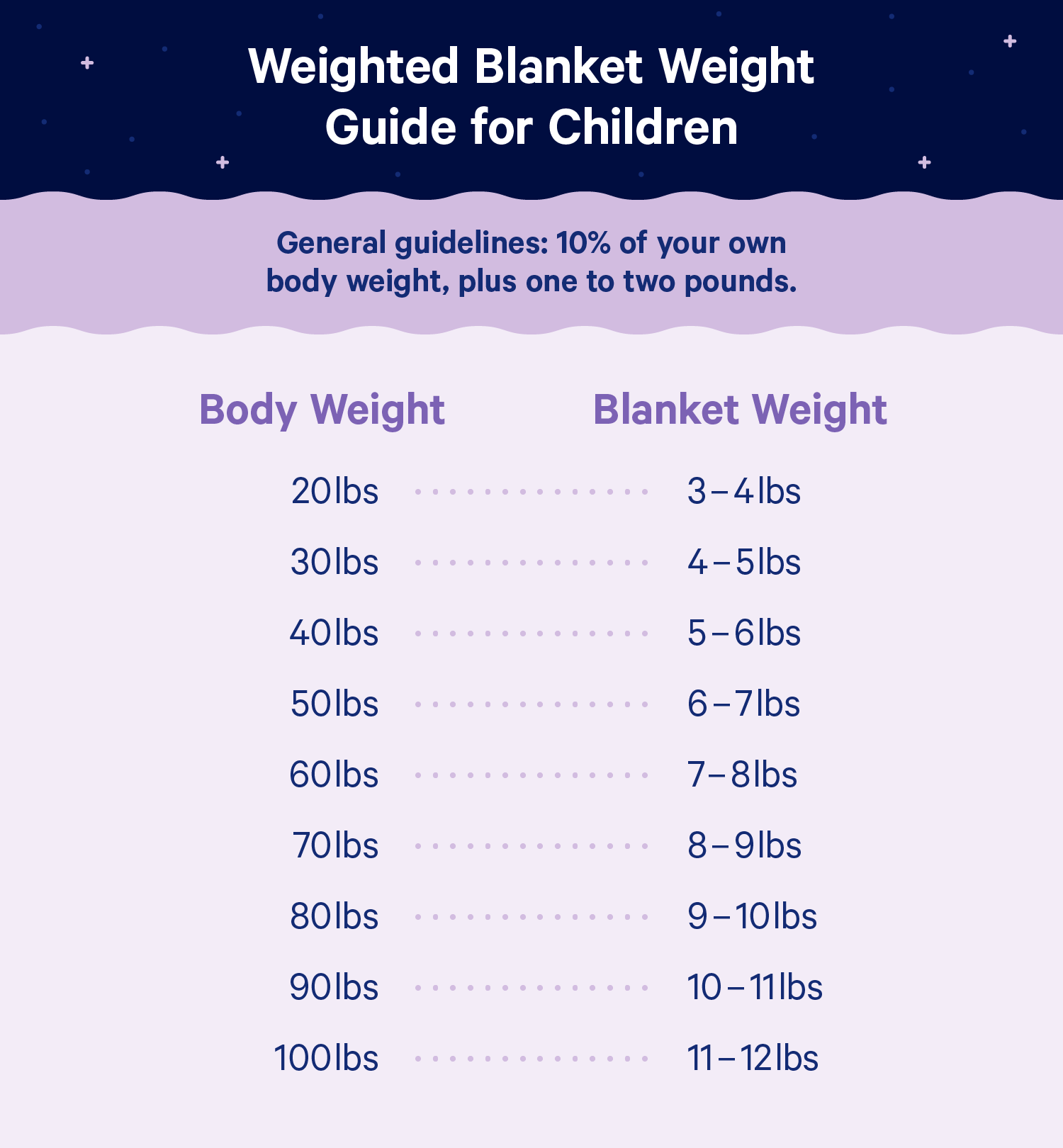
Weighted blankets can help children with anxiety, ADHD, or autism, but safety must come first.
• Never use for children under 2 years old
• Minimum weight: 20 lbs
• Recommended: 10% of body weight plus 1 to 2 lbs (for example, a 60 lb child would use a 7 to 8 lb blanket)
• Maximum safe weight: 12 to 25 lbs, depending on age and strength
Always ensure the child can easily remove the blanket on their own. Consult a pediatrician or occupational therapist before use, especially for children with medical or developmental conditions.
Match Blanket Size to Your Bed or Body
A properly sized blanket ensures full coverage without excess fabric dragging on the floor or causing the blanket to shift during the night.
Standard Size Guidelines
| Blanket Size (inches) | Best For |
|---|---|
| 48×72 | Twin bed; solo sleeper; feels heavier due to concentrated weight |
| 60×80 | Full or Queen bed; most adult solo users |
| 80×87 | King bed; couples; covers approximately 70% of bed surface |
| 88×104 | Extra-large king; prevents overhang |
The blanket should be slightly smaller than your mattress to lie flat and stay in place. Unlike comforters, weighted blankets are not meant to drape over the sides.
Consider Height and Coverage Needs
Choose a length equal to or longer than your height for full-body coverage. Tall users over 6’2″ may need custom or oversized blankets. Some prefer a body-only fit rather than full-bed coverage.
Knitted Blankets Offer Better Drape
Knitted weighted blankets made from thick, dense yarn instead of beads naturally drape better on larger beds. Their flexibility makes them ideal for king-sized mattresses where traditional quilted blankets might bunch or shift.
Compare Filling Types: Beads vs. Knit
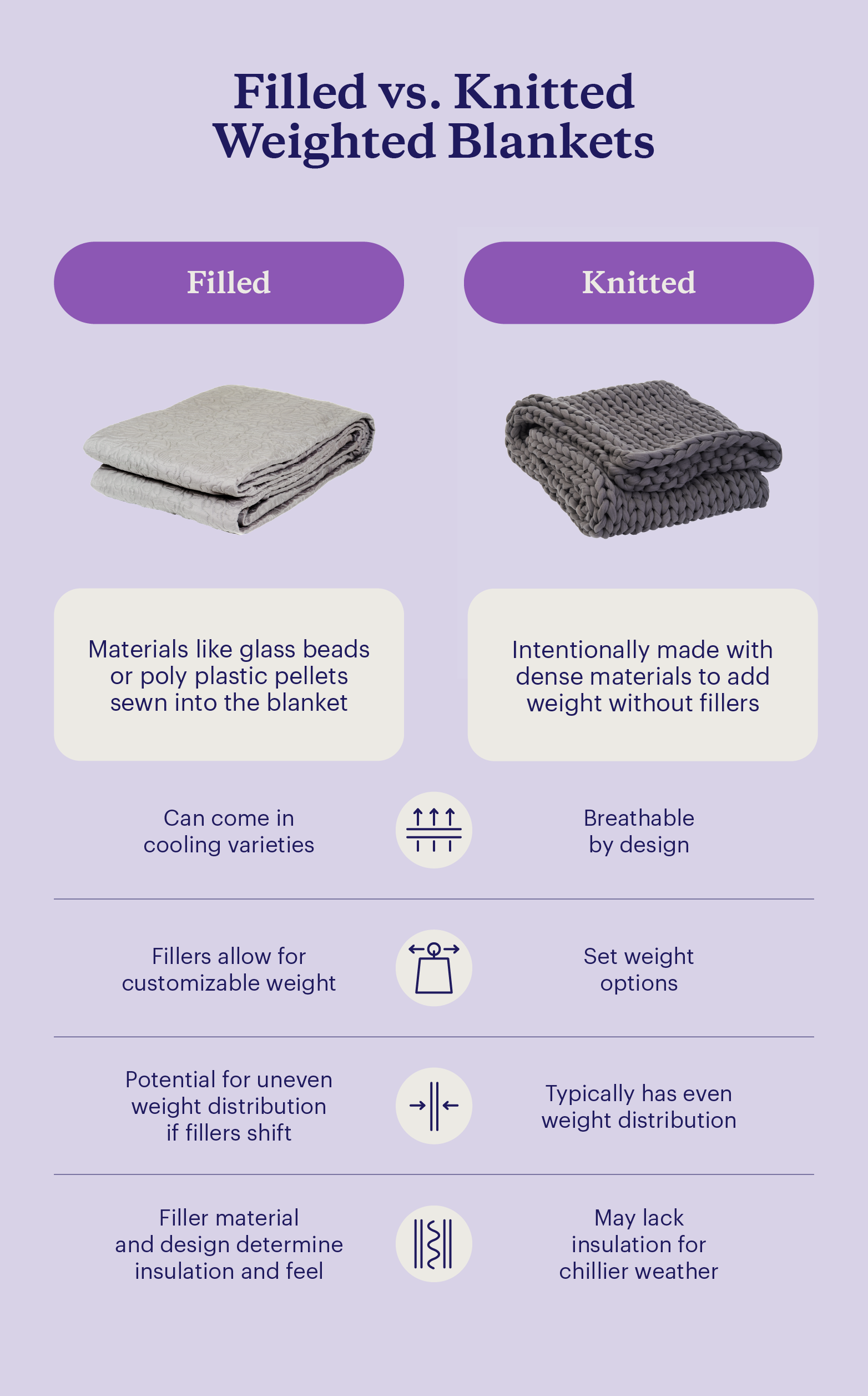
The filling determines how the weight feels, how evenly it distributes, and how easy the blanket is to clean.
Micro Glass Beads: Premium and Even Pressure
• Hypoallergenic, non-toxic, and quiet
• Smaller than plastic pellets, so they distribute weight more evenly
• Used in high-end brands like Casper and YNM
• Modern designs use 2×2 inch compartments to prevent shifting
Micro glass beads are best for adults who want a smooth, luxurious feel and consistent pressure.
Plastic Poly Pellets: Affordable and Safe
• Made from polypropylene, non-toxic and machine washable
• Slightly crinkly when moved
• Common in children’s blankets due to durability and ease of cleaning
Plastic poly pellets are best for budget-conscious buyers or families needing frequent washes.
Steel Shot Beads: Durable but Less Common
• Denser than glass, so fewer beads are needed
• Long-lasting and cost-effective for manufacturers
• Risk of rust if exposed to moisture unless coated
• Can feel coarser under fabric
Steel shot beads are rarely used in premium models due to texture and potential durability concerns.
Knitted Construction: No Beads, All Comfort
• Weight comes from thick, dense yarn
• Breathable and soft, ideal for hot sleepers
• Even pressure distribution with a plush, decorative look
• Feels lighter than bead-filled blankets at the same weight
Knitted blankets are popular in chunky yarn, tie-dye, velvet, and chenille designs. They double as stylish throws during the day.
Choose Fabric for Your Climate

The outer material affects temperature regulation, comfort, and sensory experience.
For Hot Sleepers: Stay Cool
• Bamboo: Breathable, moisture-wicking, naturally antibacterial
• Cooling Nylon or PE: Engineered for heat dissipation with smooth texture
• Cotton: Lightweight, hypoallergenic, promotes airflow
For Winter: Add Warmth
• Chenille: Soft, fuzzy, insulating
• Velvet: Plush and heat-retaining
• Faux Fur or Sherpa: Ultra-cozy, mimics animal fur (cruelty-free)
• Flannel: Warm and comfortable in cold rooms
Year-Round Options
• Cotton-poly blends: Durable, low maintenance, moderate insulation
• Modal: Softer than cotton, eco-friendly, great for sensitive skin
• Removable covers: Swap covers seasonally for adaptability
Avoid thick, non-breathable fabrics if you tend to overheat. A hot, heavy blanket defeats the purpose of restful sleep.
Prioritize Safety for All Users
Weighted blankets are safe when used correctly, but certain conditions require caution.
Who Should Avoid Weighted Blankets
• Infants and toddlers under 2 years old
• Children under 20 lbs
• People with sleep apnea or asthma
• People with heart or circulatory issues
• People with epilepsy or neurological disorders
• People with claustrophobia
Always consult a doctor if you have a medical condition or are using the blanket for therapeutic purposes.
Safety Rules Everyone Must Follow
• User must be able to remove the blanket independently
• Never cover the face or restrict movement
• Do not use as a restraint
• Stop use immediately if the user shows distress, sweating, or breathing difficulty
Parents should supervise children during initial use and teach them how to push the blanket off.
Ensure Easy Cleaning and Maintenance
A dirty weighted blanket becomes a hygiene hazard, especially for kids or allergy sufferers.
Machine Washable Is Essential
Look for fully machine-washable models or those with removable, washable covers. Avoid blankets that require dry cleaning or spot-cleaning only.
Washing Tips
• Use cold water and gentle cycle
• Air dry when possible, or tumble dry on low heat for short periods
• For blankets over 12 lbs, use a commercial washer and dryer (such as laundromat machines) to protect home appliances
Never dry clean or microwave a weighted blanket, as this can damage fillings or fabric.
Understand the Science Behind the Calm
Weighted blankets work because of deep pressure touch stimulation, a therapeutic technique that calms the nervous system.
How It Works
• Pressure activates mechanoreceptors in the skin
• Signals travel to the brain, reducing sympathetic nervous system activity (fight-or-flight)
• Increases serotonin and oxytocin, which convert to melatonin, the sleep hormone
• Decreases cortisol, the stress hormone
The result is faster sleep onset, fewer nighttime awakenings, and reduced anxiety.
Proven Benefits
• Improved sleep quality in people with insomnia
• Reduced anxiety and panic symptoms
• Support for ADHD, autism, PTSD, and sensory processing disorders
• Calming effect during sensory overload or emotional distress
For medical use, consult a therapist or doctor to integrate the blanket into a broader treatment plan.
Make Smart Design and Value Choices
Your blanket should be functional, durable, and fit your lifestyle.
Look for Purpose-Driven Features
• No tucking required: Blankets lie flat over bedding
• Not oversized: Should not hang over bed edges
• Tactile-friendly textures: Important for sensory-sensitive users
• Duvet covers: Let you change style or fabric without buying a new blanket
Portability Matters
• Lap pads (5 to 8 lbs): Great for work, travel, or car rides
• Foldable designs: Use as shoulder wraps or seat weights
• Travel-sized blankets: Ideal for flights or hotel stays
Compare Value, Not Just Price
Price range spans from $100 to $300 or more. Higher cost often reflects premium materials, advanced stitching, safety certifications, and warranties.
Follow the Final Decision Checklist
Before buying, run through this quick checklist.
• User Age: Adult, child, or couple?
• Body Weight: 10% rule (or 7.5% for couples)?
• Bed Size: Twin, Full, Queen, or King?
• Climate: Hot, cold, or variable?
• Fabric: Cooling (bamboo) or cozy (chenille)?
• Filling: Glass beads (even pressure) or knit (breathable)?
• Washability: Machine-washable or removable cover?
• Safety: Can user remove it independently?
• Return Policy: Can you exchange if it is too heavy?
Frequently Asked Questions About Choosing a Weighted Blanket
What happens if my weighted blanket is too heavy?
A blanket that is too heavy can restrict movement, cause discomfort, and potentially interfere with breathing during sleep. If the blanket feels constraining or causes distress, it is too heavy. Most manufacturers offer return policies that allow you to exchange for a lighter option.
Can I use a weighted blanket if I sleep with a partner?
Yes, but you have two options. You can use a single larger blanket sized for both partners (aiming for 7.5% of your combined weight), or each partner can use their own individual blanket to get the optimal weight for their body.
How do I know if a weighted blanket is right for my child?
Weighted blankets can help children with anxiety, ADHD, or autism, but safety is critical. Never use for children under 2 years old, and ensure the child can easily remove the blanket on their own. Consult a pediatrician or occupational therapist before purchase, especially if your child has medical or developmental conditions.
Do weighted blankets help with anxiety?
Yes, weighted blankets promote the release of oxytocin and serotonin while reducing cortisol levels. This combination helps calm the nervous system and reduce anxiety symptoms. Many users report feeling more relaxed and less anxious within minutes of lying under a weighted blanket.
Can I use a weighted blanket year-round?
Yes, you can use a weighted blanket year-round by choosing the right fabric. Bamboo, cotton, or cooling nylon work well for summer. Chenille, velvet, or faux fur provide warmth in winter. Some blankets come with removable covers so you can swap between seasonal fabrics.
How long do weighted blankets last?
With proper care, a quality weighted blanket typically lasts 3 to 5 years or longer. Machine-washable designs with durable fillings like micro glass beads tend to have the longest lifespan. Regular cleaning and proper storage help extend the blanket’s useful life.
Key Takeaways for Choosing Your Perfect Weighted Blanket
Choosing the right weighted blanket comes down to matching several key factors to your specific needs. Start with the 10% body weight rule (or 7.5% for couples), then consider your bed size, climate, and personal comfort preferences. The filling type matters significantly: micro glass beads offer premium even pressure, while knitted options provide breathability and aesthetic appeal.
Safety should always come first. Ensure the user can independently remove the blanket, and consult healthcare professionals for therapeutic use or when shopping for children. Finally, prioritize machine-washable designs for easy maintenance, and remember that the goal is finding a blanket that feels like a continuous, comforting hug that helps you sleep better and feel calmer.