If your once-plush faux fur blanket has turned flat, matted, or clumped, you are not alone. Millions of households struggle with damaged faux fur throws, especially after improper washing or heavy use. The good news is most common issues can be reversed at home with the right tools and techniques. This guide reveals the most effective, user-verified methods to restore softness, volume, and drape to your favorite blanket using everyday items like a hairdryer, pet brush, and spray bottle.
You will learn how to diagnose damage, apply safe restoration methods, and maintain fluffiness long term without risking fiber melt or irreversible harm. Whether you are fixing a matted throw from pet use or reviving a shrunken heirloom, these proven methods deliver real results.
Diagnose the Damage Type
Before treatment, identify the specific issue affecting your blanket. Different problems require tailored approaches for successful restoration.
Matting vs. Clumping: Know the Difference
Matting appears as flat, stiff patches where fibers are tightly tangled and compressed. Clumping forms rope-like strands, often after machine drying or heat exposure.
Visual cues to identify damage:
- Matted areas resist lifting when touched
- Clumps feel dense and hang like dreadlocks
- Use fingers to gently pull apart a section
Matted fur resists separation while clumped fur may loosen with coaxing. Understanding this difference determines which restoration method works best.
Check for Irreversible Damage
Some issues cannot be fixed at home. Watch for these warning signs:
- Bald spots indicate adhesive failure between fibers and backing
- Shiny, hardened patches mean fiber melting from iron or dryer
- Severe backing shrinkage shows as puckered, distorted fabric
If these are present, only partial restoration is possible. Focus on salvaging undamaged zones rather than attempting full recovery.
Restore Fluffiness With Heat and Air
Heat and airflow are the most powerful tools for reversing compression in synthetic fur. Choose the safest method based on your blanket sensitivity.
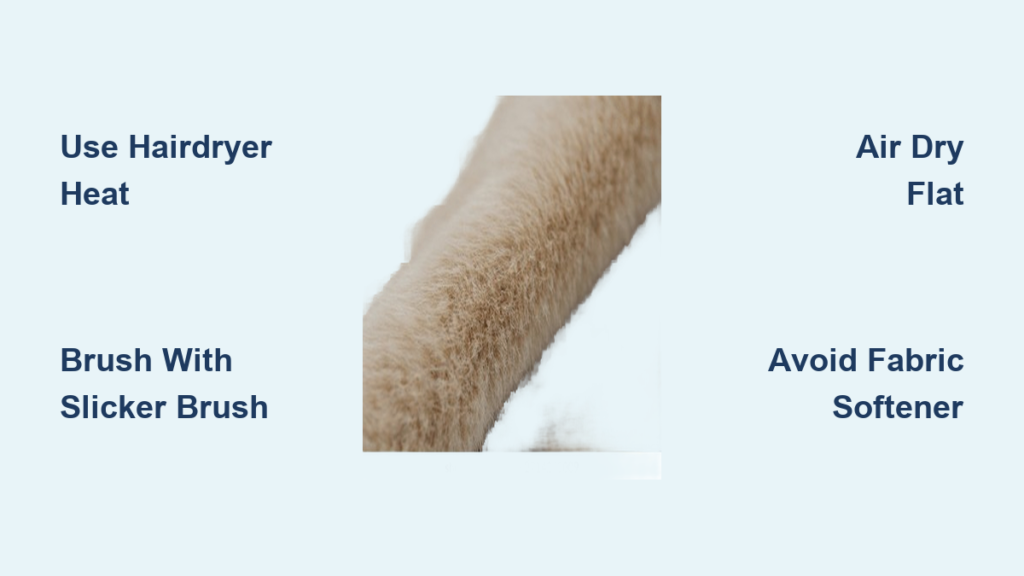
Use High-Heat Hairdryer Carefully
Best for: Deep matting, flattened pile, minor shrinkage.
Steps:
1. Set hairdryer to high heat, high airflow
2. Hold 6 to 8 inches above the surface
3. Sweep slowly over matted areas for 30 to 60 seconds
4. Gently pull fibers apart with fingers while heating
5. Follow with brushing
Pro tip: Work in small sections. Overheating melts acrylic fibers at approximately 300°F. Never touch the nozzle to the fur.
Success case: Monkey Boys Productions restored a shrunken powder blue faux fur throw using only this method, achieving full drape and softness recovery.
Try Cool-Air Fluffing for Heat-Sensitive Fur
Best for: Delicate, unknown, or dyed fur that may react poorly to heat.
Steps:
1. Set hairdryer to cool or ambient air
2. Hold 12 to 18 inches away
3. Direct airflow across the surface while brushing upward
4. Continue until fibers lift and regain volume
This method offers zero risk of melting. It works ideally when combined with light misting for stubborn areas.
Detangle With the Right Brushing Tools

Mechanical brushing is essential for breaking up knots and restoring upright pile. The wrong tool can worsen damage significantly.
Choose the Correct Brush Type
The right tool makes all the difference in restoration success:
- Pet slicker brush: Best for long-pile, shaggy, or severely matted fur. Penetrates deep with short, gentle strokes.
- Wide-tooth comb: Ideal for light tangles and short-pile fur. Start at tips, work toward root.
- Pet fur rake: Best for dense clumps. Hold base of clump and comb from tip down.
- Soft-bristle clothes brush: Perfect for daily fluffing and maintenance. Brush lightly in one direction.
Avoid: Stiff wire brushes, human hair combs, or electric fabric shavers. These can pull out fibers and create bald spots.
Brushing Technique: Do It Right
- Start at the edge of a matted area, never in the center
- Hold the base of the clump to reduce tension on the backing
- Comb from tip to root in short strokes
- Work outward gradually to prevent tightening the knot
- Repeat daily for stubborn areas; progress may take 2 to 3 days
Expert note: Brushing while applying low heat or cool air dramatically improves results by loosening fibers during detangling.
Use Steam or Mist to Loosen Fibers
Moisture softens stiff fibers and enhances brushability when applied correctly. Too much water causes different problems.
Apply Light Steam Safely
Tools: Handheld garment steamer or steam iron.
Steps:
1. Hang or lay blanket flat on heat-safe surface
2. Hold steamer 6 or more inches away, do not touch fabric
3. Pass evenly over matted zones, do not soak
4. Immediately comb or brush while fibers are relaxed
Caution: Avoid over-wetting. Moisture weakens adhesive layers, especially in foam-backed or flocked fur.
Mist With Water or Conditioner Solution
For added softness and static control, use one of these approaches.
Basic mist:
– Fill spray bottle with room-temperature water
– Lightly mist affected area, just enough to dampen
– Wait 1 to 2 minutes, then brush
Enhanced version:
– Mix 10 parts water to 1 part mild fabric conditioner
– Spray lightly and brush immediately
– No rinsing needed; conditioner coats fibers to reduce friction
Warning: Test on hidden area first, especially for dyed fur. Overuse attracts dirt and causes buildup.
Wash Faux Fur Safely to Prevent Damage
Cleaning can both restore and prevent matting if done correctly. Most damage occurs during washing.
Follow Safe Washing Rules
Follow these specifications for damage-free cleaning:
- Cold water only at 85°F or lower
- Delicate or hand-wash cycle only
- Mild, pH-neutral detergent like Woolite
- No bleach or fabric softener
- Front-loader only, never top-loader with agitator
- Use mesh laundry bag to minimize friction
Washing steps:
1. Shake blanket to remove loose debris
2. Place in mesh bag
3. Add 1 cap of Woolite
4. Run cold, delicate cycle
5. Skip spin if possible
Dry Without Causing Clumps or Shrinkage

Drying is where most faux fur blankets get ruined. Avoid high heat at all costs.
Air Dry Flat: Safest Option
Steps:
1. Lay on clean, dry towel
2. Reshape to original dimensions
3. Flip every few hours to dry evenly
4. Once dry, brush thoroughly to prevent re-matting
Pro tip: Place another towel on top to absorb excess moisture and replace as needed.
Use No-Heat Dryer With Balls
Only use this method if the label permits machine drying.
Steps:
1. Set dryer to air-only, no heat
2. Add 2 to 3 clean tennis balls or wool dryer balls
3. Run for 30 to 60 minutes
4. Remove while slightly damp, then brush immediately
Balls bounce and break up clumps during tumbling, mimicking professional fluffing. Never use high or low heat settings.
Maintain Faux Fur Long-Term
Prevention is key. Regular care keeps your blanket soft and extends its life by years.
Daily and Weekly Habits
- Shake vigorously once a week to restore loft
- Lightly brush every few uses with a soft-bristle brush
- Spot clean spills with damp cloth and mild soap
- Vacuum gently with upholstery attachment to remove dust
Store Properly
- Roll or loosely fold, never compress tightly
- Store in breathable cotton bag, not plastic
- Keep in cool, dry place away from sunlight
- Place muslin or cotton sheet between folds to prevent creasing
Clean on a Schedule
- Full wash: Every 3 to 6 months depending on use
- Light refresh: Every 4 to 6 weeks with mist and brush
Repair by Faux Fur Type
Tailor your approach based on pile length and material for best results.
Fix Short-Pile Faux Fur
Short-pile fur is less prone to matting and easy to maintain. Use soft cloth or dry sponge for refreshes. Apply wide-tooth comb for tangles and avoid excessive moisture.
Revive Long-Pile or Shaggy Fur
Long-pile fur is highly susceptible to deep tangles. It requires frequent brushing and slicker brush. Best restored with heat plus brushing or steam plus combing. Always wash in mesh bag to prevent snagging.
Restore Faux Rabbit Fur (High-Luster)
Faux rabbit fur is prone to flattening and shine loss. Responds well to cool-air fluffing and diluted conditioner mist. Avoid aggressive brushing and use only soft tools.
Handle Dyed or Custom-Colored Fur
Dyed fur is sensitive to pH and heat. Use pH-neutral cleaners only. Test heat, steam, or conditioner on hidden area first. Restoration works but proceed cautiously.
Avoid Common Mistakes
Even small errors can ruin your blanket. Know what not to do.
Never Use Fabric Softener
Fabric softener coats fibers with residue, increases friction, promotes clumping, and attracts dirt over time. Replace with sparingly-used conditioner mist.
Do Not Iron or Use Direct Heat
Even low settings can melt or flatten synthetic pile and cause irreversible shine or hard spots. Use steam from a distance instead.
Avoid Top-Loading Washers With Agitators
High agitation rips fibers, causes matting, and distorts backing. Always use front-loader or hand-wash.
Never Wring or Twist
These actions damage backing and compact fibers. Always press out water gently and dry flat.
Tools You Actually Need
You do not need expensive gear. Here is the essential toolkit:
- Hairdryer (heat and cool settings): Loosen fibers, restore volume
- Pet slicker brush: Deep detangling for long-pile fur
- Wide-tooth comb: Gentle separation for light tangles
- Spray bottle: Apply water or conditioner
- Mesh laundry bag: Safe washing protection
- Dryer balls or tennis balls: Prevent clumping in dryer
Skip: Electric fabric shavers, lint rollers, and steam irons.
Frequently Asked Questions About Fixing Faux Fur Blankets
Can I use a regular brush on my faux fur blanket?
Yes, but choose carefully. Pet slicker brushes work best for long-pile fur while wide-tooth combs suit short-pile varieties. Avoid stiff brushes that can pull out fibers and create bald spots.
Why does my faux fur blanket keep matting after washing?
Matting after washing usually stems from improper drying or insufficient post-wash brushing. Always air dry flat or use no-heat dryer with balls, then brush thoroughly before storage. Fabric softener residue also causes clumping.
Is it safe to put faux fur in the dryer?
Only on air-only settings with dryer balls. High heat melts synthetic fibers and causes irreversible damage. Remove while slightly damp and brush immediately for best results.
How do I fix a shrunken faux fur blanket?
High-heat hairdryer treatment works effectively for shrinkage. Hold the dryer 6 to 8 inches above the blanket while gently pulling apart fibers. This relaxes the synthetic backing and restores original dimensions.
Can I use fabric softener to make faux fur softer?
No. Fabric softener coats fibers with residue that increases friction and promotes clumping. Use a light conditioner mist instead (10 parts water to 1 part mild conditioner) for softness without buildup.
How often should I wash my faux fur blanket?
Wash fully every 3 to 6 months depending on use. Perform light refreshes with mist and brushing every 4 to 6 weeks to maintain fluffiness between deep cleans.
Key Takeaways for Fixing Your Faux Fur Blanket
Most faux fur blanket damage can be reversed at home using heat, brushing, and proper washing techniques. The hairdryer method combined with pet slicker brushing delivers the most effective results for matted or flattened fur. Always use cold water, gentle cycles, and avoid fabric softener to prevent future damage.
With consistent care, most faux fur blankets last 3 to 7 years. Eighty percent of longevity depends on user habits rather than initial product quality. By diagnosing damage early, using safe heat and brushing techniques, and following preventive maintenance routines, you can keep your blanket soft, fluffy, and beautiful for years without replacement.