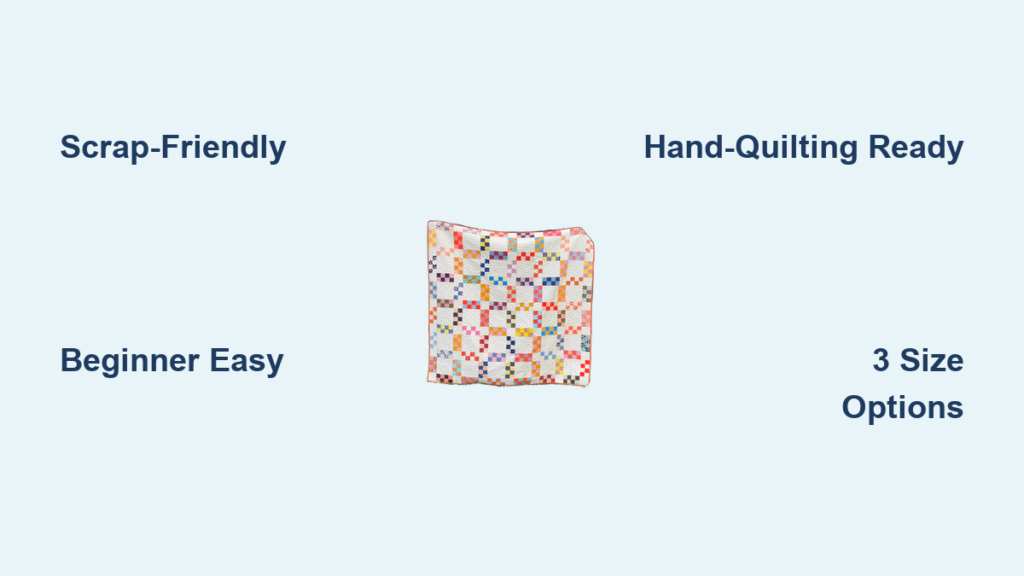
The Dorothy quilt pattern offers a beginner-friendly entry into heirloom-quality quilting without overwhelming complexity. Created by Jennifer Jones of Penelope Handmade, this design combines simple large-scale blocks with thoughtful flexibility, making it perfect for first-time quilters or anyone seeking a relaxed scrap-busting project. Whether you’re stitching a baby gift or a full bed cover, the pattern adapts beautifully across three finished sizes.
What makes this quilt pattern truly special is its versatility at every stage. You can construct it using traditional strip piecing or adapt it for 5-inch squares, which works wonderfully with jelly rolls, fat quarters, or leftover fabric scraps. The generous 8-inch finished blocks also invite stunning hand-quilting, transforming a basic top into a cherished keepsake. This guide covers everything from fabric selection and construction methods to hand-quilting tips and purchasing options.
Choose Your Finished Dorothy Quilt Size
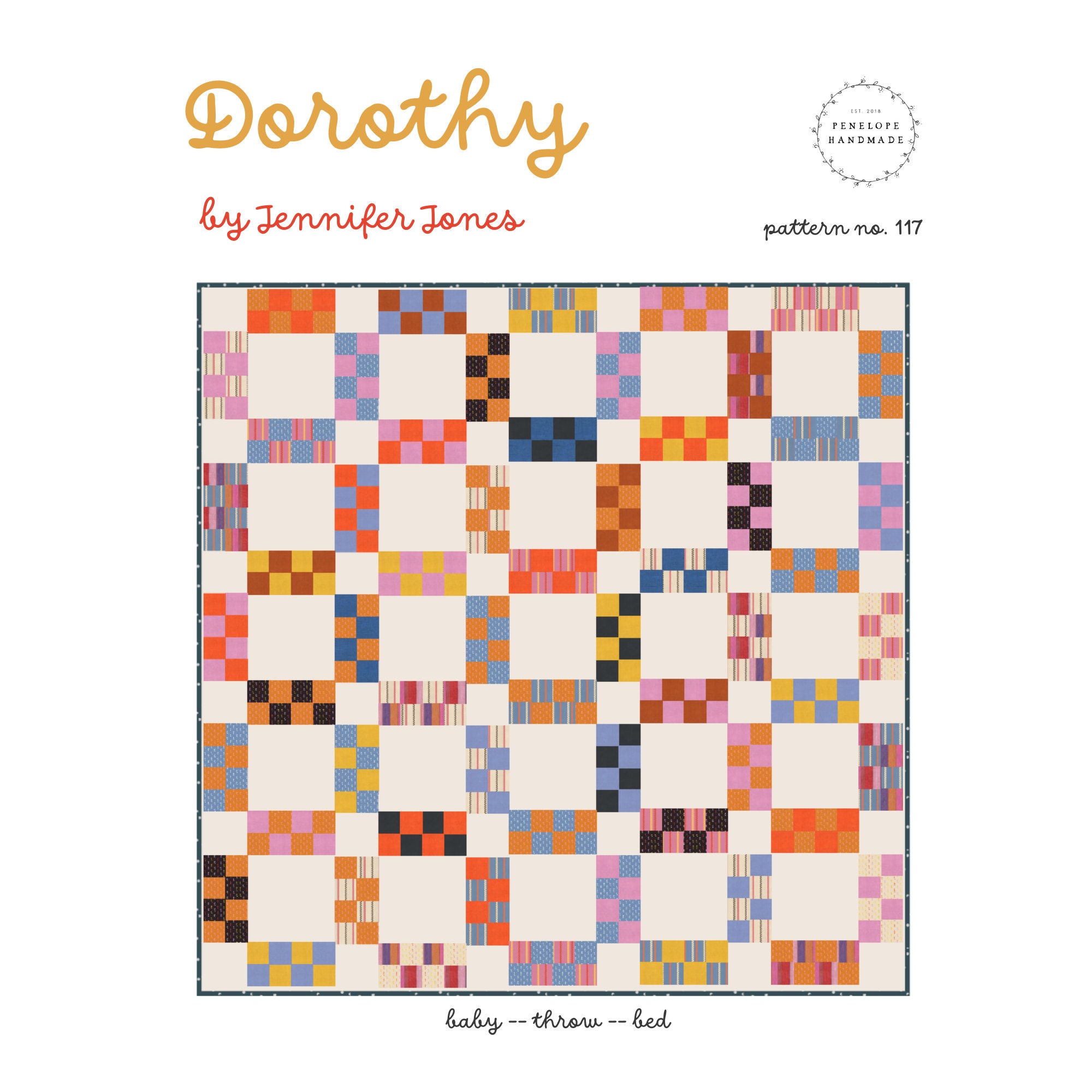
The Dorothy quilt pattern comes in three scalable sizes, letting you tailor the project to your needs. Options range from a small baby blanket to a roomy bed quilt.
| Size | Finished Dimensions |
|---|---|
| Baby | 40″ x 40″ |
| Throw | 64″ x 64″ |
| Bed | 100″ x 100″ |
Each size uses the same block structure, so once you master the technique, scaling up is seamless. The Baby size makes a sweet gift for newborns, while the Throw fits nicely over a couch or twin bed. The Bed size is truly impressive and ideal for showcasing large floral prints or creating a statement piece with hand-quilting.
Pick the Right Fabric for Your Dorothy Quilt
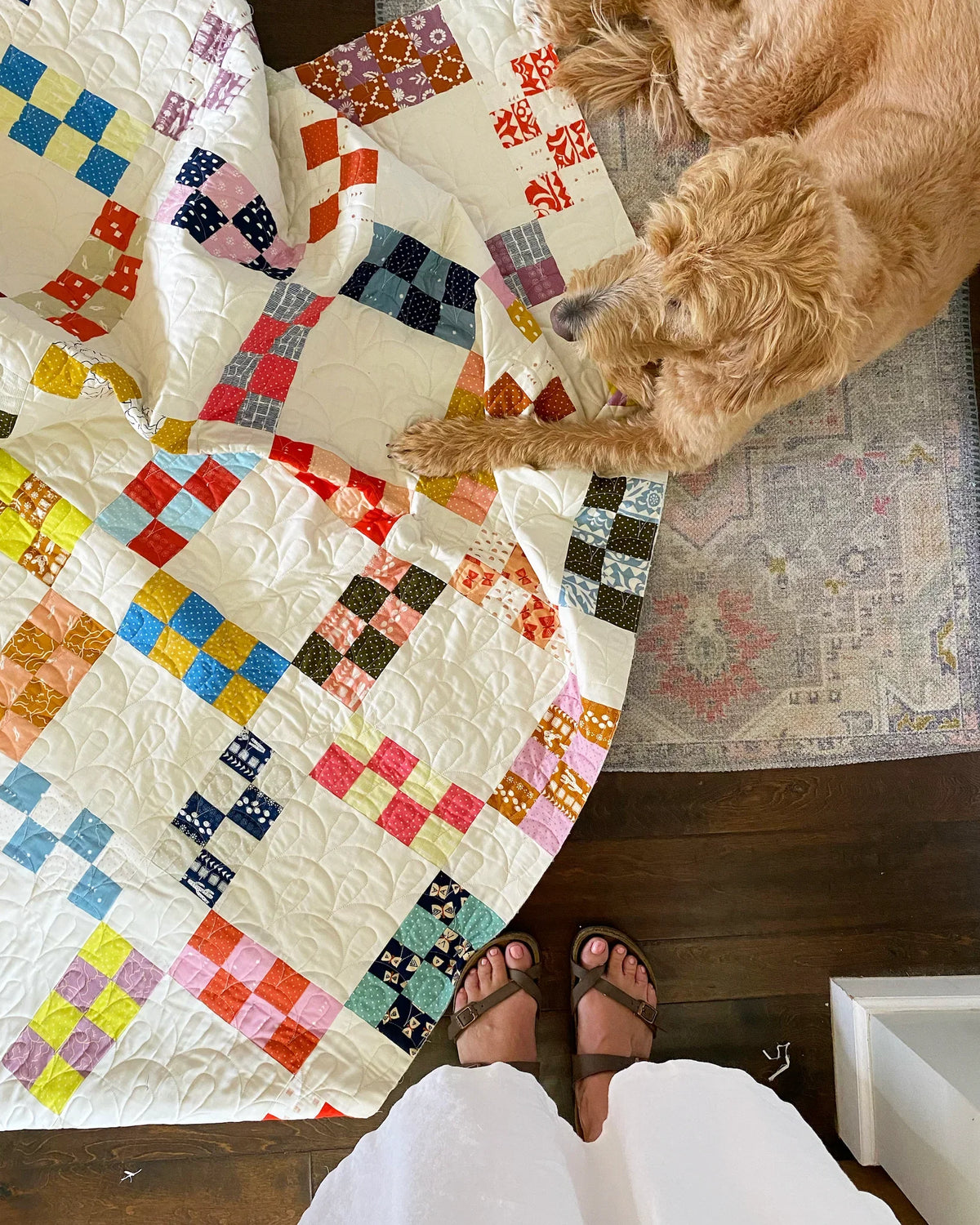
Match Fabric to Project Goal
Choosing the right fabric dramatically impacts how your Dorothy quilt feels and drapes. The pattern works beautifully with several fabric types:
- Florals (especially Kaufman Sevenberry)
- Linens
- Vintage prints
- Checks
While linen adds texture and elegance, using 100% linen for all pieces can make the quilt feel too heavy. For better drape, mix linen with lighter cottons or reserve it for feature blocks only.
Use Scraps or Pre-Cuts
One of the biggest strengths of the Dorothy pattern is its scrap-friendliness. You can easily use leftover 5-inch squares, jelly rolls, or fat quarters without buying yardage unless you want to.
For those using standard fabric cuts, here is the updated yardage guide:
| Size | Small Squares (Background/Accent) | Large Squares (Main Feature) |
|---|---|---|
| Toddler/Baby | 0.25 yards | 0.75 yards |
| Throw | 0.50 yards | 1.75 yards |
| Bed | 1.25 yards | 4.00 yards |
Small Squares usually refer to background or secondary fabrics. Large Squares are the focal point of your design.
Swap Backgrounds for Visual Balance
A clever variation in the updated pattern suggests replacing solid background squares with vintage prints. This trick reduces visual weight when using bold or dense fabrics like linen, creating a more balanced, dynamic look.
Build Your Dorothy Quilt With Strip or Square Piecing
You can assemble the Dorothy quilt two ways. Choose the method that fits your materials and skill level.
Use Original Strip Piecing
The original Dorothy pattern uses long strip piecing, a classic quilting technique that speeds up assembly.
Steps:
1. Cut long strips of fabric in designated widths.
2. Sew strips together side-by-side to form block columns.
3. Press seams consistently to reduce bulk.
4. Sub-cut into individual blocks.
This method is efficient if you’re working with continuous fabric or jelly rolls, minimizing handling of small pieces.
Switch to 5-Inch Square Piecing
An updated version of the pattern adapts the design for 5-inch squares, making it perfect for donation drives, beginner classes, or scrap bins.
Why use squares?
– Easier for visual learners
– Accessible to non-English speakers
– Great for group projects
– Uses pre-cut bundles directly
Jennifer Jones created step-by-step video tutorials on her YouTube channel to support this method, ensuring even absolute beginners can follow along without confusion.
Pro Tip: If teaching or gifting kits, the square method simplifies packaging and instructions. Just include 5-inch squares and direct users to the free videos.
Assemble Blocks Efficiently
Cut Accurately for Clean Seams
Regardless of method, precision matters. Use a rotary cutter, self-healing mat, and clear acrylic ruler for straight edges.
Key measurements:
– Finished block size: 8 inches
– Cut size (before seam allowance): Typically 8.5″ square (varies slightly by method)
Ensure consistent ¼” seam allowances throughout. This prevents distortion in the final layout.
Layout Before Sewing
Arrange all blocks on a design wall or floor before stitching. Play with placement to highlight favorite prints or create symmetry. This step is crucial when using directional fabrics or limited prints.
Press as You Go
After sewing each row or block:
– Press seams flat first to set the stitch
– Then press them open or to one side (depending on bulk)
Proper pressing ensures flat, professional-looking seams and helps blocks align during final assembly.
Customize Your Dorothy Quilt With Hand-Quilting

Why Hand-Quilt the Dorothy Pattern?
The large 8-inch blocks are perfect for hand-quilting, transforming a simple pieced top into an heirloom. Jennifer designed Dorothy with this in mind, inspired by her grandmother’s hand-stitched quilts.
Hand-quilting adds texture, depth, and personal touch. It is also meditative, turning sewing into a mindful practice.
Select the Right Stencil
Because the finished block is 8″, choose a 7.5″ stencil to keep stitching within the fabric area and away from seam allowances.
Recommended stencil:
– 7.5″ Feather Design by Quilting Creations
This size and motif complement the vintage aesthetic of florals and linens. While Amazon offers some options, selection is limited. Quilting Creations provides better quality and fit.
Mark Blocks Carefully
Use a Pilot Frixion Pen to trace stencil designs onto fabric.
How to use:
1. Place stencil over block.
2. Trace design with Frixion pen.
3. Remove stencil.
4. Iron block after quilting to erase marks.
⚠️ Critical Warning: Always test the pen on a scrap first. Heat may not fully remove marks on all fabrics, and some fibers can be damaged. The designer disclaims responsibility for ruined tops, so testing is non-negotiable.
Alternatives:
– Quilt pounce and tracing wheel
– Air-erase pens
– Mechanical fabric pencils
Estimate Time Commitment
Hand-quilting takes patience, but the results are worth it.
- Time per block: approximately 35 minutes
- Total for Baby size (25 blocks): approximately 5.5 hours
Break it into short sessions. One block a day turns a week-long project into a rewarding ritual.
Expert Note: Embrace slow stitching. The goal is not speed but creating something lasting and beautiful, one careful stitch at a time.
Buy the Dorothy Quilt Pattern
Download the Digital PDF
Price: $8.00 USD
Format: Instant download (PDF)
Delivery: Email link after purchase
Copyright: © 2022 Penelope Handmade
Pros:
– Immediate access
– Print at home or on tablet
– Includes updated instructions for all sizes and methods
Important Notes:
– Save the file locally because downloads are limited
– Open on computer or tablet (not mobile-optimized)
– Check spam folder if email does not arrive
– Contact: penelopehandmadeshop@gmail.com for issues
You can sell finished quilts on a small scale as long as you credit Penelope Handmade.
Order the Printed Booklet
Price: $13.00 USD (Special Order)
Format: 5.5″ x 8.5″ physical booklet in zip bag
SKU: 8328DO
Availability: Frequently sold out; often requires special order
Lead Time: 14+ days
Best For: Quilters who prefer paper patterns or teach classes
While the printed version costs more and has longer wait times, it is durable and easy to flip through during sewing.
Tip: If buying for a class or gift, confirm availability via email before ordering.
Avoid Common Dorothy Quilt Mistakes

Don’t Skip the Test Run
Even beginners should make a practice block first. It helps you:
– Check seam accuracy
– Test pressing technique
– Verify cut sizes
– Get comfortable with layout
A single test block can prevent major errors in a large quilt.
Don’t Use 100% Linen Without Testing
Linen adds elegance but increases weight significantly. A full linen quilt may feel stiff or too heavy for daily use.
Solution: Use linen only for feature blocks and pair with cotton backgrounds or binding.
Don’t Rush Marking
Using a Frixion pen without testing can result in permanent marks or fiber damage. Always test on a scrap piece with the same fabric and batting sandwich.
Also, avoid over-marking. Trace only what you need. Excess lines increase error risk and visual clutter.
Don’t Ignore Video Tutorials
Even if you are not in a class or non-native in English, the free YouTube videos are invaluable. They show:
– Exact assembly sequences
– Hand-quilting close-ups
– Troubleshooting tips
Watching them once before starting saves time and frustration.
Maintain Your Finished Dorothy Quilt
Wash Gently for Longevity
Though care instructions are not specified, the use of hand-quilting and natural fibers like linen suggests gentle handling.
Recommended care:
– Machine wash cold on delicate cycle
– Use mild detergent
– Air dry flat or on low heat
– Avoid bleach or harsh chemicals
This preserves thread integrity and prevents shrinkage or distortion.
Store Properly
To keep your Dorothy quilt heirloom-ready:
– Fold and rotate storage position regularly
– Avoid plastic bags (traps moisture)
– Store in cotton pillowcase or breathable container
– Keep away from direct sunlight to prevent fading
Repair Minor Damage
If a thread breaks or fabric snags:
– Use matching hand-quilting thread to re-stitch
– Re-mark and re-sew small areas if needed
– Patch from back with matching fabric if a hole occurs
Small fixes extend the life of a cherished quilt for generations.
Frequently Asked Questions About the Dorothy Quilt Pattern
What is the Dorothy quilt pattern?
The Dorothy quilt pattern is a beginner-friendly design by Jennifer Jones of Penelope Handmade. It features large 8-inch finished blocks and comes in three sizes: Baby (40″ x 40″), Throw (64″ x 64″), and Bed (100″ x 100″). The pattern works beautifully with scraps, jelly rolls, or yardage.
Is the Dorothy quilt pattern good for beginners?
Yes, the Dorothy quilt pattern is classified as beginner-friendly. It uses simple piecing techniques and offers two construction methods (strip piecing and 5-inch square piecing). Free video tutorials on YouTube also support visual learners and non-English speakers.
Can I make the Dorothy quilt with fabric scraps?
Absolutely. The Dorothy quilt pattern is highly scrap-friendly. The updated square-piecing method was specifically designed for 5-inch squares, making it perfect for scrap bins, donation drives, fat quarters, and jelly rolls.
How much fabric do I need for the Dorothy quilt?
Fabric needs depend on size. For the Baby size, you need about 0.25 yards of background fabric and 0.75 yards of feature fabric. The Throw requires 0.50 yards of background and 1.75 yards of feature fabric. The Bed size needs 1.25 yards of background and 4.00 yards of feature fabric.
Where can I buy the Dorothy quilt pattern?
You can purchase the Dorothy quilt pattern as an instant PDF download for $8.00 USD or as a printed booklet for $13.00 USD (special order, 14+ days). Both versions are available through Penelope Handmade. Contact penelopehandmadeshop@gmail.com for any download or order issues.
Can I sell quilts made from the Dorothy pattern?
Yes, you can sell finished Dorothy quilts on a small scale. The designer only requires that you credit Penelope Handmade when listing or promoting your finished work.
Key Takeaways for Stitching Your Dorothy Quilt
The Dorothy quilt pattern stands out as a thoughtfully designed gateway to meaningful making. From its roots as a personal dream quilt to its evolution into a teaching tool for diverse learners, every detail reflects intention.
Its strength lies in flexibility:
– Works with scraps, pre-cuts, or yardage
– Adaptable to strip or square piecing
– Scales across three useful sizes
– Invites hand-quilting for heirloom quality
Unlike many digital patterns, it includes real-world support through video guides, fabric hacks, and clear warnings. This shows Jennifer Jones’ commitment to quilter success.
Grab your scraps, pick your favorite florals, and start sewing today. Your Dorothy quilt awaits, ready to become part of the quiet, meaningful moments in someone’s life.