If you have ever woken up drenched in sweat or tossed and turned because your blanket felt like a furnace, you are not alone. For hot sleepers, night sweats sufferers, and anyone battling summer heat, a cooling blanket can be a game-changer. But how does a cooling blanket stay cool, especially when it does not plug in or freeze your skin? The answer lies not in magic, but in smart science.
A cooling blanket does not generate cold. Instead, it works with your body’s natural cooling systems to draw heat away, move moisture, and let air flow freely. While traditional blankets trap heat like a thermos, cooling blankets act more like a radiator, dissipating thermal energy to keep your sleep surface within the ideal range of 60 to 67 degrees Fahrenheit. This optimal zone supports deeper REM sleep and reduces nighttime awakenings.
Heat Conduction: Pulling Heat Away From Skin
Cooling blankets feel cool at first touch because of heat conduction, which is the transfer of thermal energy from your warm body to the cooler fabric. This is not just about initial sensation. The right materials continue pulling heat away over time.
Why Some Fabrics Feel Cooler Than Others
Not all fibers conduct heat equally. Materials like TENCEL, bamboo, cotton, and silk have high thermal conductivity, meaning they absorb body heat quickly and disperse it into the air. When you lie under one of these blankets, heat flows from your 98.6 degree Fahrenheit skin into the room-temperature fabric, creating an immediate cooling effect.
The most effective cooling fabrics include:
- TENCEL Lyocell, which absorbs 50 percent more moisture than cotton and dries quickly
- Bamboo, which naturally wicks away sweat and has a silky, breathable texture
- Cotton, which offers reliable breathability and hypoallergenic properties
- Mineral-infused fibers like 37.5 Technology, which embed volcanic minerals into the weave to increase infrared energy emission and speed up heat release
- Gel-infused layers made of silica or paraffin, which absorb heat and slowly release it to delay thermal saturation
The cooling sensation fades once the blanket reaches thermal equilibrium with your body. What sets high-performance blankets apart is how long they take to get there.
How Thermal Mass Extends Cooling Time
Blankets with higher thermal mass, like those with gel or phase change material layers, can absorb more heat before warming up. Think of it like ice in a drink. A larger ice cube melts slower and keeps the liquid cold longer. Similarly, a gel-infused or mineral-enhanced blanket acts as a heat sink, absorbing excess warmth and prolonging comfort.
In independent tests, phase change material-enhanced blankets delayed thermal saturation by 2 to 4 hours compared to standard cotton. These materials recharge overnight when room temperatures drop, resetting for the next use.
A cooling blanket will not feel icy all night. Its job is to slow heat buildup, not replace air conditioning.
Moisture Wicking and Evaporative Cooling
Your body cools itself by sweating. A good cooling blanket enhances this natural process through moisture wicking and evaporative cooling, turning sweat into a powerful ally for staying comfortable.
How Wicking Fabrics Keep You Dry
Cooling blankets use hydrophilic water-attracting and hydrophobic water-repelling fibers in combination to move moisture away from your skin.
The most effective moisture-management materials are:
- TENCEL and bamboo, which absorb up to 50 percent more moisture than cotton and dry quickly, reducing dampness
- Polyester blends, which repel sweat and use capillary action to pull it to the fabric surface where it evaporates faster
- Merino wool, which despite being a natural fiber wicks moisture efficiently and can absorb 35 percent of its weight in sweat without feeling wet
By keeping your skin dry, these fabrics prevent the sticky, clammy feeling that disrupts sleep.
The Science of Evaporative Cooling
When sweat evaporates, it absorbs heat from your body, a process called latent heat of vaporization. Cooling blankets amplify this by spreading moisture across a large surface area, speeding up evaporation.
In low-humidity environments, this effect is strongest. A bamboo-TENCEL blend can reduce perceived sleep temperature by 3 to 5 degrees Fahrenheit just through evaporation. Blended fabrics optimize performance. Cotton absorbs, polyester spreads, and open weaves allow airflow to carry moisture away.
This is especially valuable for people with menopause-related hot flashes, hyperhidrosis, or those recovering from intense workouts.
Breathability: Letting Air Flow Freely
Even the best materials fail if air cannot circulate. Cooling blankets are designed to be highly breathable, preventing the formation of a hot, humid microclimate under the covers.
Design Features That Boost Airflow
Cooling blankets incorporate specific structural features to maximize air circulation:
- Loose knits and open weaves allow warm air to escape and cool air to enter
- Mesh panels or chambered construction prevent fill from clumping and maintain consistent airflow
- Dual-layer designs often pair a cool-touch top with a breathable backing to maximize heat dissipation
Fleece blankets trap warm, moist air like a greenhouse. Cooling blankets work like a well-ventilated tent, letting heat escape while maintaining comfort.
Lightweight Vs Insulating Materials
Weight matters. Heavy fills like down or thick polyester retain heat. Cooling blankets use lightweight, open-cell fills or no fill at all to reduce insulation.
Eucalyptus-based fabrics are naturally breathable and soft, with certifications like FSC and PEFC for sustainable sourcing. High-thread-count cotton can still be cooling if it uses breathable weaves, though tight percale or sateen weaves may limit airflow despite premium feel.
Look for sheer, airy textures or visible gaps in the weave. If light passes through, air likely does too.
Advanced Cooling Technologies
Beyond basic fabrics, high-performance cooling blankets use engineered systems to deliver smarter, longer-lasting temperature control.
Phase Change Materials: NASA-Inspired Thermal Regulation
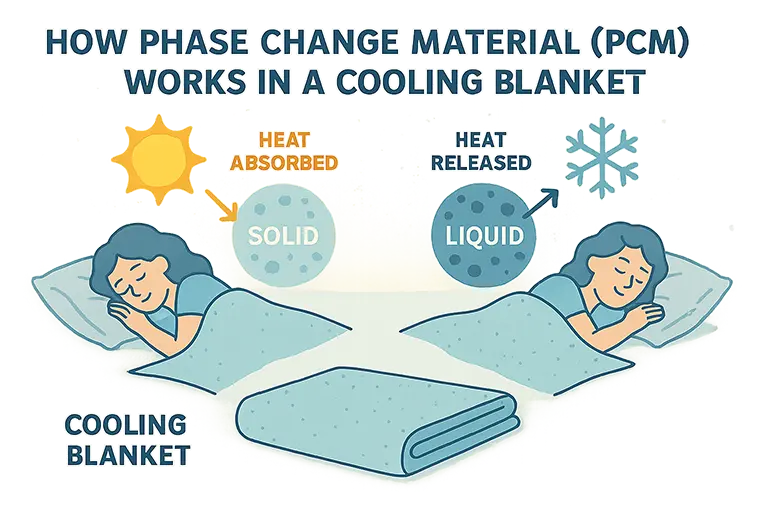
One of the most effective innovations is Phase Change Materials, microencapsulated thermocules that absorb and release heat as they shift between solid and liquid states. Originally developed by NASA in the 1980s for astronaut suits, these materials now appear in premium bedding.
How Phase Change Materials work at night:
- When your skin heats up, the material absorbs excess heat and melts, storing energy without rising in temperature
- As the room cools, the material solidifies and releases heat, acting like a thermal battery
- This cycle buffers temperature swings, keeping your sleep environment stable
Outlast technology, used in Sleep Number and Dangtop products, embeds phase change materials directly into fibers for dynamic heat regulation throughout the night.
Phase change materials need cooler ambient temperatures to reset. In a room above 78 degrees Fahrenheit, they may not fully recharge. With proper care, phase change material performance lasts 3 to 5 years before degrading.
Active Cooling Systems: Fan-Powered Climate Control
For maximum precision, some blankets use electric cooling with built-in fans or air channels.
Air-cooling blankets pump cool air through layers, actively replacing warm air. Users can adjust fan speed, temperature, and airflow zones, ideal for medical conditions like neuropathy or chronic night sweats.
Drawbacks include noise, power dependency, and higher cost. These systems are best for people who need clinical-level temperature control, not casual comfort.
Radiative Cooling: Emerging Technology
Some experimental designs use infrared-emitting coatings to radiate heat into the environment, even cooling below ambient temperature under ideal conditions. Currently used in architecture, this technology may inform next-generation fabrics. It is not yet mainstream in bedding but shows promise for passive, energy-free cooling.
Best Materials in Cooling Blankets

The fabric is the foundation of any cooling blanket. Different materials offer unique benefits, and knowing which ones work best helps you avoid marketing hype.
Top Natural and Engineered Fibers
The most effective cooling materials include:
- TENCEL Lyocell, which offers superior wicking, exceptional softness, and eco-friendly production, making it ideal for night sweats and sensitive skin
- Bamboo, which is highly absorbent, fast-drying, and has a silky feel, perfect for hot sleepers and humid climates
- Cotton, which is breathable, lightweight, and hypoallergenic, suitable for everyday use and mild climates
- Eucalyptus, which is naturally cool, sustainable, and odor-resistant, appealing to eco-conscious buyers
- Merino wool, which wicks moisture and regulates temperature without overheating, great for all-season use and temperature extremes
- Silk, which is light, smooth, and temperature-balancing, providing a luxury feel for delicate skin
- Polyester blends, which are durable, enhance wicking, and offer affordable performance
Look for blends like cotton-TENCEL or bamboo-polyester. They combine breathability, durability, and moisture control.
Why Blends Outperform Single Fibers
No single material does everything well. High-end cooling blankets use multi-fiber blends to balance moisture management, softness, durability, and thermal conductivity.
For example, a bamboo-polyester blend offers the absorbency of bamboo with the quick-drying strength of polyester, ideal for heavy sweaters.
Cooling Weighted Blankets: Pressure Without Overheating

Weighted blankets provide deep pressure therapy for anxiety, ADHD, and insomnia, but traditional versions can overheat. Cooling-weighted models solve this with smart design.
How They Stay Cool Under Pressure
Cooling-weighted blankets use specific features to prevent heat retention:
- Glass beads instead of plastic for filling, which are smaller, lighter, and less insulating
- Shells made from bamboo, cotton, or TENCEL with open-knit patterns for airflow
- Gel infusions or phase change material layers to counteract heat retention from added weight
Typically, these blankets weigh 7 to 12 percent of body weight for therapeutic effect without discomfort.
Layering a Cooling Blanket Over a Weighted One
You can layer a cooling blanket over a weighted blanket, and it is often the best setup. Place a lightweight cooling blanket on top to maintain airflow while preserving the calming pressure beneath.
Avoid heavy top layers, which trap heat and reduce benefits. Hybrid models like Baloo or Bearaby combine weight and breathability in one product.
Care Tips to Preserve Cooling Performance
Even the best blanket loses effectiveness if washed wrong. Proper care keeps fibers open, wicking active, and phase change materials intact.
Washing Without Damage
Follow these guidelines to maintain cooling performance:
- Use cold water and a gentle cycle
- Avoid bleach and fabric softeners, which coat fibers, clog moisture pathways, and degrade finishes
- Air dry or use lowheat tumble drying to prevent shrinkage and melting of microcapsules
Fabric softeners can reduce wicking performance by up to 50 percent after repeated use.
When to Replace Your Cooling Blanket
Over time, fibers break down, weaves tighten, and phase change materials degrade. Signs it is time to replace include the blanket feeling warmer than it used to, taking longer to dry after washing, and showing noticeable pilling or thinning.
With proper care, most quality cooling blankets last 3 to 5 years.
Realistic Expectations: What Cooling Blankets Cannot Do
Cooling blankets are effective, but they are not miracle devices. Understanding their limits prevents disappointment.
They Do Not Lower Room Temperature
A cooling blanket helps your body shed heat more efficiently, but it will not cool the air. It is a personal microclimate tool, not a substitute for air conditioning.
Best use case is layering with a fan or mild air conditioning to reduce energy use while staying comfortable.
The Cool Feeling Is Not Permanent
All blankets warm up eventually. The difference is how fast. Passive models like cotton equalize in 15 to 30 minutes. Phase change materials can extend that to several hours.
In very warm rooms above 78 degrees Fahrenheit, even advanced blankets struggle. Cooling is continuous but finite, dependent on airflow, humidity, and material quality.
Not for Everyone
People with poor circulation, hypothermia risk, or cold sensitivity should use caution. Deep pressure combined with cooling may be too intense for some.
Consult a doctor if you have diabetes, neuropathy, or circulatory issues.
Key Takeaways for Staying Cool All Night
A cooling blanket stays cool by working with your body, not against it. Through advanced materials and intelligent design, it enhances your natural ability to regulate temperature, leading to drier, deeper, and more restful sleep.
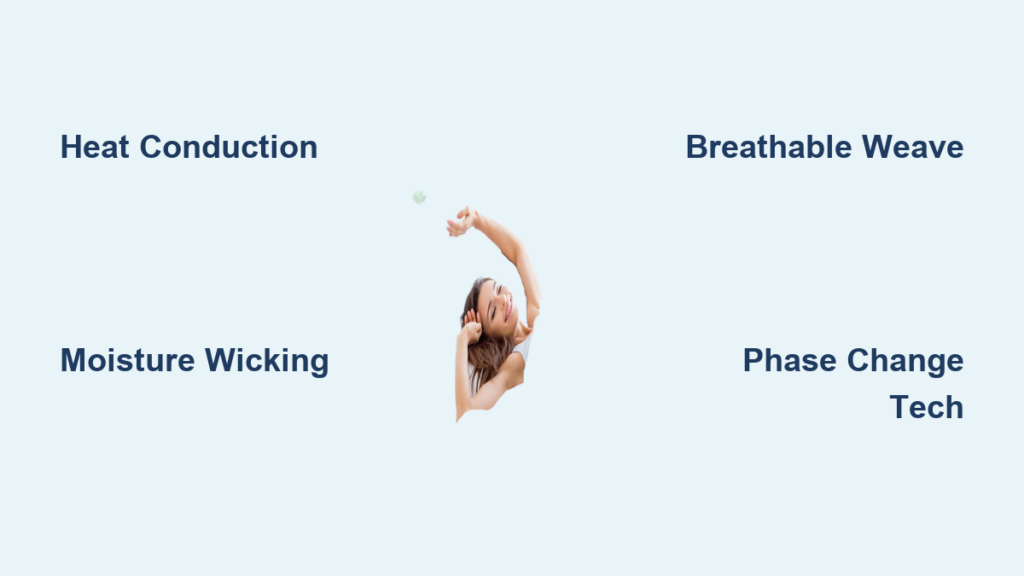
The four core mechanisms are heat conduction using high-thermal-conductivity materials, moisture wicking and evaporative cooling, breathability through open weaves and lightweight fills, and advanced technologies like phase change materials for dynamic thermal buffering.
Whether you choose a simple bamboo throw or a NASA-tech phase change material duvet, the right blanket can transform your nights from sweaty struggles to cool, comfortable recovery. Consider your specific needs, climate, and budget when selecting a cooling blanket, and remember that proper care extends its performance for years to come.
Frequently Asked Questions About Cooling Blankets
How does a cooling blanket work technically?
A cooling blanket works through heat conduction, moisture wicking, airflow, and sometimes phase change materials or active cooling systems. It draws heat away from your body, moves sweat to the fabric surface for evaporation, and allows air to flow freely to prevent heat and humidity buildup.
How long does the cooling last?
Standard fabrics provide ongoing but short-term regulation. Phase change materials can extend cooling for 2 to 6 hours, depending on room temperature and usage. The effect is continuous but finite.
Can you use a cooling blanket in winter?
Yes. Layer it over a warmer blanket. Its breathability prevents overheating, making it year-round versatile. In mild winters or for warm sleepers, it may be sufficient on its own.
Do cooling blankets help with night sweats?
Absolutely. Moisture-wicking combined with evaporation and airflow reduces dampness and discomfort, especially with merino wool or phase change material blends. This combination is particularly effective for menopause-related hot flashes and hyperhidrosis.
Is a cooling blanket better than air conditioning?
No, but it reduces air conditioning dependence, saving energy while maintaining personal comfort. It works best as a complementary solution rather than a replacement.
Can a cooling blanket be used with a weighted blanket?
Yes. Layer a lightweight cooling blanket on top, or choose a hybrid cooling-weighted model that combines both deep pressure and temperature regulation in one product.