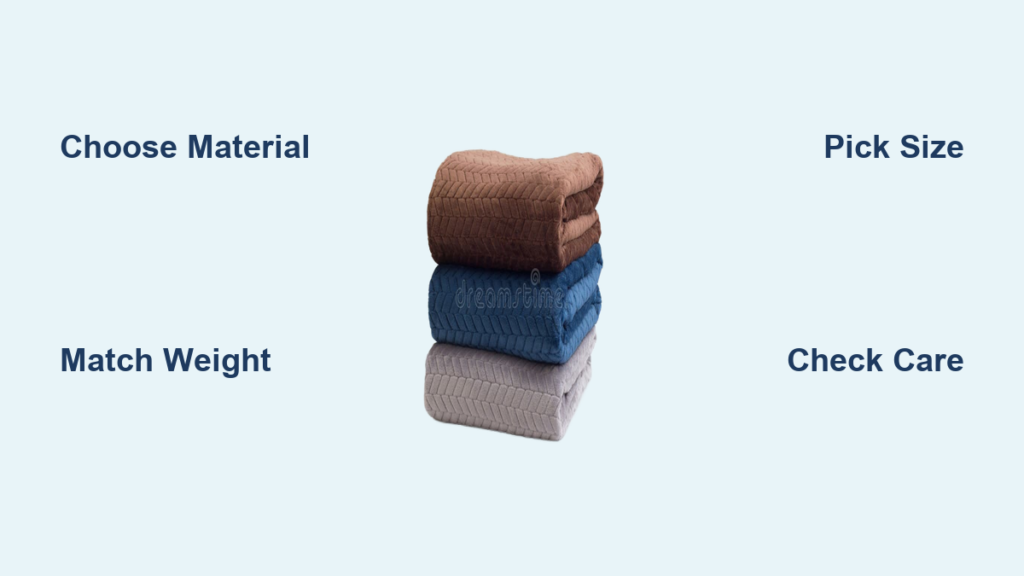
If you’ve ever woken up sweating under a blanket that’s too warm or shivering because it wasn’t enough, you know how much the right blanket affects your sleep. Choosing a blanket isn’t just about picking the softest option—it requires matching material, weight, and size to your sleep style, climate, and lifestyle. Whether you’re a hot sleeper needing breathability, want cozy warmth for winter nights, or need a stylish throw for your living room, the right blanket transforms your comfort.
This guide walks you through every factor that matters: from cotton versus bamboo to GSM weights and hypoallergenic options. You’ll learn how to avoid common mistakes, decode blanket labels, and invest in a blanket that lasts. By the end, you’ll know exactly how to choose a blanket that fits your needs perfectly.
Match Blanket Material to Your Sleep Style
The fabric determines whether you stay cool, warm, or overheated throughout the night. Different materials offer unique benefits, so aligning them with your sleep preferences is the most important step.
Cooling Materials for Hot Sleepers
Cotton and bamboo are the top choices for hot sleepers or warm climates. Both breathe well, wick moisture, and feel gentle against sensitive skin.
Cotton is a natural, hypoallergenic fiber that lets air circulate freely. It softens after multiple washes and works well year-round. Look for organic cotton or high GSM weaves like waffle or gauze for extra breathability. Bamboo viscose takes cooling further—it feels silky and cool to the touch while naturally regulating temperature. This makes it ideal for night sweats or humid environments.
Avoid 100% cotton in very cold weather since it lacks the insulation of wool or fleece.
Warm Materials for Cold Nights
When temperatures drop, fleece and wool deliver the deep warmth you need.
Polyester fleece is affordable, plush, and traps heat efficiently. It’s perfect for winter beds or couch throws. However, it’s less breathable and can cause overheating in warmer rooms. Sherpa and microplush versions add extra softness and often resist pet damage better.
Wool and alpaca offer natural temperature regulation—they’re warm in winter but breathable in summer. They’re also odor-resistant and long-lasting but often require dry cleaning. Some people find wool itchy, so look for merino or baby alpaca for a smoother feel.
Luxury Materials for Style and Comfort
Cashmere and faux fur add elegance and sensory comfort to any space.
Cashmere is ultra-soft, lightweight, and warm—perfect for cool evenings and high-end decor. It’s delicate though: hand wash only and avoid frequent use around pets. Faux fur mimics the plushness of real fur without animal products. It’s a favorite for sensory comfort but can mat or shed over time. Best used as a decorative throw rather than a daily bed blanket.
Choose the Right Blanket Weight for Your Climate

Blanket weight, measured in GSM (grams per square meter), determines warmth and coziness. Matching GSM to your climate prevents you from being too hot or too cold.
Lightweight: 100–200 GSM
Lightweight blankets are ideal for summer or hot climates. They promote airflow and prevent overheating. Quince’s Airy Gauze Blanket uses four layers of organic cotton gauze—breathable, soft, and perfect for layering. These work well for babies or allergy sufferers since they reduce overheating risk. Avoid lightweight options in cold weather—they won’t provide enough warmth.
Medium Weight: 200–300 GSM
This range hits the sweet spot for all-season use. Bedsure’s Sherpa Fleece Blanket offers balanced warmth without suffocating heat. Cotton weaves in this range are breathable yet substantial. If you live in a moderate climate or use layered bedding, 200–300 GSM is versatile enough to use alone in spring and fall, then add a duvet in winter.
Heavyweight: 300–400+ GSM
For cold sleepers or winter nights, heavyweight blankets deliver serious insulation. The Company Store’s Cotton Weave at 420 GSM and L.L.Bean’s Wicked Cozy at 400 GSM are thick, durable, and cozy. These are less breathable, so skip them if you tend to overheat. Reserve them for colder months or drafty rooms.
Higher GSM always means warmer. For year-round flexibility, choose medium weight or layer a lightweight cotton base with a removable fleece throw.
Find the Perfect Blanket Size for Your Space
:max_bytes(150000):strip_icc()/standard-bed-and-blanket-sizes-2116316-FINAL-5b64db72c9e77c0025ad020f.png)
A blanket that’s too small slips off constantly; one that’s too big becomes unwieldy. Matching size to your bed or seating area ensures comfort and style.
Bed Blanket Sizes
Twin blankets measure 66 by 90 inches and work best for kids or single sleepers. Full and queen sizes at 90 by 90 inches fit most adult beds. King尺寸 at 108 by 90 inches give couples plenty of coverage. Choose a blanket extending 5 to 10 inches past your mattress sides for a polished look and full coverage.
Throw Blanket Sizes
Standard throws around 50 by 60 inches fit most sofas and chairs. Oversized throws at 72 by 90 inches or larger accommodate full-body lounging or shared use. Brands like ChappyWrap and Big Blanket Co. specialize in oversized options. Big Blanket Co. offers a 120 by 120-inch blanket perfect for families or movie nights.
Match blanket size to your intended use: bed measurements for sleeping, 50 by 60 inches for solo couch use, and 80-plus inches wide for couples lounging together.
Consider Care Requirements Before Buying
Care requirements vary widely, and ignoring them can ruin a high-quality blanket. Always check the label before purchasing.
Machine-Washable Options
Most cotton, microfiber, and polyester blankets handle machine washing without issues. Bedsure, Bare Home, and ChappyWrap throws are designed for easy cleaning. Use cold water on a gentle cycle and tumble dry low or air dry. Avoid bleach and fabric softeners since they break down fibers over time.
Delicate Materials Requiring Special Care
Cashmere and wool need hand washing in cold water with baby shampoo, then lay flat to dry. Alpaca and fine weaves often require dry cleaning. Some fleece blankets like L.L.Bean Wicked Cozy need air-drying to prevent fiber damage. Store wool and cashmere in breathable cotton bags with cedar blocks to prevent moth damage. Never store blankets in plastic since it traps moisture and causes mold.
Select a Blanket for Sensitive Skin and Allergies
If you have allergies, asthma, or sensitive skin, material choice directly impacts your health. The wrong blanket triggers irritation or respiratory issues.
Hypoallergenic Materials to Look For
Bamboo, Tencel, and tightly woven cotton resist dust mites and work well for allergy sufferers. Microfiber is naturally hypoallergenic and easy to wash frequently. Down alternatives avoid the allergens found in real down. Avoid untreated wool or down unless certified RDS (Responsible Down Standard).
Materials That Resist Odors and Bacteria
Wool and bamboo wick moisture away and resist odor-causing bacteria. This makes them excellent for people who sweat at night or want low-maintenance options. Using duvet covers protects your blanket and lets you wash the cover weekly, reducing how often you need to clean bulky bedding.
Pick a Blanket That Fits Your Budget
Blanket prices range from under $20 to $300 or more. The key is matching price to how often and where you’ll use it.
Budget Options: $10–$30
Polyester and fleece blankets offer warmth on a tight budget. Better Homes & Gardens throws fall in this range. They’re best for kids’ rooms, guest beds, or seasonal use. Expect shorter lifespans with frequent washing.
Mid-Range Value: $50–$150
This range delivers excellent value with cotton, blends, and quality microfiber. Bedsure, ChappyWrap, and The Company Store offer top performers here. You get durability, style, and comfort without the luxury price tag.
Investment Pieces: $150+
Luxury materials like cashmere, alpaca, Tencel, or organic wool cost more but last longer and feel superior. Quince’s Mongolian cashmere throw offers premium quality. These are worth it for primary bedding or frequent use. Use duvet covers to protect expensive blankets and extend their life.
Spend more on blankets you use nightly; save on decorative or secondary ones.
Match Blanket Style to Your Home Decor
A blanket should look as good as it feels. The right color, texture, and finish elevate your bedroom or living room.
Choosing Colors and Patterns
Neutrals like white, gray, and beige stay timeless and blend with any decor. Bold prints like florals or geometrics make a statement. Reversible designs offer two looks in one, like ChappyWrap’s Harborview Herringbone.
Mixing Textures for Visual Interest
Smooth textures include satin, sateen, and bamboo. Plush options feature fleece, sherpa, and microplush. Textured choices include waffle, knit, and jacquard weaves. Layer a smooth cotton base with a plush throw for a hotel-like aesthetic.
Quality Finishing Details
Look for satin binding that adds elegance, double-stitched edges for improved durability, and weighted corners that prevent slipping in some luxury models.
Avoid These Common Mistakes
Even experienced buyers make blanket errors. Steer clear of these pitfalls to ensure satisfaction.
Using a heavy blanket in a hot climate causes major discomfort—a 400 GSM fleece in summer will make you overheat. Always match weight to your climate. Ignoring care labels leads to shrinkage or damage—always read instructions before washing. Prioritizing looks over function means a beautiful throw won’t help if it makes you sweat. Buying the wrong size results in constant readjusting or bulkiness—measure your bed or couch first. Overlooking allergies triggers asthma or skin irritation—choose hypoallergenic materials if needed.
Frequently Asked Questions About Choosing a Blanket
What is the best blanket material for hot sleepers?
Bamboo and cotton are the best choices for hot sleepers. Bamboo viscose feels cool to the touch and naturally regulates temperature. Cotton breathes well and wicks moisture away from your body. Both options are hypoallergenic and work well in warm climates or for people who sleep hot.
How do I choose the right blanket weight?
Match blanket weight to your climate and sleep temperature. Lightweight (100–200 GSM) works for summer and hot climates. Medium weight (200–300 GSM) suits all-season use and moderate climates. Heavyweight (300–400+ GSM) is best for cold sleepers and winter nights. A medium-weight blanket or layering system offers the most flexibility.
What size blanket do I need for my bed?
Match your blanket to your mattress size. Twin beds need 66 by 90 inches. Full and queen beds need 90 by 90 inches. King beds need 108 by 90 inches. Choose a blanket extending 5 to 10 inches past your mattress sides for full coverage and a polished look.
Are expensive blankets worth the investment?
Expensive blankets are worth it if you use them nightly and want durability, premium materials, and superior comfort. A well-made blanket lasting 10 years is more economical than replacing cheap options every two years. For decorative throws or occasional use, budget options work fine.
How often should I wash my blanket?
Wash bed blankets every one to two weeks if used nightly. Wash throw blankets every few weeks or monthly, depending on use. Use a duvet cover to protect your blanket and reduce washing frequency. Always follow the care label instructions for best results.
Can I use a weighted blanket if I have allergies?
Yes, but choose carefully. Look for weighted blankets with hypoallergenic fills like glass beads and breathable, machine-washable covers. Avoid weighted blankets if you have respiratory issues or claustrophobia since the weight can feel constraining. Consult your doctor if you have specific health concerns.
Key Takeaways for Choosing Your Perfect Blanket
Finding the right blanket comes down to matching material to your sleep style, weight to your climate, and size to your space. Hot sleepers should choose breathable cotton or bamboo, while cold sleepers benefit from fleece or wool. Medium-weight blankets around 200–300 GSM work best for year-round use. Always check care requirements before buying—machine-washable options save time and money long-term.
Consider allergies, budget, and decor style alongside comfort. A quality blanket with proper care lasts 5 to 10 years, making it worth investing in one that fits your actual needs. Use this guide to narrow your choices, and you’ll enjoy cozy, restful nights for years to come.