Every new parent discovers the power of a well-made swaddle. It calms fussy newborns, prevents the startle reflex from waking them, and turns chaotic wiggles into peaceful sleep. Yet many store-bought swaddles fall short. They are too small, too stiff, or made from synthetic fabrics that trap heat and increase overheating risk. The solution is simple: make your own swaddling blanket.
This guide walks you through every step to create a professional-quality swaddle at home. You will learn how to choose the right fabric, cut perfect dimensions, hem edges like a pro, and add decorative touches. Whether you are crafting a baby shower gift or building a personalized nursery set, homemade swaddles outperform retail versions in size, softness, and breathability.
Choose the Right Fabric for Your Swaddle
Your fabric choice directly impacts comfort, breathability, and how well the swaddle functions. Stick to natural fibers for safety and performance.
Cotton Gauze: Lightweight and Breathable
Cotton gauze is the top choice for warm weather and year-round use. It is airy, slightly crinkly, and becomes softer with each wash. Most commercial favorites use gauze because it is SIDS-safe and drapes beautifully.
• Width: 48 to 52 inches
• Yardage needed: 1.25 yards per 47-inch square
• Pre-wash recommended: Yes, softens fabric and pre-shrinks
Double Gauze: Soft and Luxurious
Two loosely connected layers of gauze create a slightly thicker feel without sacrificing breathability. This option works well for reversible or double-sided swaddles.
• Pre-wash: Test first, as some sources advise against it to preserve texture
• Best for: When you want a more substantial feel
Cotton Knit: Stretchy and Secure
Knit fabric has 20 to 30 percent natural stretch, which conforms snugly and resists coming undone. It does not fray, so overlocking is unnecessary.
• Recommended size: 39 by 39 inches (stretch compensates for smaller dimensions)
• Stitch type: Use zig-zag or twin needle to prevent popped seams
• Pre-wash: Yes
100 Percent Cotton Muslin: Budget-Friendly
A plain-weave cotton that softens dramatically over time. Widely available in solids and prints.
• Pre-wash: Always, as it shrinks and stiffens otherwise
• Selvage: Trim before hemming to avoid stiffness
Avoid: Polyester, fleece, and microfiber. These synthetic fabrics increase overheating risk and reduce airflow.
Gather Essential Sewing Tools
You do not need an elaborate setup. A few basic tools will do the job.
• Sewing machine with adjustable stitch length (set to 3.0 mm)
• Rotary cutter and quilters ruler for straight cuts
• Iron and pressing cloth (pressing is key to clean hems)
• Clips instead of pins for delicate fabrics like gauze
• Sewing stiletto or chopstick to turn corners sharply
• Sharp fabric scissors
• All-purpose thread (cotton or polyester)
• Bias binding (half-inch double-fold) for decorative edges
• Fusible tape to stabilize tie layers
Pro Tip: Use a 70/10 needle, ideal for lightweight cottons. Test on a scrap piece first.
Cut Your Fabric to the Perfect Size
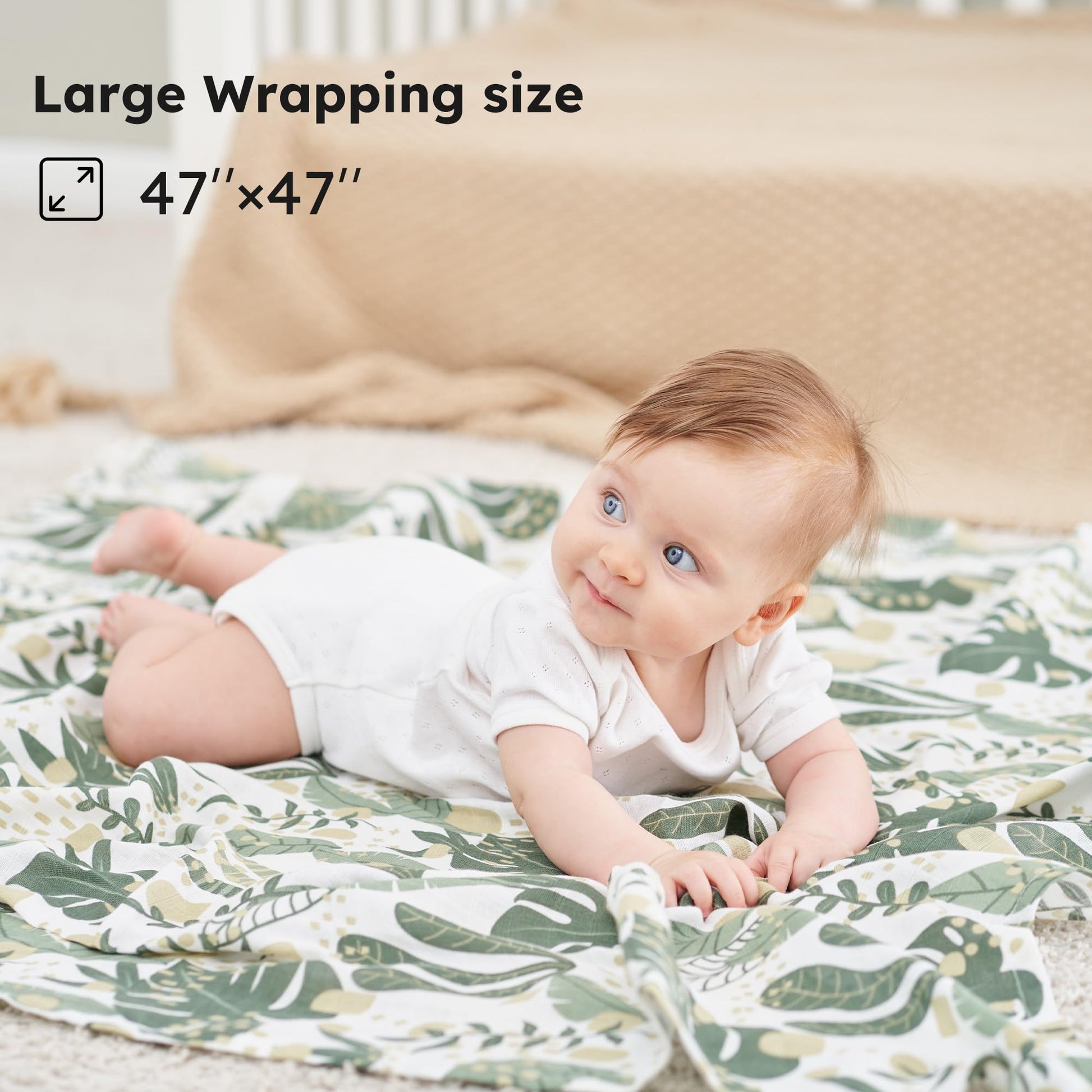
Size matters significantly. Many store-bought swaddles measure only 30 inches square, which is too small for secure wrapping. Aim bigger for better results.
Recommended Dimensions
| Fabric Type | Recommended Size |
|---|---|
| Woven (gauze, muslin) | 47 by 47 inches |
| Knit (cotton, bamboo) | 39 by 39 inches |
| Triangle swaddle | 40-inch base line from corner |
Cutting Steps
- Lay fabric flat, aligning selvage edges.
- Use printed grid lines (common in gauze) to guide cuts. No grid? Pull a thread to find the grain or use a set-square.
- Trim the selvage, especially printed edges that stiffen after washing.
- Verify squareness by measuring both sides and folding corner to corner.
Yardage Tip: From 52-inch wide fabric, you can cut two 43 by 50-inch swaddles from 2.5 yards.
Hem Edges with a Double-Fold Method
Raw edges fray and pose a safety risk. Hemming encloses them neatly and adds polish. The double-fold method is beginner-friendly and works well for woven fabrics.
Steps to Double-Fold Hem
- Fold edge half an inch to the wrong side and press.
- Fold again half an inch to hide the raw edge.
- Clip in place.
- Topstitch one-eighth inch from the inner fold.
- Backstitch at start and end.
- Pivot at corners: stop with needle down, lift foot, rotate fabric, continue.
Stitch Settings: 3.0 mm length, 70/10 needle. Use an edge-stitching foot for consistent seam allowance.
Create Professional Mitered Corners
For gifts and a refined look, mitered corners create flat, crisp results that retail versions rarely achieve.
Mitered Corner Steps
- Mark 1.5 inches from each corner along both edges.
- Draw a diagonal line and cut off the corner.
- Press half-inch fold on all sides.
- At each corner, bring two folded edges together, right sides facing, so the seam runs perpendicular to the fold. Pin.
- Sew along the diagonal line with half-inch seam.
- Trim seam to one-fourth inch.
- Turn right-side out and press the miter flat.
- Topstitch around the entire perimeter.
Pro Tip: Use a fabric scrap under the presser foot to prevent thread tangles.
Add a Decorative Fabric Tie
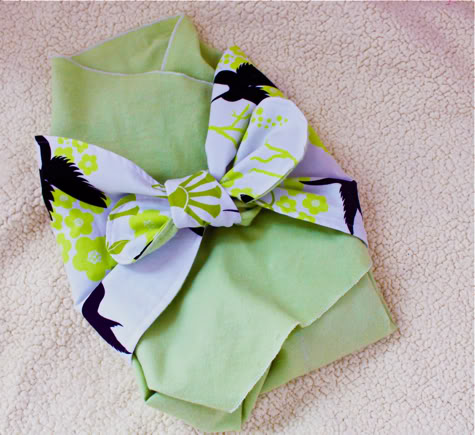
A fabric tie elevates a simple triangle swaddle into a stylish, giftable piece. This step is optional but adds significant visual appeal.
Materials Needed
• Quarter yard cotton print fabric
• Flannel scraps
• 44 to 45 inch by 10 inch fabric strip
Tie Construction Steps
- Create a tie template by folding the strip lengthwise and widthwise, then freehanding a tie shape from the fold.
- Cut flannel backing by tracing the tie shape and cutting two halves.
- Assemble by placing cotton tie face-up, positioning flannel halves right side down, aligning only the center vertical edge. Pin and sew quarter-inch seam.
- Turn right-side out through the open center seam. Use a chopstick to push out points. Press flat.
- Stabilize by inserting fusible tape along exposed edges, then topstitch quarter-inch from edge.
- Attach to blanket by folding triangle vertically, pressing center crease. Place tie folded in half, cotton side in, aligning center with crease, 3 inches down from top. Sew with zig-zag or decorative stitch.
Design Tip: Use contrasting thread or stitch pattern for visual pop.
Customize by Fabric Type
Each fabric behaves differently. Adjust your method accordingly.
| Fabric | Pre-Wash? | Hem Method | Stitch Type |
|---|---|---|---|
| Double Gauze | Test first | Double-fold or mitered | Straight stitch |
| Muslin | Yes | Double-fold or serged | Straight stitch |
| Cotton Knit | Yes | Single half-inch fold | Zig-zag or twin needle |
| Flannel | Avoid for swaddling | N/A | N/A |
Knit Tip: Stretch allows for a smaller size. A 39 by 39-inch knit swaddle works perfectly.
Wash and Care for Longevity
Proper care ensures softness, safety, and durability for years of use.
Pre-Washing Before Sewing
• Wash muslin, knit, and flannel in hot water, dry on high heat
• Double gauze: Test first, as some retain texture better unwashed
After Completion
• Wash in cold or lukewarm water, gentle cycle, baby-safe detergent
• Dry: Air-dry preferred, low heat if using dryer
• Iron on low heat with steam. Do not flatten gauze texture
• Avoid bleach, which weakens cotton fibers
Bonus: Gauze and muslin become softer and more crinkly with each wash. Babies often love the soothing sound.
Creative Design Variations to Try
Make each swaddle unique with these creative options.
Color and Pattern Ideas
• Contrasting bias binding (mint gauze with coral binding)
• Solid fabric with patterned binding
• Flannel base with cotton print tie for layered effect
Shape Options
• Square or rectangle: Easiest to wrap, most functional
• Triangle: Modern look, ideal for tie attachment
• Curved corners: Cut a gentle arc before hemming for added softness
Double-Sided Swaddle
Cut two identical shapes from different fabrics. Sew right sides together, leaving a 3 to 4 inch gap. Turn, press, and topstitch quarter-inch to close. This creates a reversible, luxurious finished piece.
Frequently Asked Questions About Making a Swaddling Blanket
What is the best fabric for a swaddling blanket?
Cotton gauze is widely considered the best fabric. It is lightweight, breathable, and becomes softer with each wash. Double gauze offers slightly more substance while remaining breathable. Cotton knit provides stretch that makes wrapping easier and helps the swaddle stay secure.
What size should a homemade swaddling blanket be?
For woven fabrics like gauze and muslin, aim for 47 by 47 inches. For knit fabrics, 39 by 39 inches works well because the stretch compensates for the smaller dimensions. This is significantly larger than many store-bought versions, which are often only 30 inches square.
Do I need to pre-wash the fabric before making a swaddle?
Yes for most fabrics. Muslin, knit, and flannel should always be pre-washed in hot water and dried on high heat to pre-shrink and soften. For double gauze, test first since some sources recommend avoiding pre-washing to preserve its texture.
How do I prevent the corners from looking bulky?
Use a mitered corner technique. Cut the corners at a diagonal before folding, sew the diagonal seam, trim the seam allowance, and press flat. This creates crisp, professional-looking corners without bulk.
Can I make a swaddle if I am a beginner sewer?
Absolutely. The double-fold hem method is beginner-friendly and produces clean results. Start with woven cotton gauze or muslin, which are forgiving and easy to work with. The entire project requires only basic sewing skills.
Key Takeaways for Making Your Own Swaddling Blanket
Making a swaddling blanket is a rewarding project that produces a superior product compared to most store-bought options. The key steps are choosing breathable natural fabrics like cotton gauze or knit, cutting to generous dimensions of at least 47 inches for woven types, and using a double-fold or mitered hem for a clean finish.
Pre-wash your fabric to prevent shrinkage later, use a 70/10 needle with 3.0 mm stitch length, and press every seam as you go. Add a decorative tie if making a triangle swaddle, or create a double-sided version for a luxurious reversible option. With proper care, your handmade swaddles will last through multiple children and become cherished keepsakes.