You’ve finished your pieced top, layered your batting, and smoothed the backing into place. Now comes the stitch that binds everything together. Understanding the different types of quilt stitches helps you choose techniques that match your project’s purpose, whether that’s heirloom handwork or bold modern texture.
This guide walks you through every major stitch category, from machine-based precision to traditional hand techniques. You’ll learn which stitches work best for bed quilts, bags, and wall hangings, plus how to match thread weight, needle size, and density to your goals.
Machine Quilting Techniques and Pattern Types
Machine quilting offers speed and consistency, making it ideal for larger projects or repeatable geometric designs. Your choice between free-motion and walking foot methods depends on the complexity of your design and the texture you want to achieve.
Free-Motion Quilting Styles
Free-motion quilting lets you guide fabric manually under a lowered feed dog, creating custom shapes and flowing designs. This approach rewards practice with unique, artistic results that machines cannot replicate on automatic settings.
Stipple and Meandering Stitches
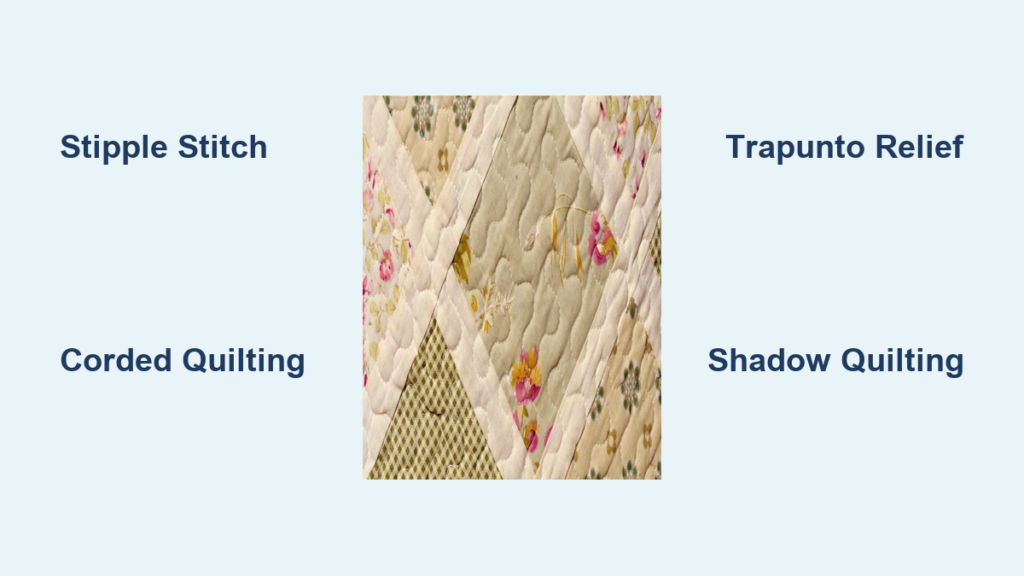
Stipple quilting uses continuous, non-crossing curves to fill background space with soft texture. It’s beginner-friendly because it hides minor inconsistencies while adding dimension to plain areas.
- Use a darning foot or free-motion presser foot
- Keep stitch length consistent by syncing hand speed with machine speed
- Begin at the quilt center and work outward in small sections
Corded and Shadow Quilting
Corded quilting, also called Italian quilting, stitches double parallel lines and threads yarn or thick thread through the channels to create raised designs. Shadow quilting layers sheer fabric like organdie or chiffon over shapes, stitching around them for a soft dimensional look.
- Ideal for wall hangings and decorative pieces
- Try 8wt or 12wt thread for visible cords
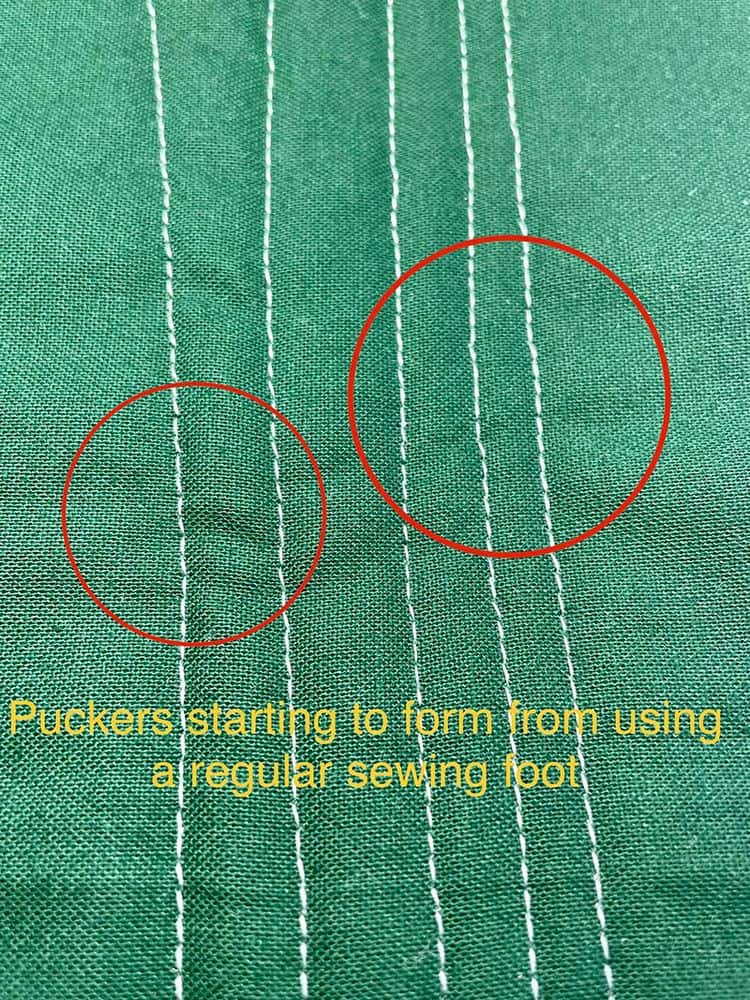
- Test tension on scrap fabric to prevent puckering
Trapunto Relief Stitching
Trapunto involves stitching a design, then cutting small slits in the backing to insert extra batting into selected motifs. This creates dramatic raised effects where flowers, stars, or geometric shapes lift off the surface.
- Choose tightly woven fabrics to prevent tearing
-
Cut only the backing layer when stuffing