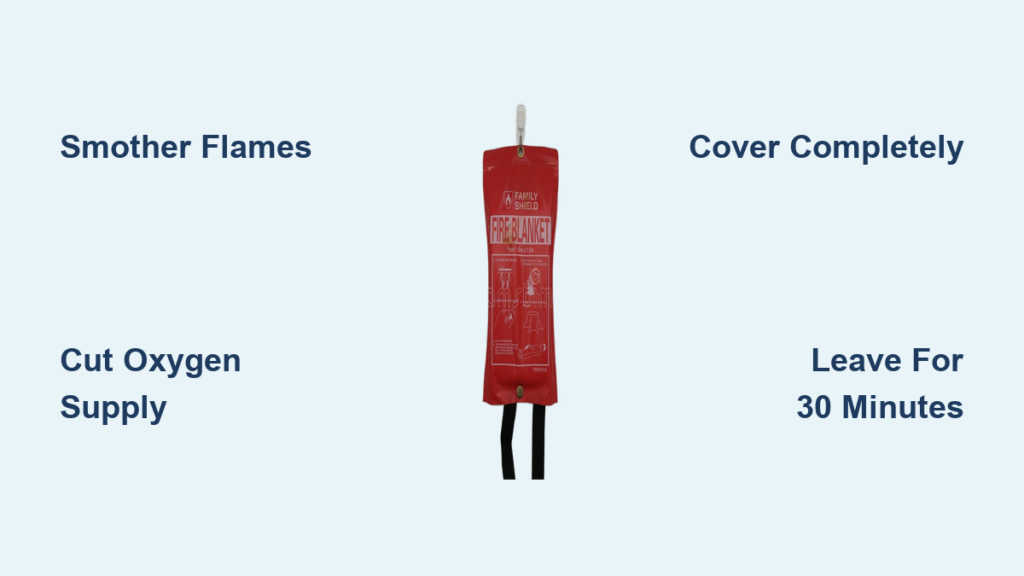
A fire blanket extinguishes a fire by smothering the flames and cutting off the oxygen supply that fire needs to burn. This simple method targets one leg of the fire triangle—the three components every fire needs to sustain itself. When you cover a fire with a fire-resistant blanket, you create a physical barrier that prevents fresh air from reaching the flames. Without oxygen, the chemical reaction that creates fire cannot continue, and the flames die out quickly.
Fire blankets are particularly useful for small, contained fires in kitchens, workshops, and homes. They leave no residue, require no training to use, and provide a clean alternative to chemical extinguishers. Understanding how they work helps you decide when to use one and when to reach for a different fire-fighting tool.
In this guide, you will learn exactly how fire blankets smother flames, what materials make them heat-resistant, proper deployment techniques, and their critical limitations. You will also discover which fire types they handle best and how they compare to other fire suppression methods.
The Science Behind Smothering: Oxygen Deprivation Explained
Fire cannot burn without oxygen. This fundamental principle is what makes fire blankets effective. When you place a fire blanket over flames, you are not cooling the fire or chemically interrupting the combustion. You are simply removing the air supply that feeds the flames.
The Fire Triangle and How Blankets Break It
Every fire requires three elements to exist: fuel, heat, and oxygen. This is known as the fire triangle. Remove any one element, and the fire goes out. Fire blankets target the oxygen component directly. By covering the flames with an impermeable layer, you cut off the oxygen supply entirely. The fire consumes the remaining trapped oxygen, and once that is gone, combustion stops.
This differs from extinguishers that cool the fuel or interrupt the chemical reaction. Fire blankets work through pure physical separation. They do not require pressurization, chemicals, or special training. The simplicity is part of what makes them so effective for the right situations.
Why Complete Coverage Matters
A fire blanket only works when it creates a complete seal around the fire. Gaps or loose edges allow oxygen to seep in, which can sustain the flames or cause reignition. For example, draping a blanket over a burning pot without pressing the edges down may suppress the flames temporarily, but once oxygen re-enters, the fire can flare up again.
The blanket must make contact with a solid surface around the fire, such as the stovetop or floor. This creates an airtight barrier. Without that seal, the smothering effect fails. Proper technique matters as much as the blanket itself.
Materials That Withstand Extreme Heat

Not all fire blankets are created equal. The effectiveness depends on the materials used to construct them. Different materials offer varying levels of heat resistance, durability, and suitability for specific fire types.
Glass Fiber: The Standard for Home Use
Glass fiber is the most common material in household fire blankets. It can withstand temperatures up to 1,200°C (2,192°F) without burning or melting. The fibers are tightly woven and often coated with silicone for added protection and heat reflection. This makes glass fiber ideal for kitchen use, where quick deployment and high heat resistance are essential.
Most home fire blankets use this material because it is affordable, effective, and readily available. It performs well for the types of fires most likely to occur in residential settings.
Kevlar and Treated Wool: Industrial Applications
Some fire blankets use Kevlar, a synthetic fiber known for its strength and thermal stability. Kevlar can resist temperatures up to 480°C (896°F) and is often blended with other materials for improved flexibility. It appears in industrial and laboratory settings where durability matters.
Treated wool is another option, particularly in laboratory environments. Wool is naturally flame-resistant, but manufacturers add chemical treatments such as zirconium acetate to boost its performance. Treated wool can survive temperatures up to 570°C (1,058°F).
Nextel and Asbestos: High-Performance Options
Nextel ceramic fibers represent the high end of fire blanket technology. These materials can resist heat up to 1,300°C (2,372°F) and appear in manufacturing and automotive settings where extreme temperatures are possible.
Asbestos was used in older fire blankets but is now banned due to serious health risks. If you encounter an old fire blanket, do not handle it. Disturbing asbestos-containing materials can release dangerous fibers. Replace any outdated blankets with modern alternatives.
Step-by-Step Deployment: Using a Fire Blanket Correctly
Using a fire blanket correctly can mean the difference between stopping a fire safely and making the situation worse. Follow these steps for proper deployment.
Retrieving the Blanket
Fire blankets typically come in quick-release pouches or wall-mounted containers. Look for pull-down tabs or handles at the top of the packaging. Grasp both straps and pull down simultaneously to release the blanket smoothly. Pulling from one side only can cause uneven unfolding and waste precious seconds.
Protecting Yourself Before Approaching
Hold the blanket in front of your body with arms extended. Use it as a shield between you and the flames. Most designs include a folded top edge that protects your hands from heat. Never approach a fire with bare hands or without full body coverage.
Covering the Fire Completely
Walk slowly toward the fire, keeping the blanket between you and the flames. Lower the blanket gently but firmly over the fire source. Do not throw the blanket, as this can cause you to miss the target or splash burning oil. For stovetop fires, ensure the blanket extends over the edges of the cooktop to seal off oxygen completely.
Leaving It in Place
Once covered, do not remove the blanket for at least 30 minutes. Even if flames are no longer visible, the fuel may still be hot enough to reignite when exposed to air. The waiting period allows the material to cool below its ignition point. Removing the blanket too early is a common mistake that leads to reignition.
After Removing the Blanket
Check for lingering heat or smoke. If the fire involved electrical equipment or batteries, consult a professional before handling the area. Never reuse a deployed fire blanket, even if it looks undamaged. Replace it immediately and store a spare in an accessible location.
Where Fire Blankets Work Best
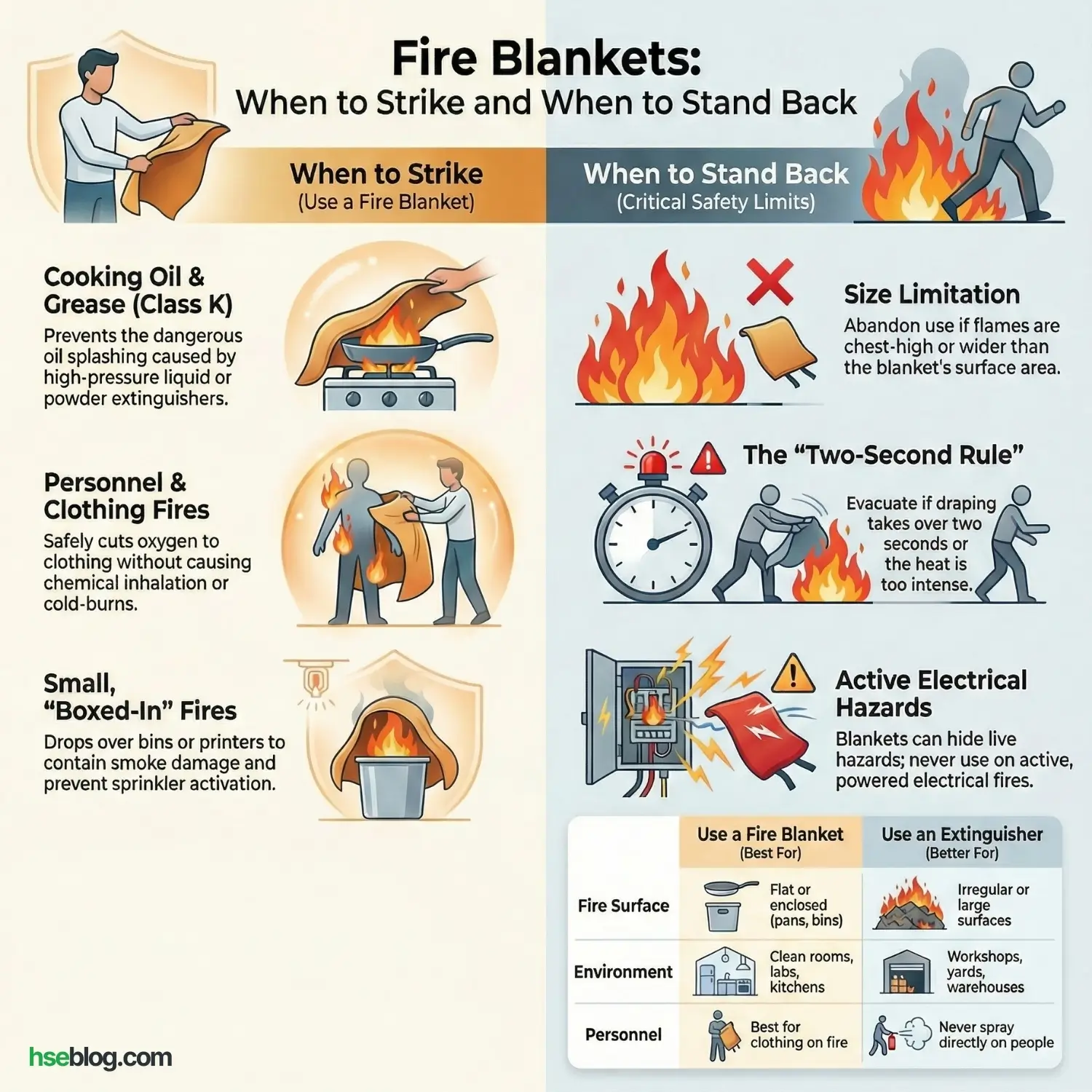
Fire blankets excel in specific scenarios where their smothering action provides a safe, clean solution. Knowing these use cases helps you respond appropriately in an emergency.
Clothing Fires: One of Their Best Uses
Fire blankets are highly effective when a person’s clothing catches fire. This is considered one of the best applications. Hand them the blanket and instruct them to stop, drop, and roll. Wrap them completely, covering the head but allowing breathing. The blanket cuts off oxygen and protects the skin from further burns. Schools, kitchens, and laboratories commonly stock fire blankets for this exact scenario.
Small Electrical Fires: Safe and Residue-Free
For fires involving toasters, phone chargers, or laptops, fire blankets are ideal. They do not conduct electricity and leave no residue, making them safer than water or foam extinguishers near electronics. This makes them particularly useful in offices and homes with multiple electronic devices. However, they are not suitable for high-voltage electrical panels or wiring.
Kitchen Fires: Handle with Caution
Fire blankets are often marketed for grease or chip pan fires, and they can work if used properly. The key is gentle placement without disturbing the hot oil. However, safety authorities in the Netherlands tested 22 fire blankets and found that 16 caught fire when used on oil fires. Six caused reignition after removal. Many blankets now carry warnings stating they are not suitable for oil and grease fires. Only use a fire blanket on a grease fire if it is specifically certified and tested for that purpose.
Emergency Escape: Protective Shield
In a smoke-filled room, use the blanket as a heat shield while escaping. Wrap children, pets, or vulnerable individuals to protect them from flames and radiant heat. Some emergency kits include compact fire blankets specifically for this purpose.
EV and Lithium-Ion Battery Fires: Specialized Blankets Only
Standard fire blankets cannot stop lithium-ion battery fires. These fires burn hotter than 1,000°C and can reignite days later. However, specialized fire blankets up to 6 meters by 9 meters can delay fire spread, contain flames, and allow safer towing. Firefighters use these large blankets to buy time, but they do not fully extinguish the fire.
When Not to Use a Fire Blanket
Fire blankets have clear limitations. Misuse can be dangerous and waste precious time during an emergency.
Fire Is Too Large
If flames extend beyond the blanket’s size, typically 1 meter by 1 meter for home models, the blanket cannot create a seal. Attempting to cover a large fire wastes time and increases injury risk. Evacuate and call emergency services instead.
Oil or Grease Fires (Unless Certified)
As demonstrated in Dutch safety tests, many blankets fail on oil fires. Some ignite, others allow reignition. Unless the blanket is specifically rated for Class F (cooking oil) fires, avoid using it. Opt for a Class F wet chemical extinguisher instead.
Lithium-Ion Battery Fires
Standard fire blankets are ineffective against these fires. They require massive water volume or specialized suppression systems. A blanket may slow the fire slightly but cannot stop thermal runaway.
High-Voltage Electrical Fires
Only use blankets rated for high-voltage use near industrial equipment. Regular blankets may not insulate properly, risking electric shock.
Design Features for Fast Access
Fire blankets include several design elements to ensure they work when you need them most.
Quick-Release Packaging
Most come in snap-open pouches or wall-mounted cases with pull tabs. This allows deployment in seconds, even under stress.
Pull-Down Tails for Hand Protection
The built-in handles or folded edges let you hold the blanket without exposing skin. This feature is crucial for safely approaching flames.
Wall-Mountable and Compact
Many include brackets or holes for mounting near stoves, labs, or workbenches. Household models fit in drawers or cabinets while remaining easily accessible.
Clear Labels and Instructions
Look for ISO or BS EN 1869 certification and fire class ratings. Labels should state if the blanket is unsuitable for oil fires.
Maintenance and Replacement
A fire blanket only works if it is in good condition. Follow these guidelines to ensure reliability.
Regular Visual Inspections
Check monthly for fraying, tears, or discoloration from heat or moisture. Inspect the packaging for damage. Replace immediately if any issue is found.
Professional Inspection in Commercial Settings
Businesses and labs must follow FIA Code of Practice, requiring annual inspections for BS EN 1869-compliant blankets. This ensures compliance and safety.
Storage Tips
Keep the blanket in a dry, dust-free area. Avoid exposure to grease, sunlight, or chemicals. Mount it near high-risk zones but out of reach of children.
Replacement Timeline
Replace the blanket after any use, even if it appears undamaged. Replace every 7 years due to material aging. Replace earlier if expired or compromised.
Fire Blanket vs. Other Fire-Fighting Tools
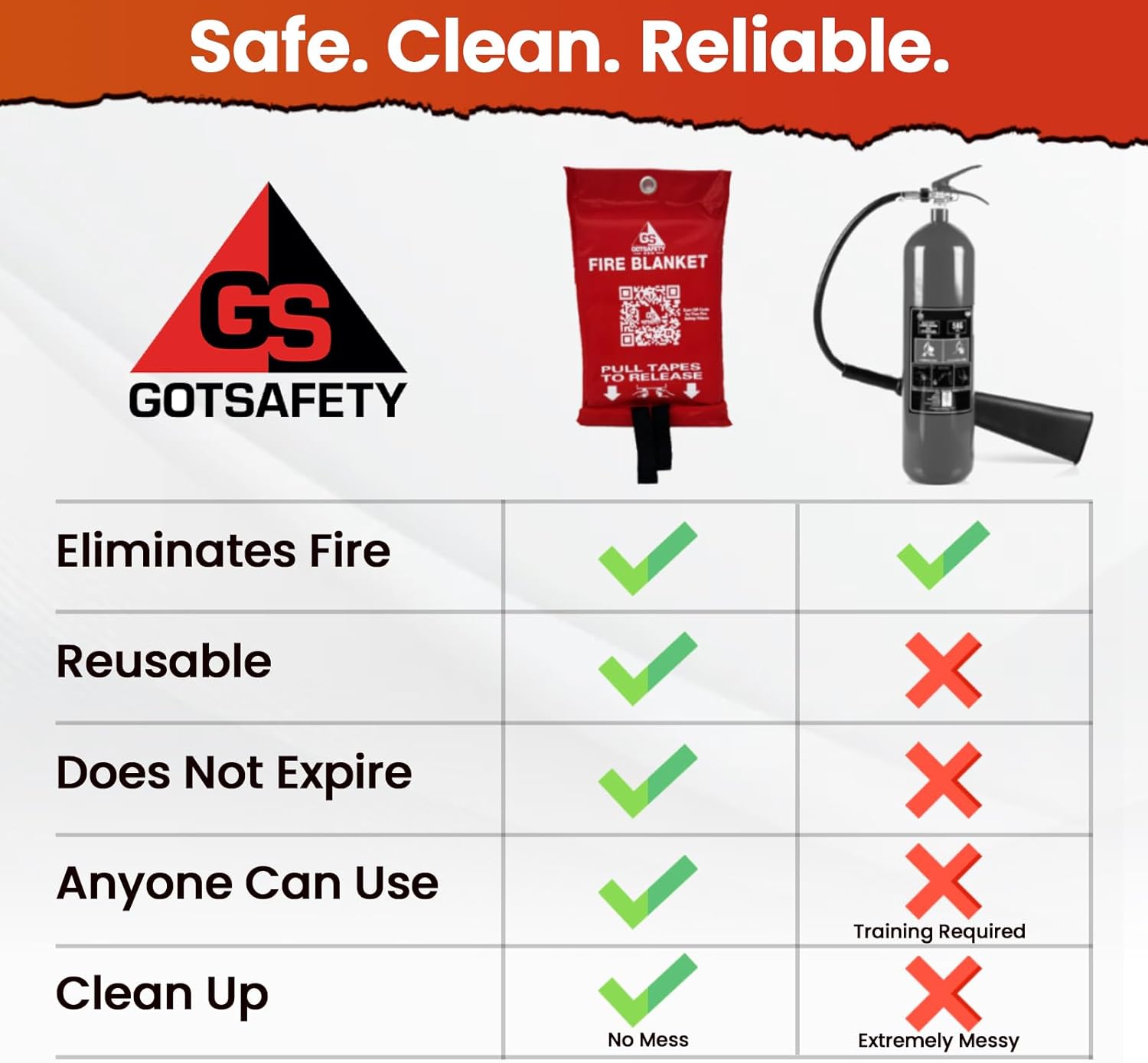
Understanding how fire blankets compare to other options helps you choose the right tool for each situation.
| Feature | Fire Blanket | ABC Dry Chemical Extinguisher | Water Extinguisher |
|---|---|---|---|
| Extinguishing Method | Smothers (cuts oxygen) | Interrupts chemical reaction | Cools fuel |
| Residue | None | Powder (can damage electronics) | Water damage |
| Best For | Clothing, small electrical, contained fires | General home fires | Wood, paper, fabric (Class A) |
| Ease of Use | Simple, no training needed | Requires practice | Risk of misuse |
| Safety Near Electronics | High | Moderate (powder can conduct) | Low (shock risk) |
| Reusability | Single use | Single use | Rechargeable |
Frequently Asked Questions About Fire Blankets
Can a fire blanket be used on all types of fires?
No. Fire blankets work best on small, contained fires involving clothing, low-voltage electrical equipment, or trash. They are not reliable for grease fires, large fires, or lithium-ion battery fires. Always check the fire class rating before use.
How long should I leave a fire blanket on a fire?
Leave the blanket in place for at least 30 minutes. Even if flames are not visible, residual heat can cause reignition when oxygen re-enters. Wait until the area has cooled completely before removing the blanket.
Can I reuse a fire blanket after using it once?
No. Fire blankets are designed for single use. Replace them immediately after deployment, even if they appear undamaged. The heat exposure can compromise the fire-resistant materials.
Are fire blankets safe for grease fires?
Many fire blankets are not safe for grease fires. Testing by Dutch authorities found that most blankets caught fire or allowed reignition when used on oil fires. Only use a blanket specifically certified for Class F (cooking oil) fires.
What is the lifespan of a fire blanket?
Replace fire blankets every 7 years, per manufacturer and Fire Industry Association recommendations. Replace earlier if the blanket shows signs of damage, discoloration, or contamination.
Key Takeaways for Using Fire Blankets Effectively
A fire blanket extinguishes fire by smothering the flames and cutting off the oxygen supply. This simple mechanism makes it effective for clothing fires, small electrical fires, and contained fires in the early stages. The materials used, primarily glass fiber, can withstand extreme temperatures and create a reliable barrier against air.
Proper deployment is critical. Retrieve the blanket carefully, protect yourself with the built-in hand shield, cover the fire completely, and leave it in place for at least 30 minutes. Never reuse a deployed blanket.
However, fire blankets have significant limitations. They are not reliable for grease fires unless specifically certified, and they cannot handle lithium-ion battery fires or large blazes. Understand these limits to avoid dangerous misuse.
For comprehensive fire safety, install fire blankets in kitchens, workshops, and vehicles. Combine them with ABC fire extinguishers and smoke detectors. Train household members in proper deployment techniques, and inspect your fire blankets regularly to ensure they are ready when needed.