You’ve got a cozy throw blanket, but storing it neatly or displaying it stylishly feels like a constant challenge. What if you could turn that blanket into a plush, pillow-like bundle in under a minute, no sewing, no tools, just folds and tucks? Folding a pillow blanket isn’t just a space-saving hack; it’s a clever way to transform everyday textiles into functional decor. Whether you’re organizing a small apartment, packing for a trip, or styling your living room, mastering this skill keeps things tidy and elegant. In this guide, you’ll learn four proven methods, each tailored for different needs from speed to style.
Quick Simple Square Method (Under 30 Seconds)
The simple square is the fastest way to convert any lightweight blanket into a compact, pillow-shaped bundle. This method works perfectly for quick storage or if you’re new to folding pillow blankets.
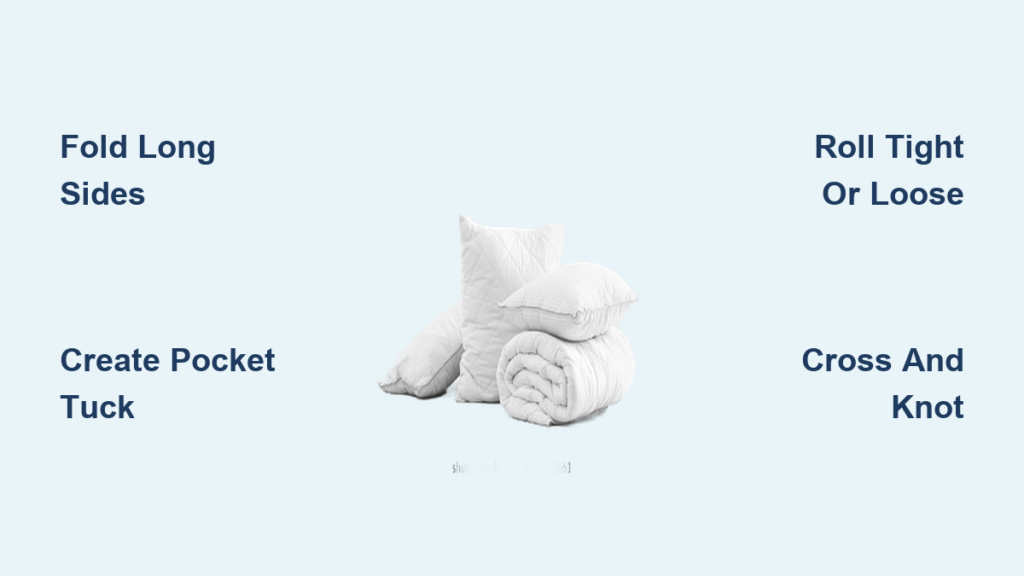
Fold Long Sides to Center
Lay your blanket flat on a bed or floor. Grab one long edge and fold it toward the middle, covering about half the width. Repeat with the opposite long side so both meet or slightly overlap in the center. You now have a layered strip running the length of the blanket.
Create the Pocket Tuck
Fold one short end toward the center, about one-quarter of the way. Then fold the opposite end over the top, like closing a book. The first fold creates a pocket, and the second gets tucked inside. Give the bundle a gentle squeeze to settle the layers.
Slide the final folded edge into the open pocket created by the first end. Adjust the corners for symmetry. This square holds its shape through friction and tucking, no knots or clips needed.
Pro Tip: Use this method for lightweight fleece or cotton throws. It takes less than 30 seconds and fits neatly into shelves or under furniture.
Structured Square Pillow With Hidden Seams

Want a cleaner, more polished look? This version hides raw edges and delivers a professional finish ideal for display on couches or guest rooms.
Start With a Hidden Pocket
Begin with the blanket flat. Take one short end and fold it under about one-quarter of the way down. This creates a hidden pocket. Leave the other end open for now.
Fold Sides and Quarter the End
Take one long side and fold it inward, covering roughly one-third of the width. Bring the opposite long side over it so they meet or slightly overlap. Now fold the open end in three stages: first one-quarter toward the pocketed end, then again halving the remaining section, then the final flap to complete a tight square.
Flip and Tuck for Seamless Finish
Flip the whole piece over so the pocket faces up. Reach into the pocket and pull it outward, turning it inside out. Drape this everted flap over the folded body and tuck the raw edge beneath the layers. The reverse side becomes the outer cover, concealing all seams.
Result: A seamless, cushion-like square that resists unraveling. Great for coffee tables or guest rooms.
Common Mistake: Skipping the flip step leaves visible edges. Always invert the pocket for that boutique look.
Cylindrical Roll Pillow for Support and Travel
Need lumbar support or a sleek travel companion? Roll your blanket into a firm bolster that works as a neck pillow or backrest.
Form the Base Strip
Spread the blanket flat. Fold one short end under by about 25% to create a small square pocket. Then fold each long side toward the center, about one-third width each, so they meet or slightly overlap. You now have a narrow central panel.
Roll Tight or Loose
Starting at the end without the pocket, roll tightly toward the pocketed end. Tightness determines firmness. A tight roll gives firm support perfect for backrests. A loose roll creates a soft, plush feel ideal for decor.
Cover the End With Everted Pocket
When you reach the pocket, insert your hand into the flap from behind. Pull it outward, turning it inside out. Use this extended fabric to wrap around the open end of the roll. Tuck the exposed edge into the everted pocket to lock it in place.
Design Tip: Choose patterned or fringe blankets. The details shine when rolled. This method works best with medium-weight knits or chenille.
Use Case: Toss it in your car for neck support or place it at the base of your sofa for boho flair.
Bohemian Knot Pillow Style

Go bold with a bohemian knot, perfect for Instagram-worthy setups or playful spaces where style takes priority.
Roll Both Sides Toward Center
Lay the blanket flat. Starting from one long edge, roll tightly toward the middle. Stop when you reach the halfway mark. Repeat from the opposite long side. You’ll have two rolls meeting in the center.
Cross and Knot the Rolls
Lift both rolled ends. Cross one over the other to form an X. Then pass one end through the loop created beneath. Pull gently to form a knot, like tying shoelaces.
Adjust Tightness for Shape
A loose knot creates a soft, round bun that looks fluffy and inviting. A tight knot forms a compact core that holds shape longer. Tuck any loose fabric ends underneath the knot layers to hide frayed edges and stabilize the form.
Variation: Use an oversized blanket for a dramatic, high-volume knot ideal for photo backdrops or kids’ rooms.
Warning: Slippery fabrics like satin may loosen over time. Stick to fleece, cotton, or knit for best hold.
Choosing the Right Blanket for Folding
Not all blankets fold equally. Get the best results by matching material and size to your chosen method.
Best Sizes and Fabrics
Ideal size is 50″ x 60″, which is the standard throw. Top materials include fleece for lightweight grippy texture that holds folds well. Cotton is breathable and easy to roll. Knit or cable weave adds texture and looks great on display. Chenille or Sherpa is plush and ideal for knotting methods.
Avoid These Types
Heavy wool is too stiff to roll or tuck smoothly. Slippery satins won’t hold knots or pockets. Oversized blankets over 70″ wide become bulky unless you’re intentionally creating large pillows.
Pro Tip: Test fold on a hard surface like a table. Softer beds cause misalignment and uneven folds.
Practical Uses for Folded Pillow Blankets
Turn function into fashion with smart applications across home and travel.
Maximize Storage Space
Fold blankets into square or cylindrical pillows to stack neatly in bins, under beds, or on shelves. Unlike loose folds, these shapes resist tangling and creasing. Label containers “folded pillow style” to keep systems consistent.
Elevate Your Home Decor
Display folded blankets as accent pieces on couch armrests, at the foot of a bed, or in woven baskets. Pair with matching throw pillows for cohesive styling. Switch styles seasonally. Cylindrical rolls work well for winter, while knots bring summer vibes.
Travel and Camping Hacks
Roll or knot your blanket to save luggage space. Once unpacked, it becomes a neck pillow, a seat cushion, or an emergency blanket. No extra gear needed. Just refold and go.
Perfect for Dorm and Small Spaces
In tight quarters, every inch counts. Use the simple square method for daily tidying. Teach roommates or kids the steps. It’s a fun and useful chore.
Quillows: The Permanent Pillow Blanket Solution
Want a no-fail, reusable version? Try a quillow, a hybrid blanket with a built-in pocket that never requires relearning folds.
How Quillows Work
Fold the blanket into thirds lengthwise. Roll or fold into a square. Slide the entire bundle into the attached fabric pocket. Many quillows are reversible, with one side a blanket and the other a decorative pillow cover.
DIY Your Own Quillow
Turn any throw into a quillow by cutting a fabric pocket 12″ to 18″ wide from matching or contrasting material. Sew or glue it securely to one corner or edge. Use durable thread or waterproof adhesive for longevity.
Best For: Kids’ rooms, camping, or frequent travelers who hate relearning folds.
Comparing All Folding Methods

Choose the method that matches your priority. The simple square takes under 30 seconds and works best for storage and beginners. The structured square takes 45 to 60 seconds and delivers high stability for decor and display. The cylindrical roll takes about 45 seconds and offers high stability for lumbar support and travel. The knot takes 60 seconds or more with medium-high difficulty and works best for style and visual appeal.
Quick Guide: Choose simple square for speed. Choose structured square or cylindrical for looks. Choose knot pillow for flair. Choose quillow for a permanent solution.
Maintenance and Longevity Tips
Keep your folded pillow blankets looking fresh with simple care routines.
Washing and Drying
Follow care labels. Most throws are machine washable in cold water on a gentle cycle. Avoid bleach to preserve color and texture. Air dry or use low heat to prevent shrinkage. Refold while slightly damp for crisp edges.
Reduce Wear and Tear
Rotate folding methods to avoid crease fatigue. Knots and rolls stress fabric less than repeated sharp folds. Store in dry, ventilated areas to prevent mildew.
Final Tips for Folding Pillow Blankets Successfully
Mastering how to fold a pillow blanket turns clutter into charm. With just a few precise moves, you gain more space, better style, and smarter functionality. Whether you’re rolling for travel, knotting for decor, or tucking for tidiness, each method gives you control over your environment one fold at a time.
Sharpen folds by using a table edge or smoothing with your palm. Prevent slipping with textured or non-slip-backed blankets. Teach kids the simple method. It’s a fun way to learn organization. Use neutral tones in offices or formal spaces. Save bold prints for casual areas.
Try one method today. Then try another. Soon, you won’t just own blankets. You’ll shape them.
Frequently Asked Questions About Folding Pillow Blankets
What is the fastest way to fold a blanket into a pillow?
The simple square method takes under 30 seconds and requires just three folds and a tuck. Lay the blanket flat, fold both long sides to center, fold both short ends inward, then tuck the final edge into the pocket created by the first fold.
Which blanket material works best for folding?
Fleece, cotton, and knit fabrics work best because they’re lightweight and grip well. Fleece holds folds reliably, cotton breathes well, and knits add decorative texture. Avoid heavy wool, satin, and oversized blankets over 70 inches.
How do I keep my folded pillow blanket from unraveling?
Use the pocket tuck technique built into each method. For structured square and cylindrical rolls, always invert the pocket inside out before covering the end. This locks the fabric in place through friction.
Can I wash a folded pillow blanket?
Yes, most throw blankets are machine washable. Wash in cold water on gentle cycle, avoid bleach, and air dry or tumble dry low. Refold while slightly damp to maintain crisp shape.
What is a quillow and how does it work?
A quillow is a blanket with a built-in fabric pocket sewn along one edge. Fold the blanket, then slide it into the pocket to form a pillow. It provides a permanent solution that never requires relearning the folding steps.
How do I choose between the four folding methods?
Choose simple square for speed and storage. Choose structured square for display and polished looks. Choose cylindrical roll for lumbar support or travel. Choose knot pillow for bohemian style and visual impact.