Every panel of the AIDS Memorial Quilt carries a name, often more than one, stitched into fabric as a permanent testament to lives cut short by HIV/AIDS. With over 110,000 names woven into roughly 50,000 panels, each 3 by 6 foot section serves as a symbolic grave, a personalized tribute, and a public demand for remembrance. These aids quilt names are not cold statistics; they are sons, daughters, lovers, artists, activists, and friends whose stories live on through cloth, thread, and memory.
Since its debut in 1987, the Quilt has traveled the world, displayed in fragments and full spans, read aloud in solemn ceremonies, and digitized for global access. The names woven into its panels reflect a generation lost but never forgotten, especially within the LGBTQIA+ community. This guide explores how names are chosen, how panels are created, how to find specific aids quilt names, and how the legacy of the Quilt continues to educate, heal, and inspire.
Who Gets Memorialized with AIDS Quilt Names
One Name, One Panel (Usually)
Each standard 3 by 6 foot panel typically honors one individual, though some commemorate multiple people, especially couples or groups lost in the same wave of the epidemic. The size was deliberately chosen to mirror the dimensions of a human grave, making each panel a symbolic burial site for those often denied funerals due to stigma or family rejection.
When a panel includes multiple names, the people are usually connected by deep personal bonds: partners, siblings, or close friends who died within months of each other. Some panels honor entire families or circles of friends from tight-knit communities devastated by the crisis. Still, the guiding principle remains: each name deserves visibility, dignity, and space.
The Wide Reach of AIDS Quilt Names
Anyone lost to HIV/AIDS can be remembered with a panel. While the epidemic disproportionately affected gay men in the U.S., the Quilt reflects the full scope of the pandemic: women, children, hemophiliacs, transfusion recipients, and people of all races, nationalities, and backgrounds. Panels have been submitted for:
- Gay men who were shunned by families
- Mothers who contracted HIV through blood transfusions
- Children born with the virus
- Healthcare workers exposed on the job
- Transgender individuals who faced dual stigma
- Public figures like Rock Hudson and Ryan White
The Quilt rejects hierarchy in mourning. A celebrity’s panel sits beside that of an unknown waiter, teacher, or activist, each treated with equal reverence.
How Names Are Chosen
The decision of whose name appears on a panel rests with loved ones: partners, parents, siblings, friends, or caregivers. In many cases, especially during the early years, partners, often not legally recognized, were the sole advocates for memorializing their loved ones. Submitting a name was an act of defiance against silence and shame.
The process begins emotionally. Creators reflect on how the person lived, not just how they died. The name selected is almost always the one by which the person was known in life, sometimes a birth name, sometimes a chosen name, nickname, or drag name. These choices reflect identity, pride, and personal truth.
Creating a Panel: Memory in Fabric

Designing a Personal Tribute
A panel is far more than a name sewn onto cloth; it is a canvas for memory. Creators use colors, symbols, photographs, clothing, and objects that reflect the individual’s personality. A dancer might be remembered with sequined slippers, a writer with a typewriter key, and a chef with an apron patch.
Common elements include:
- Names in bold lettering, often hand-painted or appliquéd
- Photographs transferred onto fabric
- Personal items like patches from jackets, jewelry, or military insignia
- Symbols such as rainbows, doves, candles, or protest slogans
- Humor and joy expressed through cartoons, inside jokes, or playful designs
The goal is to celebrate life, not just mark death. Many panels radiate warmth, humor, and defiance, even amid sorrow.
Submission and Approval Process
Creating a panel is open to anyone, anywhere. Since 1987, the NAMES Project has provided guidelines for construction to ensure durability and uniformity. Panels must:
- Measure exactly 3 feet by 6 feet
- Be made of durable fabric (not paper or perishable materials)
- Include the full name of the person commemorated
- Optionally include date of birth and death
Once completed, panels are sent to the National AIDS Memorial in San Francisco, where they are cataloged, photographed, and added to the archive. While there is no formal approval process denying panels, staff may contact creators if a panel risks damage or includes inappropriate content such as hate speech.
Repair and Preservation
Over time, fabrics fade, threads loosen, and materials degrade. The National AIDS Memorial hosts Panel Making and Repair Workshops in the Bay Area and partners with local chapters to maintain the Quilt’s integrity. Volunteers re-stitch seams, reinforce borders, and preserve fragile elements, ensuring aids quilt names remain visible for future generations.
Notable AIDS Quilt Names and Panels
Roger Lyon: “I Speak for the Dead”
Roger Lyon’s panel holds a special place in the Quilt’s history. A gay rights activist, Lyon testified before a San Francisco Board of Supervisors in 1982, pleading for funding to fight the emerging epidemic. His words, “I speak for the dead. I see my friends dying. This disease is the greatest threat to public health since the Black Plague,” became a rallying cry.
When he died in 1984, his panel was one of the earliest created. It was displayed at the National Museum of American History from June 2011 to February 2012, marking one of the first times the Quilt entered a major U.S. museum as a historical artifact and political statement.
The Smithsonian Panel: A Meta-Memorial
In 2013, Smithsonian staff and volunteers created a unique 12 by 12 foot panel, four times the standard size. Featuring the Smithsonian Castle and miniature quilt panels on the lawn, it included names of loved ones lost to AIDS. This panel symbolizes institutional recognition of the Quilt’s cultural significance and the role of museums in preserving marginalized histories.
Panels of Public Figures
While most aids quilt names belong to private individuals, some panels honor well-known figures:
- Rock Hudson, the Hollywood star whose 1985 diagnosis brought national attention to AIDS
- Ryan White, the teenage hemophiliac who fought discrimination and became a national advocate
- Earl F. Martin, the first openly gay bishop in the U.S. Episcopal Church
- Keith Haring, the artist and activist whose bold visuals mirrored the Quilt’s mission
These panels draw public attention, but they exist alongside thousands of unknown names, reminding viewers that every life matters equally.
Finding AIDS Quilt Names in the Archive
Online Search: The Virtual Exhibit
With the physical Quilt too large to display in full, the AIDS Memorial Quilt Virtual Exhibit is now the primary way to find names. Hosted by the National AIDS Memorial, the digital archive allows users to:
- Search by first or last name
- Browse panels by year of death, location, or cause
- View high-resolution images of each panel
- Share tributes on social media
- Submit new panels or updates
The site includes over 48,000 panels and is continually updated. It ensures that even those who cannot attend a physical display can find, honor, and remember.
Library of Congress Archive
In 2019, the Library of Congress’s American Folklife Center received the official archive of the Quilt, including over 200,000 records. Of these, more than 125,000 items have been digitized with support from the Ford Foundation. The collection includes:
- Letters from creators explaining their panels
- Diaries and personal journals
- Photographs of the deceased
- Audio recordings of panel dedications
- Administrative records of the NAMES Project
Researchers, students, and families can access these materials online, offering deeper context behind the names on the panels.
Reading the Names: A Living Tradition
At every major Quilt display, a powerful ritual takes place: the reading aloud of names. Volunteers walk the rows, calling out each name with care and dignity. This practice began in 1987 on the National Mall and continues today at World AIDS Day events, museum exhibits, and community gatherings.
Hearing a loved one’s name spoken in public, often for the first time since their death, can be profoundly healing. It transforms silence into sound and absence into presence.
The Quilt’s Legacy: AIDS Quilt Names That Teach
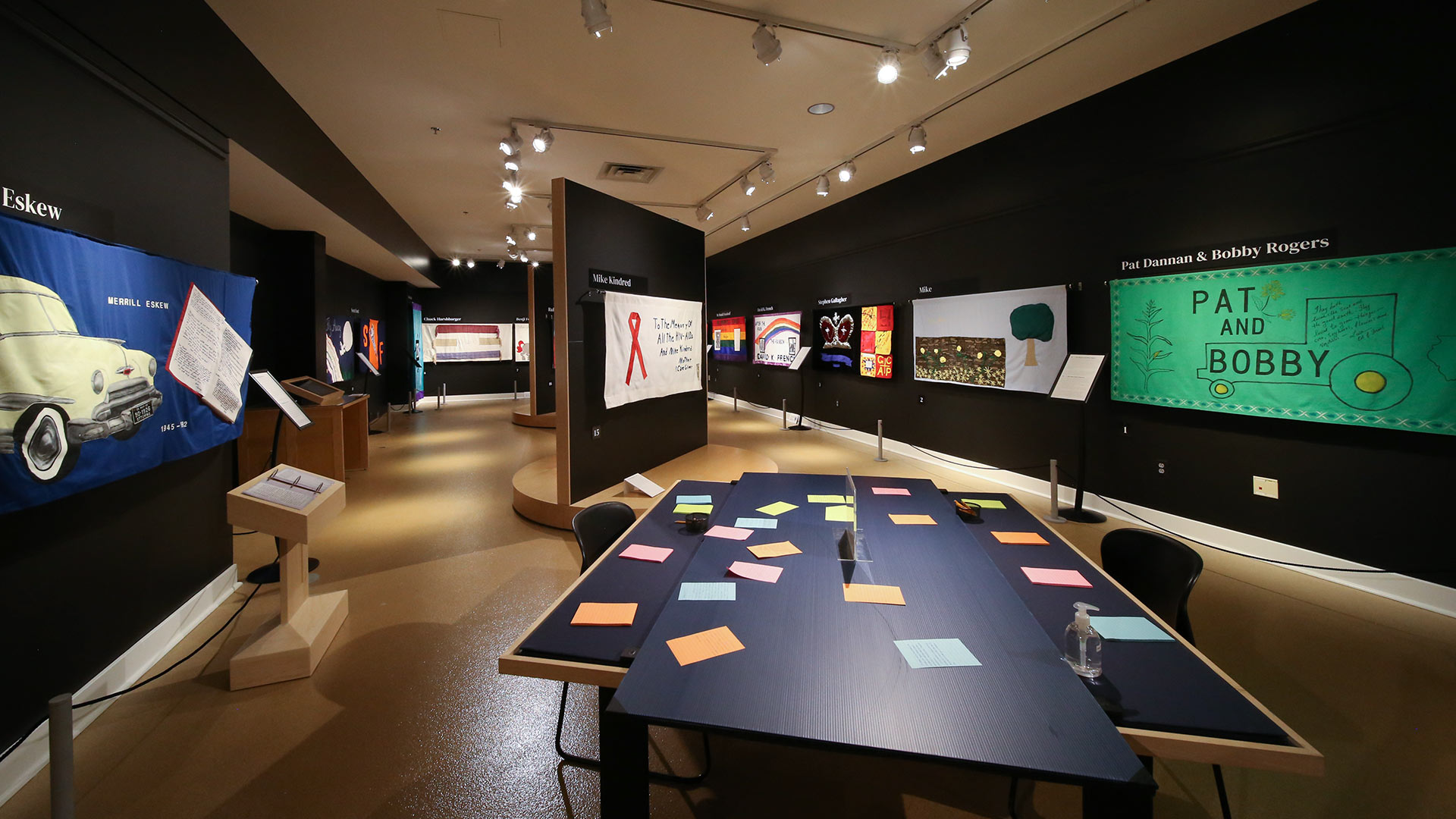
Educational Tool in Schools and Museums
The Quilt is more than a memorial; it is a teaching tool. Educators use it to discuss:
- The history of the HIV/AIDS epidemic
- LGBTQIA+ rights and stigma
- The power of grassroots activism
- The role of art in social change
Courses like Julia Bryan-Wilson’s “Handicraft and Contemporary Art” at UC Berkeley use the Quilt to explore how craft becomes protest. Students analyze panels not just for aesthetics, but for political meaning, emotional resonance, and cultural context.
“Surviving Voices” Video Series
The National AIDS Memorial produced 19 short films titled “Surviving Voices: Untold Stories of the AIDS Memorial Quilt.” These feature interviews with panel creators, including partners, parents, and siblings, who share intimate memories of the people they lost. The videos connect aids quilt names to faces, stories, and emotions, making the Quilt accessible to younger generations who did not live through the crisis.
Inspiring New Art and Activism
The Quilt continues to inspire artists and activists. In 2018, artist Anicka Yi created “Our Love Is Bigger Than an AIDS Quilt,” an immersive installation that referenced the Quilt’s emotional scale. Other projects, like the NAMES Project Global Quilt, encourage international participation, proving the model is still relevant.
How to Contribute a Name to the AIDS Quilt

Start with a Name, End with a Legacy
If you have lost someone to HIV/AIDS, you can create a panel. The process is simple:
- Choose the name you wish to honor
- Gather materials that reflect their life
- Follow the 3 by 6 foot guideline
- Submit it to the National AIDS Memorial
No sewing experience is required. Local chapters offer workshops and support. The act of creation is itself therapeutic, a way to process grief through art.
Support the Quilt’s Future
The Quilt is a living project. New panels are still being made, especially for those who died recently or whose stories were hidden for decades. The National AIDS Memorial calls for:
- Donations to fund preservation and digitization
- Volunteers for repair and display
- Educators to integrate the Quilt into curricula
- Families to submit long-overdue panels
Every contribution ensures that no aids quilt names are forgotten.
Frequently Asked Questions About AIDS Quilt Names
How many names are on the AIDS Memorial Quilt?
The Quilt commemorates more than 110,000 individuals through roughly 50,000 panels. Some panels honor a single person, while others include multiple names connected by family or community bonds.
Can anyone add a name to the AIDS Quilt?
Yes. Anyone lost to HIV/AIDS can be memorialized with a panel. Loved ones, including partners, family members, and friends, decide whose name appears and design the panel to reflect that person’s life.
How do I find a specific name in the AIDS Quilt?
Use the AIDS Memorial Quilt Virtual Exhibit on the National AIDS Memorial website. You can search by first or last name, browse by year or location, and view high-resolution images of each panel.
Where is the AIDS Quilt kept today?
The physical Quilt is housed in San Francisco, California, under the stewardship of the National AIDS Memorial since November 2019. The Library of Congress’s American Folklife Center also holds the official archive of over 200,000 records.
How big is each AIDS Quilt panel?
Each standard panel measures exactly 3 feet by 6 feet, a size chosen to approximate the dimensions of a human grave. The entire Quilt weighs an estimated 54 to 55 tons.
Can I create a panel without sewing experience?
Yes. No sewing skill is required. Local chapters and the National AIDS Memorial host Panel Making Workshops that teach beginners the craft and provide support throughout the process.
Key Takeaways for Honoring AIDS Quilt Names
The AIDS Memorial Quilt transforms grief into action, statistics into stories, and silence into remembrance. Each of the more than 110,000 aids quilt names stitched into its fabric represents a life that mattered, a person loved, and a story worth preserving. Whether you are searching for a loved one, creating a panel, or simply learning, your engagement keeps the legacy alive.
The Quilt is not a monument to the past; it is a call to remember, act, and care. By honoring aids quilt names through panels, displays, and education, you ensure that future generations understand both the cost of indifference and the power of community. Visit the Virtual Exhibit today, search for a name, or consider how you might contribute to this living archive of love and resistance.