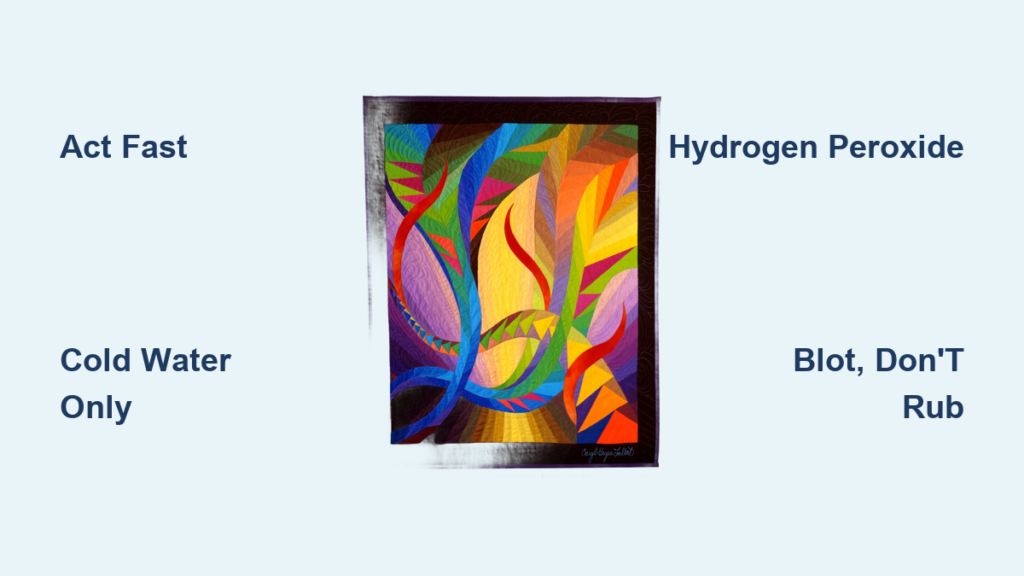
A single drop of blood on your quilt can feel devastating, especially on a hand-stitched heirloom or a freshly finished project. Whether you pricked your finger during applique, your pet had a minor accident, or you discovered an old stain on a donated quilt, knowing how to get blood out of quilt fabric quickly makes the difference between a clean save and a permanent mark.
This guide walks you through every expert-tested method, from immediate cold water rinses to hydrogen peroxide treatments and even the surprising saliva trick used by veteran quilters. You will learn which approach works best for fresh versus dried stains, which solutions are safe for cotton and blends, and how to avoid common mistakes that set stains permanently. By the end, you will have a clear action plan for any blood stain scenario.
Act Fast on Fresh Blood Stains

Speed matters most when blood is still wet. The faster you respond, the easier the stain lifts from quilt fibers.
Rinse with Cold Water Only
Hot water is your worst enemy here. Heat causes blood proteins to coagulate and bond permanently with fabric fibers.
- Hold the stained area under cold running water from the back of the fabric to push blood outward, not deeper in.
- Gently massage the spot with your fingers to loosen the blood.
- Continue rinsing for 1 to 2 minutes or until the water runs clear.
A faint shadow may remain even with quick action, especially on absorbent cotton. This is normal and can be addressed with targeted treatment.
Skip These First-Step Mistakes
Many people instinctively reach for soap or hot water. Both reduce your chances of full removal. Stick to cold water only for the initial rinse.
Try the Saliva and Cotton Thread Trick
This sounds unusual, but it is a well-kept secret among hand quilters who frequently prick their fingers during applique.
Why Your Own Saliva Works
Human saliva contains enzymes like amylase and peroxidase that break down blood proteins. When the saliva comes from the same person who bled, the biological match enhances the breakdown effect dramatically.
Step-by-Step Application
- Cut a short piece of 100% cotton thread.
- Chew one end until it is fully saturated with your saliva.
- Roll the wet thread into a small dabbing tool.
- Gently tap the blood stain without rubbing.
- Rinse again with cold water.
This method works best on small, fresh blood spots on 100% cotton. It is not effective on synthetic blends or dried stains. Keep a spool of cotton thread near your sewing workspace for instant access.
Remove Dried Blood with Hydrogen Peroxide
When blood has dried or set into fibers, cold water alone will not cut it. Hydrogen peroxide is the top-recommended solution by nurses, ER staff, and experienced quilters for both fresh and dried stains.
Why Hydrogen Peroxide Works
It acts as an oxidizing agent that breaks down hemoglobin on contact. You will see a foaming reaction when it meets blood, which lifts the stain without harsh scrubbing.
Application Steps
- Test on a hidden seam allowance first to check colorfastness.
- Pour or spray 3% hydrogen peroxide directly onto the stain.
- Wait 1 to 2 minutes and watch for foaming.
- Blot with a clean cloth or paper towel to absorb lifted residue.
- Repeat if necessary.
- Launder as usual once the stain disappears.
For large or stubborn stains, let the peroxide sit for 5 to 10 minutes before blotting.
Safety on Different Fabrics
Hydrogen peroxide has been safely used on cotton quilt tops, polyester-cotton blends, upholstery, carpets, and white shoes with no reported discoloration. For dark or vibrant quilt blocks, dilute the peroxide 1:1 with water as a precaution.
Use Commercial Stain Removers Like Shout Pads
When peroxide is not on hand, commercial stain removers offer a convenient alternative, especially for quilters who want on-the-spot protection.
How to Use Shout Take-Along Pads
- Dab the pad directly onto the blood spot.
- Let it sit for 5 to 10 minutes.
- Blot with a damp cloth.
- Launder normally.
These pads are pre-moistened with a stain-lifting formula and require no mixing or measuring. Keep a box near your sewing machine for emergencies.
Soak in White Vinegar for Stubborn Stains
When peroxide and commercial removers fall short, white vinegar offers a gentle but effective backup solution.
Mix the Soak Solution
- Combine 1 part white vinegar with 2 parts cold water.
- Submerge the stained area for 30 minutes to 1 hour.
- Gently agitate by hand.
- Rinse thoroughly with cold water.
- Wash in the machine using cold water and mild detergent.
A shirt soaked in vinegar after a car accident was restored to good-as-new condition, even after significant blood exposure. This method works well for larger stained areas or when you want to avoid chemical oxidizers.
Match Your Method to Your Quilt Fabric
The quilt material determines which method is safest and most effective.
Cotton Quilts Accept All Methods
100% cotton responds well to cold water, saliva treatment, hydrogen peroxide, vinegar soaks, and commercial stain removers. No fiber degradation has been reported after treatment, even on untreated or pre-washed cotton.
Blends and Synthetics Need Careful Selection
There is no confirmed data that the saliva method works on polyester, rayon, or microfiber blends. However, hydrogen peroxide has been tested on synthetic carpets, rugs, and upholstery with no damage. Vinegar is also naturally gentle and safe for most blends.
For non-cotton quilts, use peroxide or vinegar and avoid the saliva method.
Avoid These Costly Mistakes
Even with the right tools, errors can make stains worse or permanent.
Common Errors to Skip
- Never use hot water. Heat sets blood permanently into fibers.
- Never scrub aggressively. Rubbing frays quilt fibers and spreads the stain. Always blot gently.
- Never skip the colorfastness test. Test peroxide or stain removers on a hidden area first, especially on dark or printed blocks.
- Never rely only on mechanical scrubbing. Brushing with a toothbrush under cold water often fails on dried blood because it cannot break down set proteins.
Handle Special Stain Scenarios
Different situations call for tailored approaches.
Hand Applique Quilter Pricked a Finger
Use your own saliva on cotton thread immediately. It is fast, effective, and will not disturb delicate stitching.
Found Dried Blood on a Finished Quilt
If the original person is unavailable, the saliva method will not work. Go straight to hydrogen peroxide.
- Spray generously on the stained area.
- Blot with paper towels.
- Repeat until foam stops and the stain disappears.
- Launder gently.
This approach works on clusters up to 6 inches wide.
Pet Injury Created a Large Spill
Large spills from pets require fast action, and peroxide handles them well.
- Spray hydrogen peroxide over the entire affected area.
- Let foam develop for 1 to 2 minutes.
- Sponge up excess with clean rags.
- Repeat if needed.
- Air dry or launder.
This method also works on wood floors, carpets, and dog beds without damaging finishes.
Compare All Methods Side by Side
:max_bytes(150000):strip_icc()/RemoveStain_GrossStuff-c68f65ed4b714ec993d4dcd333667db4.jpg)
| Method | Best For | Speed | Safety |
|---|---|---|---|
| Cold Water | Fresh stains | Immediate | Safe on all fabrics |
| Saliva + Thread | Fresh, self-caused stains on cotton | Fast if prepared | Only works with own saliva |
| Hydrogen Peroxide | Dried, old, or large stains | 1 to 5 minutes per application | Safe; test dark colors |
| Shout Pads | On-the-spot treatment | 5 to 10 minutes | Pre-measured; no mess |
| Vinegar Soak | Persistent or delicate stains | 30+ minutes | Gentle; no residue |
Hydrogen peroxide stands out as the top pick for reliability, speed, and effectiveness across most scenarios.
Stock a Stain Emergency Kit

Preparation prevents permanent damage. Keep these supplies in your sewing room:
- 3% hydrogen peroxide in a brown bottle
- Shout take-along stain pads
- White vinegar
- 100% cotton thread
- Paper towels and clean rags
- Cold water access
Replace peroxide every six months because it loses potency over time.
Prevent Future Blood Stains
While accidents happen, you can reduce risks during quilting:
- Use seam guides and walking feet to avoid needle slips.
- Remove pins before sewing over them.
- Wear a thimble or finger guard during handwork.
- Keep your stain emergency kit within arm’s reach.
Frequently Asked Questions About Removing Blood from Quilts
Can you get dried blood out of a quilt?
Yes, dried blood can be removed using hydrogen peroxide or a white vinegar soak. Apply 3% peroxide directly to the stain, wait 1 to 2 minutes for foaming, then blot with a clean cloth. Repeat as needed before laundering.
Does cold or hot water work better for blood stains?
Always use cold water. Hot water causes blood proteins to coagulate and bond permanently with fabric fibers, making the stain nearly impossible to remove.
Will hydrogen peroxide bleach colored quilt fabric?
At 3% concentration, hydrogen peroxide rarely bleaches colored fabrics. However, test on a hidden seam first and dilute 1:1 with water for dark or vibrant quilt blocks as a precaution.
Why does saliva remove blood from cotton?
Human saliva contains enzymes like amylase and peroxidase that break down blood proteins. The method only works when the saliva comes from the same person who bled, due to the biological match.
How long does blood stay removable from fabric?
Fresh blood is easiest to remove within minutes. Dried blood can still be lifted with hydrogen peroxide or vinegar, but set-in stains from days or weeks ago may require multiple treatments.
Can you use these methods on a vintage or antique quilt?
Test any cleaning method on a hidden area first. For valuable vintage quilts, consider consulting a professional textile conservator before applying peroxide or vinegar.
Key Takeaways for Removing Blood Stains from Quilts
You can successfully get blood out of quilt fabric, whether the stain is fresh or dried, small or large. For fresh stains on cotton caused by your own injury, try the saliva and cotton thread method for a fast, targeted fix. For everything else, hydrogen peroxide is your best bet because it is cheap, effective, and safe on most fabrics.
Act quickly, use cold water first, and always blot instead of rubbing. Stock a small emergency kit with peroxide, Shout pads, and vinegar so you are ready the moment a stain appears. With the right method and prompt action, your quilt can look good as new again, no need to hide or discard a beloved piece over a blood stain.