A stubborn stain on your favorite quilt can feel heartbreaking, especially when it holds sentimental value. Whether you inherited a vintage heirloom, rescued a quilt from an estate sale, or simply spilled coffee on your everyday bedding, knowing how to remove stains from a quilt the right way protects both its beauty and its structure. Quilts combine delicate fabrics, fragile stitching, and color-sensitive dyes that react poorly to harsh treatment. Rushing in with hot water or strong chemicals can cause colors to bleed, fibers to weaken, or seams to tear. With careful assessment, targeted spot treatments, and gentle handling, you can lift most stains without causing lasting harm.
This guide walks you through every stage of the process. You will learn how to evaluate your quilt’s condition, treat specific stain types like blood, grease, mildew, and rust, perform safe hand-washing for older textiles, and store your quilt properly to prevent future damage.
Evaluate Your Quilt Before Any Cleaning
Before applying water or soap, take time to inspect the quilt’s overall condition. A fragile antique and a sturdy modern cotton quilt require completely different approaches.
Inspect for Structural Weakness
Look closely at seams, stitching, and fabric for tears, loose threads, or thinning areas. Hold the quilt up to light to spot weak or brittle patches. Repair minor damage by hand before cleaning so the wash cycle does not worsen existing problems.
Test Fabric and Dye Stability
Quilts often mix materials like cotton, silk, wool, and polyester, and each reacts differently to cleaners. Always test your chosen solution on a hidden area such as a corner or backing seam. Apply a small drop, wait 10 minutes, and blot with a white cloth. If color transfers to the cloth, the dyes are not colorfast and you should avoid strong products.
Decide If Washing Is Safe
Quilts over 75 years old or those with historical significance should rarely be washed. Instead, air them in indirect sunlight to freshen the fabric and remove odors. Fragile quilts that are still washable should be hand-laundered only. Sturdy modern quilts can tolerate soaking with gentle handling.
Treat Blood Stains Quickly and Correctly

Blood contains proteins that bond permanently to fabric when exposed to heat. Fast action with cold water is your best defense.
Flush with Cold Water Immediately
Run cold water through the stain from the back of the fabric. This pushes the blood out rather than deeper into the fibers. Continue flushing for several minutes. Never use warm or hot water, since heat cooks the protein and locks the stain in place.
Apply Hydrogen Peroxide for Set Stains
If cold water alone does not remove the mark, dab hydrogen peroxide onto the stain using a cotton ball. Let it sit for 30 minutes away from direct sunlight, then rinse thoroughly with cold water. Always test first, since peroxide acts as a mild bleach and can lighten colored fabrics.
Try Saliva for Fresh Stains
Your own saliva contains enzymes that break down blood proteins. Gently dab the stain with a cloth moistened with saliva. This trick works best on fresh stains and should be tested on hidden areas first. Avoid using it on delicate silks or untested dyes.
Lift Grease and Oil Stains with Surfactants
Grease does not dissolve in water, so you need a surfactant-based product to break it down without spreading the stain.
Use Dawn Dish Soap Directly
Apply blue Dawn or Dawn Free and Clear full strength to the stain. Gently rub with a soft cloth for 5 to 15 minutes. The surfactants cut through oil effectively. Rinse thoroughly with warm water and repeat if needed.
Try Folex for Stubborn Old Stains
Folex Carpet Cleaner is a no-rinse spray praised for removing decades-old grease and blood from vintage textiles. Spray directly on the stain, wait a few minutes, then blot with a clean cloth. No scrubbing is required. Always test first, but many users consider it a miracle product for set-in marks.
Brighten Yellowing and Age Spots

Yellow stains typically result from oxidation, storage in damp dark areas, or natural fiber aging. They are common on quilts stored for long periods.
Soak in RetroClean for Deep Brightening
RetroClean is an oxygen-based product designed for vintage textiles. Dissolve it in warm water and soak the quilt for up to 48 hours. It lifts yellowing, removes odors, and brightens fabric without harsh chlorine. Watch for color bleeding, especially on mixed-fabric quilts, and use a color catcher sheet in the water.
Use Oxygen Bleach for General Stains
Mix OxiClean powder in hot water at a ratio of 1 cup per gallon. Submerge the quilt and soak for 2 to 24 hours. The water will turn dark as dirt and oxidized residues release. For spot treatment, make a paste with warm water, apply it to the stain, wait overnight, then rinse. OxiClean is safe for cottons but should be tested on silks or wools.
Try Lemon Juice and Sunlight for Mild Yellowing
For delicate quilts, apply lemon juice to age spots and lay the quilt in indirect sunlight. UV rays activate the citric acid to gently bleach the fibers. Rinse after a few hours and repeat if needed. This method works best on light spotting.
Eliminate Mildew and Mold Safely
Mildew appears as gray or black spots with a musty smell. It thrives in damp, dark storage and can weaken fibers while triggering allergies.
Expose to Sunlight Before Wet Cleaning
Lay the quilt in direct sunlight for several hours. UV rays kill mildew spores and stop them from spreading. This step must come before any wet cleaning, since moisture can reactivate and spread the spores.
Use a Baking Soda and Vinegar Paste
Mix baking soda with warm water to form a paste. Apply it to mildew spots with a soft toothbrush. Pour white vinegar over the area. The bubbling reaction helps lift mold from the fibers. Blot with a towel, then soak the treated area in warm water with 1 cup of lemon juice for 10 minutes. Rinse and air dry completely.
Prevent Future Mildew Growth
Store quilts in dry, cool, dark places and never in basements or attics. Ensure the quilt is 100 percent dry before storage. Use breathable cotton bags or archival boxes rather than plastic. Rotate stored quilts every few months to air them out.
Remove Rust Stains Without Damaging Fibers
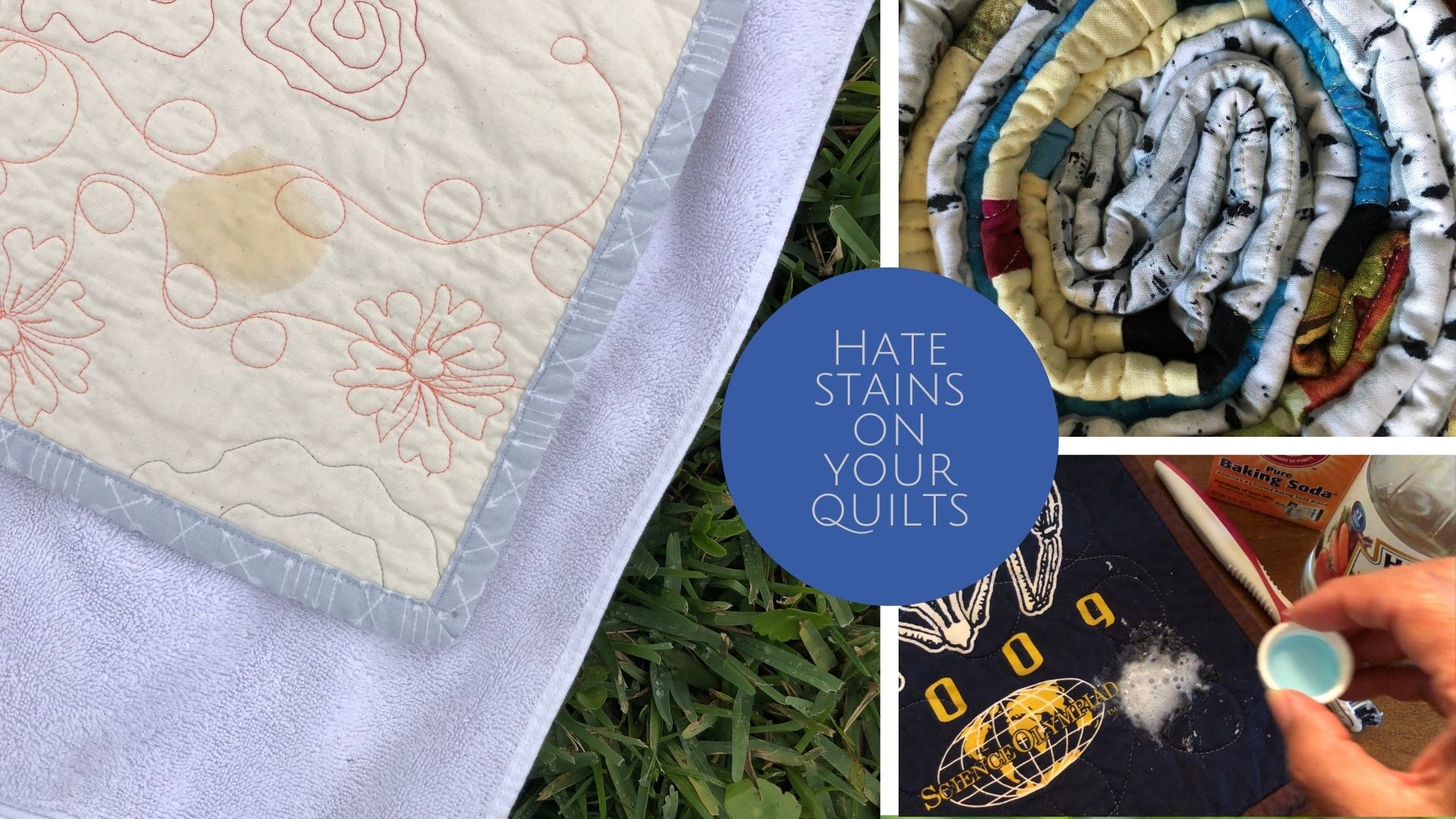
Rust comes from metal objects during storage or from iron in water supplies. It appears as reddish-brown spots and can etch fibers if left untreated.
Apply Vinegar and Salt in Sunlight
Soak the stain with white vinegar, then cover it with salt. Gently rub the mixture into the fabric. Place the quilt over a towel in direct sunlight. The heat and UV rays help break down the rust. Rinse thoroughly and wash afterward. Repeat if needed.
Avoid Harsh Rust Removers on Antiques
Products like Whink are acidic and effective on new stains but risky for old quilts. They can weaken fibers or alter dyes. Reserve them for modern quilts and always test first. For heirlooms, stick with vinegar and sunlight.
Tackle Mixed Stains Like Coffee, Chocolate, Grass, and Wine
Many stains combine tannins, oils, and dyes. A layered approach based on stain composition works best.
Break Down Chocolate and Coffee Stains
These contain tannins and oils. First, presoak in cold water with a quarter cup of baking soda for 15 minutes. Rinse under cold water to flush the tannins. Then apply dish soap with hot water to lift the oil. Blot gently without scrubbing. For coffee, dab with rubbing alcohol if the stain remains.
Remove Grass Stains with a Peroxide Mix
Grass contains chlorophyll, a strong green dye. Mix 1.5 cups cold water, half a cup hydrogen peroxide, and 1 tablespoon baking soda. Submerge the stained area for at least 2 hours. Rinse with cold water, since warm water sets the dye. Air dry before checking results.
Use Spot Removers for General Stains
Grandma’s Secret Spot Remover and Granny’s Stain Stick work well on mixed spills. Apply directly, wait as directed, then rinse. Always test on a hidden area first. A solution of 1 tablespoon bicarbonate of soda per pint of cold water is gentle and effective for general dinginess and odors.
Wash Old Quilts Safely by Hand
When spot cleaning is not enough, full immersion may be necessary, especially for musty or overall dingy quilts.
Prepare a Gentle Soak Solution
Line a bathtub with a white sheet to protect the quilt. Fill with warm or cold water depending on dye stability. Add several scoops of OxiClean or a generous squirt of Dawn. Stir to dissolve fully.
Soak and Rinse Thoroughly
Submerge the quilt and gently swish to saturate the fabric. Soak for 2 hours to overnight. Drain and refill with cold water for rinsing. Repeat 3 to 4 times until the water runs clear. Leftover residue can cause visible lines when drying.
Extract Water Without Tearing the Fabric
A wet quilt is heavy, and lifting it by one edge can stretch or tear seams.
Press Water Out in the Tub
After rinsing, push the quilt against the tub wall to let water drain by gravity. Wait 30 minutes for excess water to drip out. Support the quilt with both hands when lifting.
Use a Front-Loader for the Spin Cycle
If the quilt is sturdy, transfer it to a front-loading washer without an agitator. Run a medium spin to remove more water. This reduces drying time and prevents residue buildup. Skip this step for fragile antiques.
Dry Flat and Store Properly
How you dry and store your quilt determines its long-term health.
Lay Flat on a Clean Surface
Place the quilt on a dry sheet over tile, grass, or a large table. Avoid hanging, since it stretches seams and causes tears. Use fans indoors to speed drying, but avoid direct heat sources.
Avoid Sun Damage During Drying
Indirect sunlight helps remove odors and brighten colors. Prolonged direct exposure fades dyes. Rotate the quilt periodically for even drying.
Store in Breathable Containers
Once 100 percent dry, fold and wrap the quilt in clean cotton sheets or place it in archival boxes. Avoid plastic bags, which trap moisture and encourage mildew. Store in cool, dark, dry areas and never in attics or basements.
Frequently Asked Questions About Removing Stains from Quilts
Can I machine wash an antique quilt?
Machine washing an antique quilt is generally not recommended. The agitation can damage fragile fibers and loosen hand-stitched seams. Hand-washing in a bathtub with gentle soap is safer, but air-drying in sunlight may be the best option for quilts over 75 years old.
What is the safest homemade stain remover for quilts?
A mix of cold water, baking soda, and a small amount of gentle dish soap works well for most stains. For protein-based stains like blood, hydrogen peroxide is effective when tested first. Always spot test any homemade solution on a hidden area before applying it to visible fabric.
How do I remove old yellow stains from a vintage quilt?
Soaking the quilt in RetroClean or oxygen bleach like OxiClean for several hours lifts yellowing from oxidation. For delicate quilts, lemon juice combined with indirect sunlight offers a gentler approach. Avoid chlorine bleach, which weakens fibers and damages dyes.
Will hydrogen peroxide bleach my quilt?
Hydrogen peroxide acts as a mild bleach and can lighten colored fabrics. Always test on a hidden seam or corner before applying it to a visible area. Use it sparingly and rinse thoroughly with cold water after treatment.
How do I get mildew smell out of a stored quilt?
Lay the quilt in direct sunlight for several hours to kill mildew spores and neutralize odors. If the smell persists, soak the quilt in warm water with OxiClean or baking soda. Ensure the quilt is completely dry before storing it again in a breathable container.
Can I dry a quilt in the dryer?
Tumble drying is not recommended for quilts. The high heat can cause shrinkage, weaken fibers, and damage stitching. Always lay the quilt flat to air dry, or hang it carefully over multiple lines to distribute the weight evenly.
Key Takeaways for Safely Removing Stains from Quilts
Removing stains from a quilt is about care, not perfection. The most important steps include assessing the quilt’s condition before cleaning, testing all solutions on hidden areas, and using cold water for protein-based stains like blood. Gentle products such as Dawn dish soap, OxiClean, and hydrogen peroxide handle most stains effectively when used correctly.
For vintage or heirloom quilts, prioritize preservation over spotless results. When in doubt, consult a textile conservator rather than risking irreversible damage. With patience and the right techniques, you can restore your quilt to a clean, usable, and beautiful state for many more years of enjoyment.