Ever feel a cold draft sneaking through your door on a chilly night? You’re not alone. Hanging a blanket over a door is a simple, budget-friendly solution to block cold air, reduce noise, and boost privacy without making permanent changes to your home. Whether you’re renting, live in an older home, or just need a quick fix, this method works across door types and decor styles. In this guide, you’ll learn how to choose the right blanket, install it securely using multiple methods, and enhance its performance for maximum comfort.
Why Hang a Blanket Over Your Door
Door blankets serve multiple practical purposes in any home. They provide thermal insulation by blocking cold air drafts that enter through gaps around aging or poorly sealed doors, which is especially effective for older doors lacking modern insulation properties. They also absorb and block sound transmission between rooms, making them ideal for bedrooms, home offices, or shared living spaces where privacy matters.
Beyond temperature and sound control, blankets hung over doors offer privacy and light blocking when doors have glass panels or windows. They function as temporary room dividers in open-concept spaces and add warmth, texture, and color to your interior without requiring structural changes. This versatility makes door blankets a smart choice for renters, homeowners, and anyone seeking a quick upgrade.
Choosing the Best Blanket for Door Insulation

The effectiveness of your door blanket depends heavily on material, size, and weight. Picking the right one ensures better insulation and sound control.
Best Materials for Performance
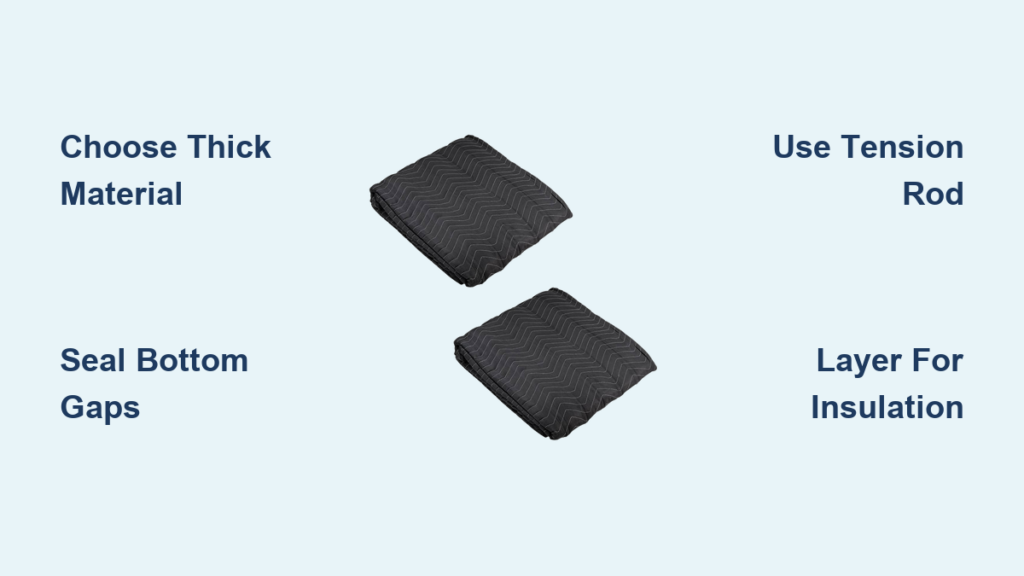
Wool blankets naturally trap heat and absorb sound, making them ideal for drafty front or exterior doors. Fleece blankets are lightweight but surprisingly effective, especially when layered behind curtains. Quilted or duvet-style blankets are thick and padded, significantly slowing heat loss and dampening noise. Velvet curtains or throws add both style and insulation, perfect for living areas or bedrooms. Moving blankets are designed for durability and density, offering top performance for soundproofing and thermal blocking.
Size and Weight Guidelines
Choose a blanket 30 to 40 inches wide, which covers most interior doors that measure 28 to 32 inches. Aim for 80 or more inches in length to reach the floor and minimize gaps at the bottom. Heavier blankets provide better insulation, but ensure your hanging method can support the weight. Avoid flimsy cotton throws that look nice but do little for temperature or noise control.
Hanging a Blanket Without Drilling
This damage-free method is perfect for renters or temporary setups where drilling isn’t an option.
Installing Adhesive Hooks
Select strong adhesive hooks rated for 3 to 5 pounds or more, such as Command Hooks. Position one hook on each side of the door frame, about 6 inches above the door for clearance. Insert a wooden dowel or curtain rod through a hemmed top edge of the blanket. Hang the rod on the hooks, draping the blanket evenly across the doorway.
Test the hooks with light pressure before final placement. Don’t overload weak hooks or they may fall when bumped or stressed. This method works best for lightweight fleece, thin quilts, or short-term use in bedrooms and closets.
Using a Tension Rod for Quick Setup
Tension rods offer a tool-free, adjustable way to hang a blanket ideal for standard doorways.
Step-by-Step Installation
Measure your doorway width and choose an adjustable tension rod that extends from 24 to 48 inches. Extend the rod until it fits snugly across the top of the door frame without wobbling. Attach clip rings to the top edge of the blanket, or sew a fabric sleeve to slide over the rod. Hang the blanket and adjust the rod tightness to prevent slipping.
Choose rods with non-slip rubber tips for maximum stability. Avoid placing the rod near the door swing to prevent knocking. Add felt pads between the rod and frame if needed. This method works well for interior doors, dorm rooms, or temporary room dividers.
Installing a Curtain Rod for Heavy Blankets

When you need to hang a thick wool or layered blanket, a mounted curtain rod provides the best support.
Secure Installation Steps
Pick a standard curtain rod 6 to 12 inches wider than the door. Mark bracket positions on the wall above the door frame, typically 6 to 12 inches above for clearance. Drill pilot holes and screw in brackets, using wall anchors if mounting into drywall for added strength. Slide the rod through a hemmed sleeve on the blanket or use curtain rings. Insert the rod into brackets and hang.
This method suits those who own their home or have permission to drill. Use it when working with heavy materials like wool, moving blankets, or layered curtains, or when you want smooth opening and closing without removing the blanket.
Using a Portiere Rod for Functional Doors
If you use the door daily, a portiere rod keeps the blanket in place while allowing easy access.
How Portiere Rods Work
A portiere rod attaches to the door frame on one side and the door itself on the other. As the door opens, the rod and blanket swing out of the way. This maintains coverage and insulation even when the door opens, overlapping door edges to help seal side gaps.
Installation Tips
Buy a pre-made portiere rod by searching “door curtain pole” or “portiere rod” online or at home stores. Mount one end to the wall and the other to the door edge. Hang the blanket from the rod using rings or a rod pocket. Ensure smooth swing by testing before final tightening.
One user noted that with this system, they can draw the curtain early to keep heat in while their partner gets in late without obstruction. This option works perfectly for frequently used exterior doors, hallways, or drafty entryways.
Sealing Gaps Around Your Door
A hanging blanket blocks front-facing airflow, but gaps around the door still leak air. Close them for full impact.
Stopping Drafts Under the Door
Roll a second blanket into a tight tube and place it along the threshold. Use a draft snake or make a DIY version by filling a fabric tube with rice or sand. Ensure the top-hung blanket touches or overlaps the floor barrier for complete coverage.
Addressing Side and Top Gaps
Apply self-adhesive weatherstripping to door edges for a clean, reusable solution. Use duct tape in emergencies, though it’s effective but temporary. Combine with magnetic door seals for a more polished look.
Sealing gaps stops drafts better than a blanket alone. Even a small 1/8-inch gap can undo the benefits of your blanket, so seal completely.
Layering Blankets for Maximum Insulation

One blanket helps, but layering multiplies effectiveness for extreme conditions.
Building a Thermal Sandwich
Hang a heavy curtain on a rod. Insert a fleece or wool blanket between the curtain and the wall. Close the outer curtain to hide the blanket and add another barrier. This creates multiple layers of insulation that work together to block heat loss and sound.
Dual Blanket Setup
Use a quilted blanket in front with a wool layer behind. This combination works great for unheated entryways or noisy hallways. Expect to spend 15 to 30 minutes assembling, depending on whether sewing is needed.
Making Your Door Blanket Look Stylish
A blanket doesn’t have to look like a survival hack. It can enhance your decor with some simple customizations.
Customizing the Top Edge
Hem the top to create a clean sleeve for the rod. Add fabric trim or fringe for a polished finish. Turn under the edge and sew for a tailored look. One user transformed a Highland blanket by trimming it and creating a hem for the pole, noting it looked fine.
Matching Your Room Style
Choose tartan or cable-knit wool for rustic or vintage spaces. Use neutral fleece behind linen curtains for modern minimalism. Dye cotton velvet curtains in the washing machine for custom colors, testing a small area first and only machine-dying cotton-based fabrics.
Maintaining Your Door Blanket Long-Term
A well-maintained blanket system lasts through seasons and moves.
Cleaning Tips
Wool blankets require hand washing or dry cleaning to prevent shrinking. Fleece and cotton blankets can be machine washed cold with low tumble dry. Check velvet curtain labels carefully, as some can be machine washed while others need steaming.
Seasonal Adjustments
In winter, add layers and extend bottom seals, closing them early. In summer, store the blanket but leave the rod in place for future use. For high-use doors, check portiere rod screws monthly for tightness. Keep a spare tension rod and hooks ready for quick reinstallation if needed.
Frequently Asked Questions About Hanging a Blanket Over a Door
What type of blanket is best for blocking cold air?
Wool blankets are naturally dense and insulating, making them ideal for blocking cold air. Fleece, quilted blankets, and moving blankets also perform well. Choose heavier materials for better thermal performance.
Can I hang a blanket over a door without using nails or screws?
Yes. Adhesive hooks and tension rods allow damage-free installation perfect for renters. These methods support lighter blankets without requiring drilling.
How do I stop drafts coming under the door?
Place a rolled blanket or draft snake along the bottom threshold. Ensure your top-hung blanket reaches the floor and overlaps this barrier. Combine with weatherstripping for complete sealing.
Do door blankets help with soundproofing?
Yes. Heavy, dense materials like wool, quilted blankets, or layered curtains absorb and block sound transmission effectively between rooms.
How do I make a door blanket look more decorative?
Hem the top edge, add fabric trim or fringe, or layer the blanket behind a decorative curtain. Choose patterns that match your room style, such as tartan for rustic spaces or neutral tones for modern decor.
Key Takeaways for Hanging a Blanket Over Your Door
Hanging a blanket over a door is more than a temporary fix. It’s a smart, adaptable upgrade that delivers real thermal and acoustic benefits while keeping your space stylish and functional. Choose dense materials like wool or layered fleece for the best insulation. Match your installation method to your needs: adhesive hooks for renters, tension rods for quick setup, and mounted curtain or portiere rods for heavy blankets and frequent door use.
Seal gaps around the door for maximum efficiency, and consider layering multiple materials for extreme conditions. With the right approach, you can block drafts, reduce noise, and enhance privacy all while maintaining a look that complements your home decor. Start tonight with what you have, then refine it over time. Your comfort and your wallet will thank you.