The story of slave quilt patterns as secret codes for the Underground Railroad has captivated imaginations for decades. According to a popular narrative, enslaved African Americans used specific quilt blocks displayed on clotheslines to signal escape routes, safe houses, and survival strategies. These patterns supposedly formed a covert visual language, guiding freedom seekers northward under the guise of everyday domestic life.
Yet, historical research reveals a more complex truth. There is no verifiable 19th-century evidence that such a quilt code existed. No slave narratives, abolitionist records, or period documents mention it. This article explores what the code supposedly meant, how it spread, why historians question it, and why it endures as a powerful symbol of resistance and remembrance.
The Alleged Underground Railroad Quilt Code
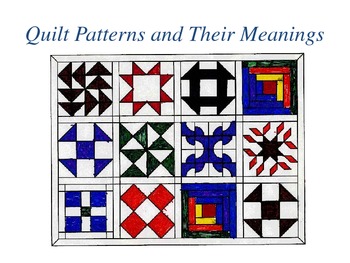
Eleven Quilt Blocks, One Escape Plan
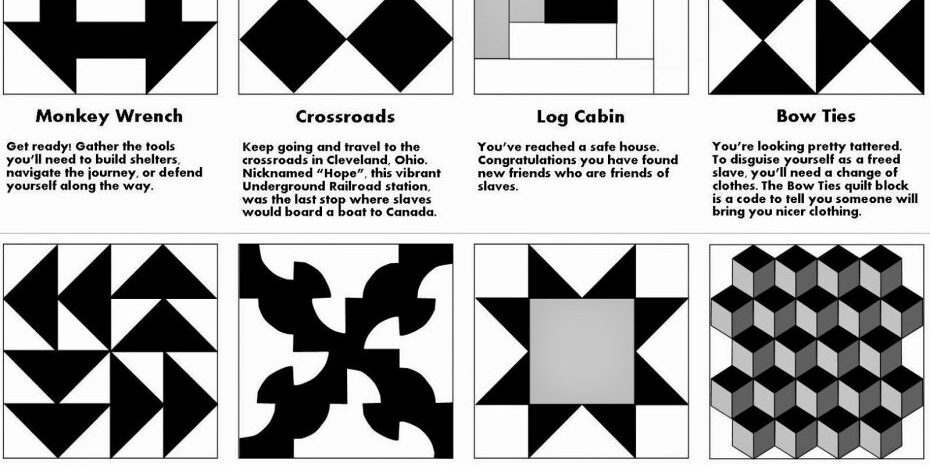
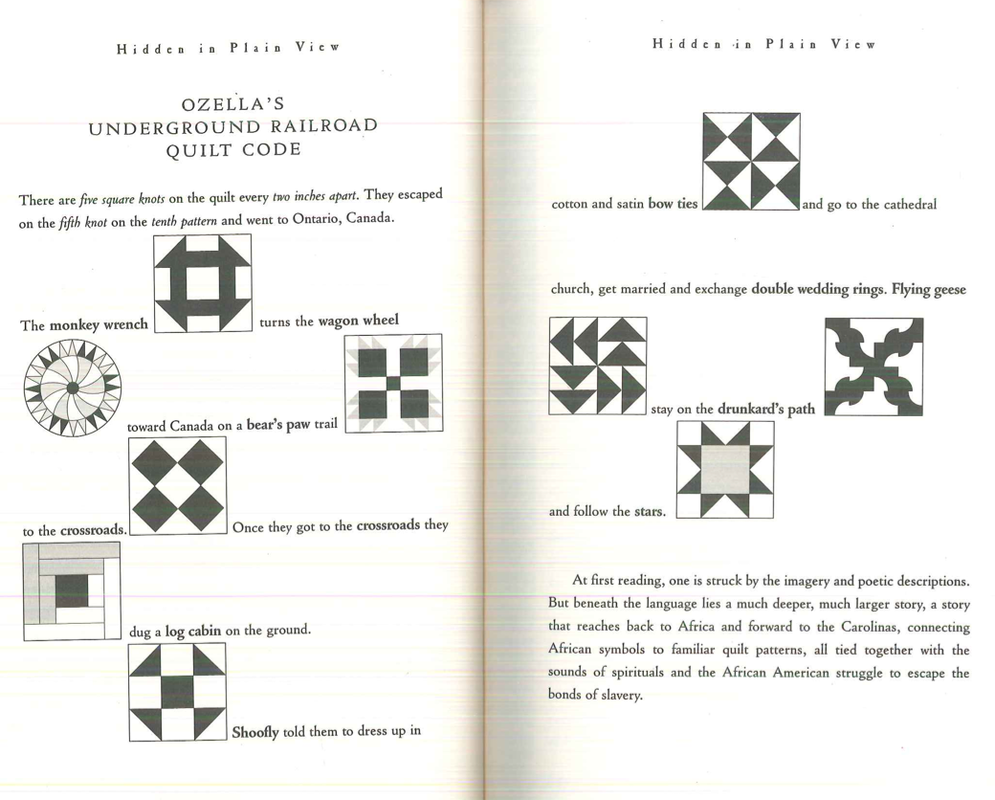
According to the 1999 book Hidden in Plain View, eleven specific slave quilt patterns were used in sequence to guide enslaved people to freedom. Each block conveyed a distinct instruction, forming a step-by-step escape protocol.
These patterns were not random designs but part of a deliberate visual communication system. They were displayed one at a time on fences, windowsills, or clotheslines so only those who understood their meaning would recognize the signals.
Monkey Wrench and the Call to Prepare
The Monkey Wrench block allegedly initiated the escape process. Its message meant “gather your tools,” referring to both physical items and mental readiness. Some interpretations link this pattern to the blacksmith, a trusted figure who could travel between plantations and act as the “pilot” signaling it was time to act.
Seeing this quilt meant the plan was real and preparation should begin immediately.
Wagon Wheel and Bear’s Paw: Movement and Navigation
The Wagon Wheel pattern signaled that transport was ready. Enslaved people were to pack supplies and prepare to board a wagon or carriage. This confirmed that a conductor or ally was in place.
When escapees entered mountainous terrain, the Bear’s Paw quilt instructed them to follow animal trails. Bears supposedly knew where to find water, food, and shelter. The pattern’s triangles and squares resembled a topographical map, and some see African design parallels in West African Hausa embroidery.
Eleven Quilt Blocks and Their Hidden Meanings
Crossroads, Log Cabin, and Shoofly: Key Junctures
Crossroads symbolized a major decision point, specifically Cleveland, Ohio, a known Underground Railroad hub offering multiple routes to Canada. The Log Cabin block supposedly signaled a safe house where allies could be trusted. However, historical records show this pattern didn’t appear until 1863 as a Union loyalty symbol, not before the war as the code claims.
Shoofly identified a friendly conductor who could help navigate the next leg of the journey. The name may derive from the spiritual “Shoo, fly, don’t bother me,” which carried coded meanings of its own.
Bow Tie, Flying Geese, and Drunkard’s Path: Survival Tactics
The Bow Tie pattern instructed escapees to change their appearance, perhaps dressing in finer clothes to pass as free. Some note that turning the block sideways resembles an hourglass, adding urgency to the message.
Flying Geese pointed the way north. The pattern told escapees to follow migrating geese in spring, which fly toward Canada. This block aligns with the spiritual “Follow the Drinking Gourd,” which used the Big Dipper to locate the North Star.
Drunkard’s Path was a survival tactic instructing travelers to zig-zag while moving to throw off bloodhounds. Walking in a straight line left a clear scent trail that this curved, broken path disrupted.
Double Wedding Ring and North Star: The Final Steps
The Double Wedding Ring block signaled freedom and the end of the journey. It meant shackles could be removed. However, this pattern wasn’t created until the 1920s, making its use in the 1850s historically impossible.
The final guide was the North Star or Jacob’s Ladder block, reminding escapees to follow the Big Dipper to find true north. Unlike the quilt code itself, this celestial navigation method is historically verified in songs and oral histories.
Origins of the Slave Quilt Patterns Story
Ozella Williams’ Oral Account
The entire slave quilt patterns narrative hinges on one source: Ozella McDaniel Williams, a South Carolina quilt vendor. In 1997, she told journalist Jacqueline Tobin about an 11-block code passed down through her family.
Her account became the foundation of Hidden in Plain View, co-authored with art historian Raymond Dobard. The book presented the story as revelation yet offered no primary documents to support it. Critics called it “breathless speculation,” blending African symbolism with unverified claims.
Pre-1999 Mentions Were Vague
Before 1999, references to quilts and escape were minimal. A 1987 video mentioned quilts signaling safe houses, but the filmmaker had no evidence. A 1990 book claimed quilts sent messages but cited no sources. The children’s book Sweet Clara and the Freedom Quilt fictionalized the idea, which later became mistaken as fact.
Notably, no African American quilters interviewed in the 1990s before the book’s release mentioned a quilt code.
Post-1999: Myth Becomes Mainstream
After 1999, the story exploded across media. The New York Times, NPR, and National Geographic all covered it. Schools adopted it into curricula, and museums created exhibits. By 2024, generations had learned about slave quilt patterns as historical truth, despite the lack of evidence.
Why Historians Doubt the Quilt Code
No Firsthand Accounts Support It
Key historical sources are silent on quilt codes. William Still, who helped hundreds escape, recorded detailed interviews with no mention of quilts. The WPA Slave Narratives from the 1930s include over 2,000 interviews, yet zero reference coded quilts. No abolitionist letters, pamphlets, or diaries describe such a system.
If such a widespread code existed, why did no one write about it?
Practical Problems with the Code
Even if the patterns existed, the logistics don’t hold up. Travel happened at night, making complex quilt patterns impossible to see in darkness. Displaying coded quilts was risky, as a discovered signal could mean death for everyone involved.
Communication by word-of-mouth was faster and safer than hanging ten quilts in sequence. Why use a fragile, visible system when whispers worked better?
Material Realities of Slave Life
Enslaved people had limited access to fabric. They were typically issued one coarse blanket every two years. Quilts made for personal use were utility quilts from scraps, rough and tied rather than finely pieced. Lye soap destroyed textiles quickly, making intricate symbolic quilts from scarce materials highly unlikely.
Chronological Problems with Key Patterns

Log Cabin Pattern: Too Late to Be True
The Log Cabin quilt is central to the code, but the earliest known example dates to 1869. Written references date to 1863, when the pattern raised funds for Union troops. It did not exist as a widespread pattern before the Civil War, making its use as a pre-war escape signal chronologically impossible.
Double Wedding Ring: A 20th-Century Design
The Double Wedding Ring block, symbolizing freedom, was first published in 1928 and became popular in the 1930s. This design could not have been used during slavery, which ended in 1865.
Bear’s Paw Confusion
Historian Barbara Brackman documents three different block designs sharing the name “Bear’s Paw” in her encyclopedia of pieced quilt patterns. It remains unclear which, if any, was the purported code block.
The Cultural Power of the Myth
A Sacred Narrative of Resistance
Even without proof, many embrace the slave quilt patterns story as truth through feeling. For descendants of enslaved people, it represents agency, ingenuity, and hope. As scholar Mary Twining-Baird noted, if people’s lives are at stake, there would be no trace.
The absence of evidence becomes proof of secrecy, a sacred narrative functioning like a parable that is meaningful even if unproven.
Sharon Tindall’s Artistic Truth
Contemporary quilter Sharon Tindall creates powerful works based on the code, not as history but as spiritual testimony. Her quilts use batik, silk, and crystals to honor ancestors. For her, the truth lies in intent rather than archives.
She found parallels in Liberian weaving traditions, reinforcing trans-Atlantic cultural memory and connection.
Quilting as Healing and Heritage
Groups like the African American Quilt Circle of Durham use the code to teach resilience. Their quilts are not replicas but acts of remembrance. Cyntia Kelly’s Recalling Slavery Days blends Jacob’s Ladder and Flying Geese with personal color choices, turning myth into memoir.
Where the Story Lives Today
Schools and Museums Teach the Code
Despite scholarly criticism, the narrative persists in education. National Geographic and the Kennedy Center offer lesson plans referencing the codes. Museums in Missouri, Florida, and Michigan display “code quilts.” Even the Iowa Wilton Rest Area features panels explaining the Underground Railroad Quilt Code.
Commercialization of the Myth
The story sells well in commercial markets. Hidden in Plain View remains a bestseller. Quilt shops sell slave quilt patterns kits, and patterns for Monkey Wrench and Bear’s Paw are marketed as “freedom blocks.” Fictional novels and documentaries continue to blur myth and history.
A Double-Edged Symbol
Folklorist Laurel Horton warns that the story can soften the brutality of slavery. If escape was so clever and simple, some may think slavery wasn’t that bad. But for African Americans, it affirms resistance and creativity, offering a counter-narrative to victimhood.
Modern Quilts and Lasting Impact

Tindall’s Notable Works
Sharon Tindall’s The Johnson House (2019) is a 40 by 28-inch quilt honoring a real Underground Railroad station in Philadelphia. Using orange batik to symbolize life and light, it connects past struggle with present hope. Her Flying Geese (2019) uses deep blues and reds to evoke migration and danger in a small but powerful 19 by 19-inch piece.
Global Influence
Quilters in South Africa have adopted the code after reading Hidden in Plain View, creating their own versions. The story has become transnational folklore, spreading beyond American borders.
The Truth in the Telling
Myth vs. History: Can Both Be True?
The slave quilt patterns story is likely not historical fact, but it is emotionally and culturally real. It functions as sacred narrative, where belief is a process of knowing not subject to verification. The story endures because it shows enslaved people as planners rather than passive victims, celebrates creativity under oppression, and gives modern descendants a tangible link to ancestors.
A Call for Honesty and Respect
The danger isn’t in believing the story but in teaching it as fact without context. A better approach honors both truth and memory by acknowledging that some believe quilts carried secret codes, historians find no proof, but the story reflects real courage and the desire for freedom.
Frequently Asked Questions About Slave Quilt Patterns
What are slave quilt patterns?
Slave quilt patterns refer to a popular narrative claiming that enslaved African Americans used specific quilt blocks as coded signals along the Underground Railroad. The story was popularized in the 1999 book Hidden in Plain View based on oral accounts from quilt vendor Ozella McDaniel Williams.
Is there historical evidence that slave quilt patterns were used as codes?
No verifiable 19th-century evidence supports the quilt code theory. No slave narratives, abolitionist records, William Still’s interviews, or WPA Slave Narratives mention coded quilts. The narrative relies on oral history recorded over a century after slavery ended.
Which quilt patterns are part of the alleged code?
The eleven patterns include Monkey Wrench, Wagon Wheel, Bear’s Paw, Crossroads, Log Cabin, Shoofly, Bow Tie, Flying Geese, Drunkard’s Path, Double Wedding Ring, and North Star. Each supposedly conveyed a specific instruction for escape.
Why do historians doubt the slave quilt patterns story?
Historians cite chronological problems, since patterns like Log Cabin (post-1863) and Double Wedding Ring (1920s) didn’t exist during the slavery era. Additionally, no firsthand accounts mention the code, and the logistics of displaying quilts at night for complex instructions seem impractical.
Why does the slave quilt patterns story remain popular?
The story endures because it celebrates agency, ingenuity, and resistance. It provides descendants with a tangible connection to ancestors and inspires contemporary quilting traditions. For many, it functions as sacred narrative regardless of historical verification.
Are slave quilt patterns taught in schools today?
Yes, the narrative appears in curricula from National Geographic and the Kennedy Center. Many museums display “code quilts,” and the story has been taught in classrooms for over 20 years, despite ongoing scholarly debate about its accuracy.
Key Takeaways on the Legacy of Slave Quilt Patterns
The legacy of slave quilt patterns lies not in historical accuracy but in cultural power. Whether myth or memory, these patterns remind us that even in silence, resistance finds a voice. The story inspires quilts, exhibits, and education while honoring the real courage of those who sought freedom.
Your next step is to explore contemporary artists like Sharon Tindall, whose work transforms this narrative into living art. Whether you view the code as history or folklore, engaging with these stories keeps the conversation about slavery, survival, and creative resistance alive for future generations.